
It’s a Flat White World
The Nomad, New York and the Neoculture
There she goes. Brooke. Yuliya. Shula. Mathilde. Ilham. With a posture that could stop a thousand ships, she rides her scooter with a fierce independence that only years of alternating trauma and therapy could mold. As her Amazonian frame whisks past countless diminutive men and women tending to religious offerings on the side of the road, she is en route to an important mission: morning Pilates.
Sitting on the café patio is a shirtless man of wonder, living beyond abandon, sipping an oat milk flat white that masks the kryptonite to his burgeoning Hyrox-built body: lactose. The corporate life behind him, his hair sits as a mess matched only by the frumpled nature of his linen shirt cast aside on the chair. What will he do today as he leads the resistance to the global elite? Let’s ask ChatGPT.
----
The insta-landscape is defining the identity of the Nomad in the urban corridors. What seems at first organic is more derivative than meets the eye. If you speak the lingua franca of this neoculture, you have a multipass to seemingly go beyond sovereignty.
This exceptional world exists beside local laws, communities, and customs. It thrives through an arbitrage of the currency of the multi-colored white-collar class. While global shifts are disrupting countries, the Nomad’s meeting grounds are surviving, despite (and perhaps because of) the rise of hard power.
The entrepots, refuges, marketplaces, cultural pools have their place. So too do the structuredly bohemian residents. But is a revanche of the rest coming?
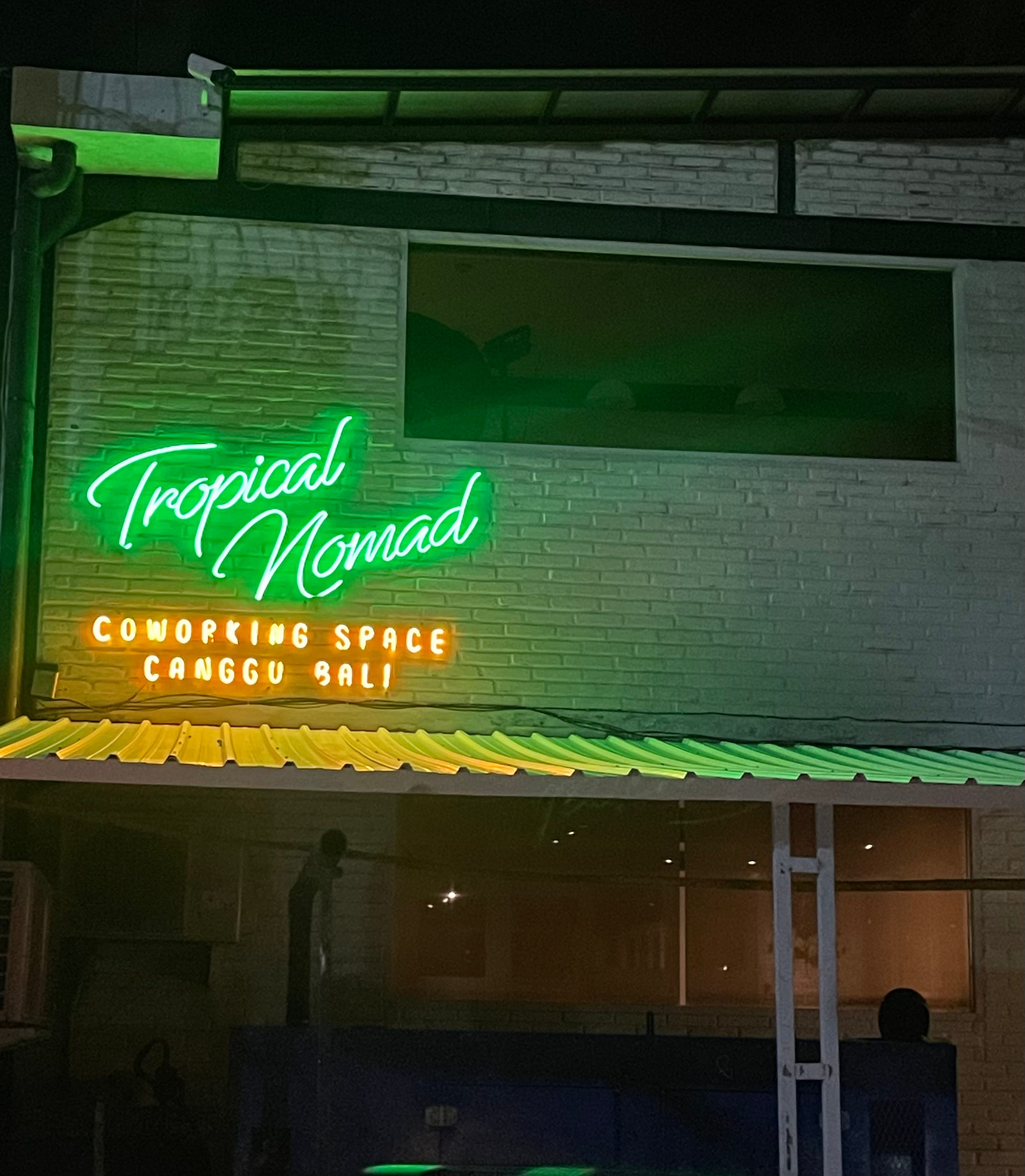
This is the yet-to-be-completed story of Ibiza. Lisbon. Brooklyn. Dubai. Tulum. Bali. And the pockets of nearly every urban square in our flat white world.
Paving the Way on the Hippie Trail
The origins of the Nomad are many and can be found in historical antecedents that challenged Western orthodoxy.
Countercurrents have been an evolutionary feature of the modern West, blending political, economic, and social dimensions, as well as sexual ones. During the French Revolution, famed libertine Marquis de Sade wrote La Philosophie dans le Boudoir, which called for the abolition of religion as a continuation of republicanism, interspersed between vivid scenes of erotic profligacy.
The state’s stranglehold on society was through the political and clerical establishment. Sexual liberation was a revolt against both. Libertine literature was all the rage in France in the late 1700s. The excesses of the French Revolution ultimately put a damper on Libertinism, although it would echo in later times.
Bohemianism took on a subtler model of blended social, cultural, political, and sexual liberation. There was a certain laissez-‘flair’ to the Bohemians. They came, for example, in the form of women like the New York heiress Aimee Crocker at the turn of the 20th century, who hosted lavish parties and cavorted with snakes (literally). Romanticism, a literary current parallel to Bohemian culture, moved readers towards nature.
In the 1800s, adjacent traditions arose in America: transcendentalism and then realism. America’s most venerated authors like Henry David Thoreau, Walt Whitman, and Ralph Waldo Emerson pushed the rejection of society’s modern evolution and beckoned a return to natural order. Mark Twain, who embodied aspects of these traditions, spoke through fiction and satire, which became popular forms of social critique in America.
The forms of expression moved from books to plays, radio shows, and films. This produced a new kind of icon. Film stars like Charlie Chaplin became vessels for messages of rebellion against the orderly state and society in the early 1900s.
The Roaring 20s and the Jazz Age added an element of music and dance to the party scene and the public square, with the television age transporting this elixir all around the world. What was seen in Harlem was soon replicated in London, Paris, and around the world. Experimentation with drugs, first opium and hashish, and then cocaine, was also on the rise. Drugs were attractive for their charm, as contraband and as windows to a heightened human experience.
America’s undercurrent of countercurrents had already evolved considerably by the time World War II ended, marking the beginning of America as the leading global power.
The Hippies
In the 1960s, the baby boom generation was being conscripted into a war abroad they rejected, while still confined to social mores at home of a bygone time. The stage was set for a movement that could integrate all elements against the modern West: philosophical questioning, political rebellion, sexual freedom, substance experimentation, and music in congregation.
The rise of the hippies is often attributed to writers congregating in the Haight-Ashbury neighborhood who began experimenting with LSD. This new drug was also taking root in wider circles. Philosopher Aldous Huxley wrote Doors of Perception in the 1950s (from which the band Doors drew inspiration) that explored its spiritual dimension. The CIA was investigating the potential of LSD to expand the powers of the mind in now well-known trials.
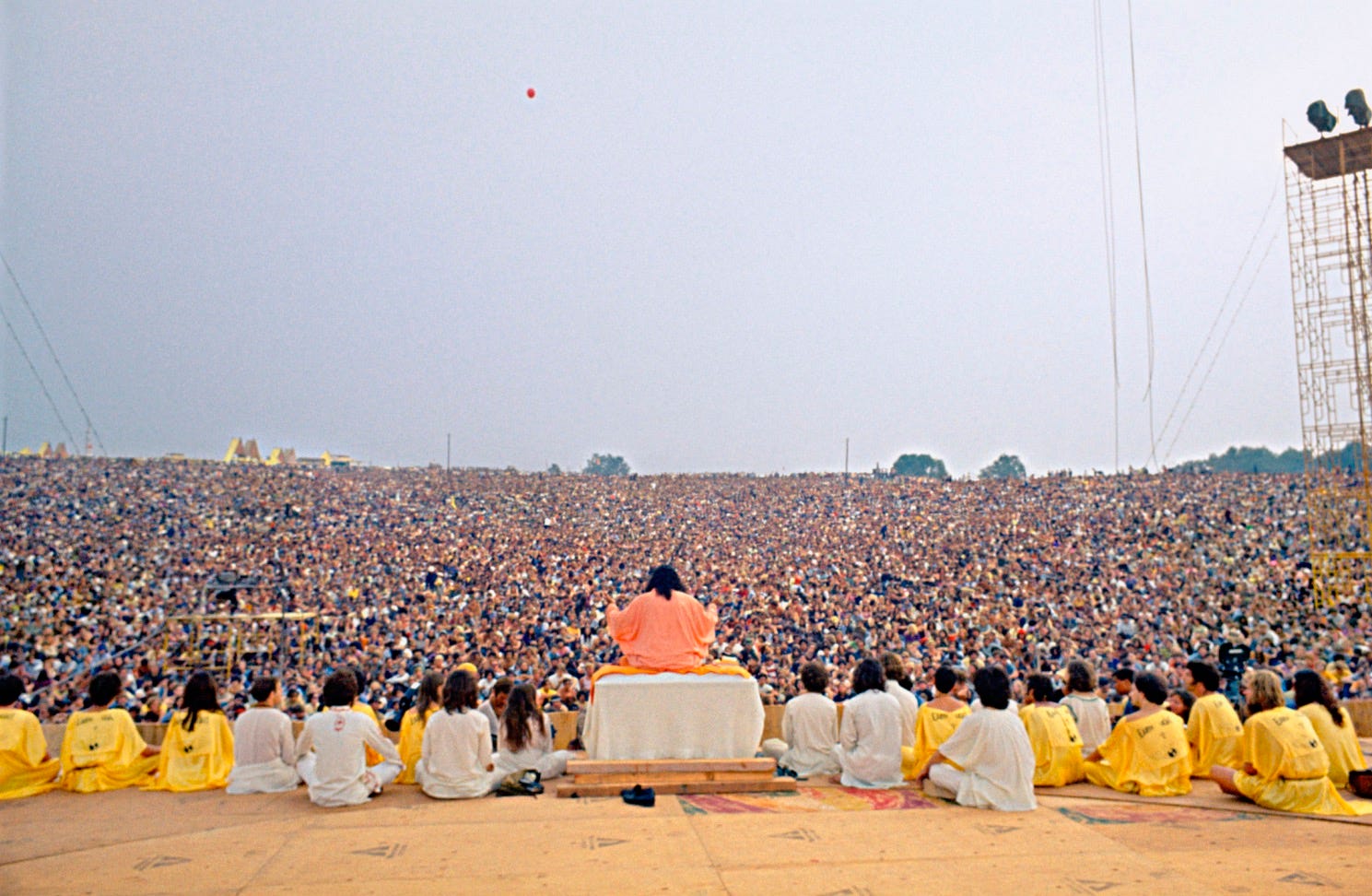
The hippies were a quixotic but potent political force. The Summer of Love in 1967 brought to the fore the mantra of ‘flower power’ against the Vietnam War. It was also a festive affair. Mass festivals were a form of protest. Mass protests came in the form of festivals. This crested in the historic Woodstock Festival, in 1969, entitled: “An Aquarian Exposition: 3 Days of Peace & Music.”
Hippieism migrated from America, becoming a global phenomenon. Musicians were the new storytellers in an interconnected age and their songs the anthems of rebellion. A young person adrift in Germany, Canada, or England sang along to take on a global counter-persona. There was generational common purpose in opposing the world’s dominant political force, the United States of America.
That did not mean gravitating towards America’s foe, the Soviet Union, but rather migrating in mind, body, and spirit to an amorphous, decolonizing East. Hippies coalesced globally around resting spaces in the West like Ibiza and Tangiers. Then a constellation of outposts, particularly in Central and South Asia, became destination points, forming what became known as the ‘Hippie Trail’: Tehran, Kabul and Lahore, and further afield.
The Islamic Revolution in Iran in 1979 ended the fantasy of the East, at least temporarily. The fall of the Soviet Union undermined the commune-led movements of Hippieism. By the 1990s, Kabul had fallen under the sway of the Taliban and Ibiza under the sway of EDM.
A new dynamic would take time to develop.
Capitalism, Encounter Culture & Coffee
The 1990s were a laboratory of the collision of the American experience. Tattoos, ear-piercing, frosted tips, alternative music à la Nirvana, punk rock, the Goths, the Crips, Tupac versus Biggie. The world was in cultural euphoria under the spell of a resurgent Americana. Geographies were opening. Globalization was connecting. Money was flowing.
The technology age was hypercharged by the internet, and it was simply too difficult to escape its reach. Manifestos like the Unabomber’s Industrial Society and Its Future appeared and disappeared. As younger generations found their way to raves and vibed on Mary Jane, a lazy malaise seemed the path of the youth.
Anti-globalization protests in response to the new capitalism of world trade failed to inspire a wider movement. One would have thought that the War on Terror would have been a catalyzing moment. Or the Iraq War. Or the Global Financial Crisis. The Tea Party and Occupy Wall Street did come to prominence, were vociferous and echoed the Beatniks of yesteryear, but they dissipated quickly as political and cultural phenomena. And their luminaries were lackluster. Thomas Piketty was distant. Rush Limbaugh was no Bob Dylan.
The political machinery of the American left and right had also learned to absorb revolt.
The Nomads
Underneath it all, something was brewing: the hipster. Hipsterdom, now mocked, had an edginess. It produced content like Vice Magazine and catapulted street art, like Banksy during the Barely Legal exhibition in Los Angeles. There was also a coffee scene that arose in the Pacific Northwest and then in Brooklyn. It was equal parts being one with your local community and equal parts complicated milkshake.
The hipsters were a foil for Americana, especially the post-war-on-terror, sports- and beer-infused, flag-bearing, rumble-tumble Americana. The now-universalizing American empire inadvertently blended its ethos with an emerging community of global patrons – Nomads. Today they constitute the educated elites in the West, urban second-generation immigrants, and the culturally literate cream of the East.
The Nomads found common cause with what is labeled ‘wokeism’, drawn from socio-political writings around race and culture foundational in university circles. The loose ideology seeks to eliminate differences based on nationalism, sexuality, and genetics and elevate new class-based hierarchies to invert existing ones. It also blends the political philosophy of decolonization of the 1970s to target American imperialism.
During the corona years, an online, remote world enabled a global consciousness that would supersede local dynamics. While that short-lived era passed, its impact reverberates through the Nomads, who are not just digital but physical in every sense of the word. Following the pandemic, the locations where Nomads live have become far more elaborate.
Unlike hippies and even hipsters, Nomads embraced the capitalism of encounter culture. They are much more about the melange than Marx. The Nomad will go deep on a trip to Costa Rica on a trip of the latest psychedelic. For just $1,000 more, an en suite bathroom is available so the Nomad can ‘exhale’ the residual from their fifth Ayahuasca journey.
Burning Man, the centripetal festival and convening point for the Nomads, is not for light wallets. The Burning Man effigy might seem bizarrely out of place given the ‘men’ of Silicon Valley, the deca-billionaire techno-overlords of our age, run amok in the camps. Yet, if anything, it is emblematic of the Nomad, who chafes against the very system that allows them to thrive.
The open capitalism of the Nomad is global, post-nationalist, and beyond borders. It fits a worldview that sees culture beyond geography and commerce beyond local laws. Due to their ubiquity and domination of the social media landscape, Nomads are a fixture in our cultural conversation.
The world’s leading brands go viral with Nomads, transmitting products around the world.
Network Stasis
Would you recognize a Nomad’s habitat if you parachuted in? There are the fitness meccas – not just gyms, but all types of ways to work your body: MMA, Ju-jitsu, Spinning, CrossFit, Hyrox, Running Clubs, Pickle, Padel, Yoga, Pilates, Hot Yoga, Hot Pilates, the sauna (also hot), and just being hot. Hotness is the throughline.
Hotness is also an aesthetic. It requires women to have a range of beauty parlors. In the milieu, you’ll find the spas, nail salons, blow-dry bars, facial stations, and skin labs. The men are equally looksmaxxing, but no one knows where they go. There’s a peptide stack but also a local supplement supplier doing the rounds.
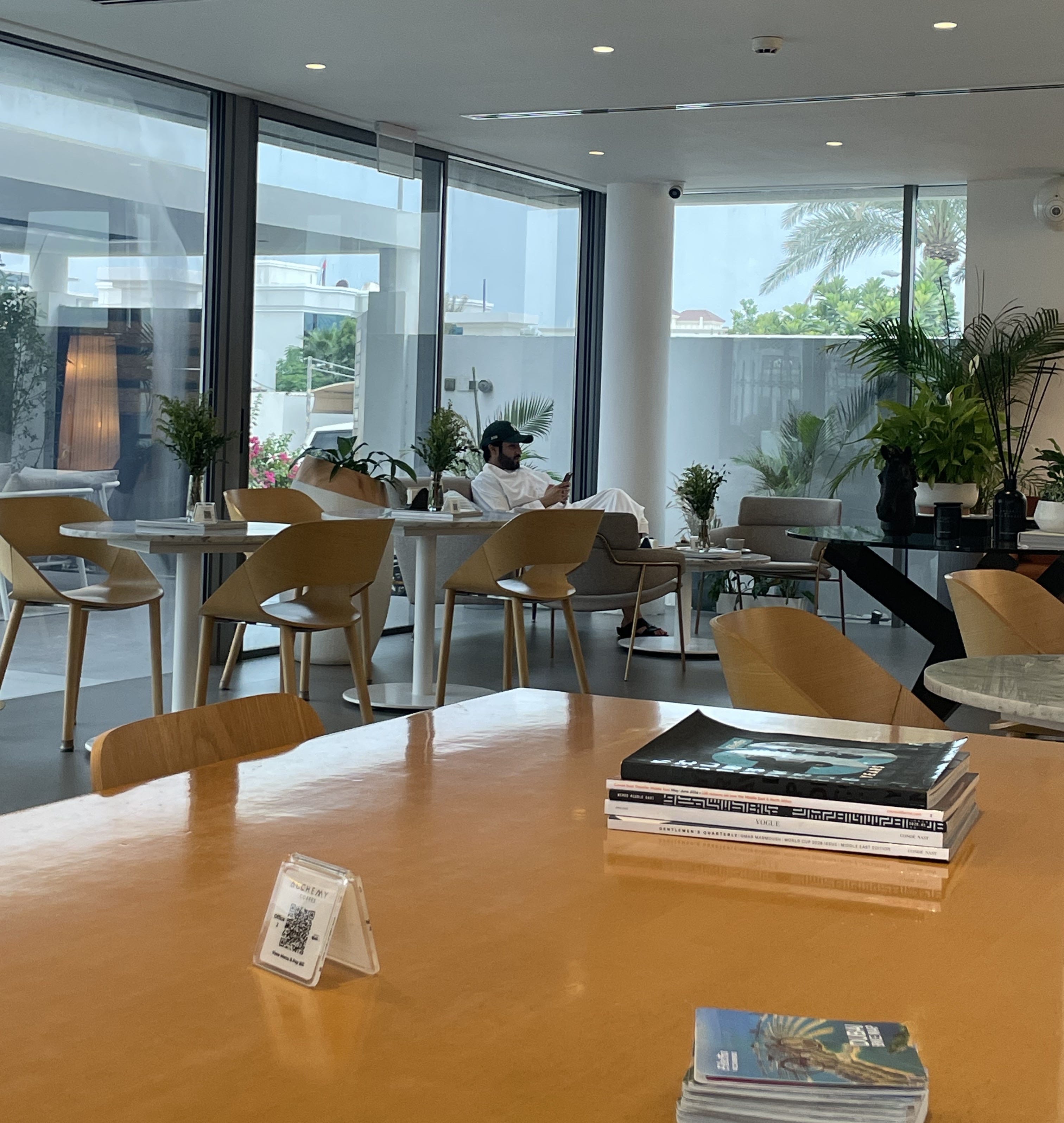
By day, there are co-working cafes that try to follow the hospital-Bali-millennial feel in design. White, some bamboo, clean, few colors. The QR menu code is unfortunately a mainstay. Many menus provide specific caloric breakdowns, although no one knows where they come from and if they are accurate. Brunch is very much emphasized, as is avocado. Sushi not so much these days. Gelato is everywhere.
At night, the range can fit every taste. There are the Mykonos thrilling beach clubs. The quiet lounges in a culturally appropriate hilltop. A vinyl listening station. A ‘wilderness’ themed natural space, where there is a couch for canoodling. And there is the rooftop, typically kitsch, except for that one, which is just a vibe. The music sounds like the Zion rave scene in The Matrix Reloaded.
Most of the world is content to cosplay the Nomad experience and stay within their local locales, occasionally traveling to immerse more fully. Being a true Nomad is exhausting. There is constant travel. You are always foreign. Your logistics are a mess. You are an entrepreneur or running from your family fortune. You are an employee, but you are also rebelling against your company. And you are always on, either for work or simply on drugs. Meanwhile, the relationships are straining: on, off, on again; long distance; open; closed.
Trauma.
And there is no succor in family, as they are far and perhaps distant. Or in your country, which, soothing in familiarity, is estranged from you. Or in your faith, which your first trip made you realize was past you. You need healing. Lots of healing.
Breathwork. Somatic only. Retreats. Lots of retreats. Pottery. Hugging. Lots of hugging. Silence.
Cities of the Nomad
The Nomad finds a calling in London and New York, in the Williamsburgs and Shoreditches, areas that rebelled in an over-produced elite rivalry against the financial districts. The street art, the deconstructed food, the slogans of cultural displacement found their way through, albeit with a California aesthetic. Invariably so did a rebellion against Americana, whiteness, and the appearances of capitalism.
Subcultures in New York and London find their way to new nomadic centers, almost as a template. While multi-colored and even linguistically sprinkled, the language is English, the format is consumerism, and the vibe is flat white. The rebellion transplants itself, like a copy of a Banksy on a barren wall in Dubai’s City Walk.
Today, the Nomad is equally at home at Burning Man, in Bali, and on a boat. One day Barcelona, the next day Bangkok. The true Nomad doesn’t couch surf. They villa surf. The enclaves that cherish their ‘separation’ from the world, like Koh Samui, are pulsated by urban centers, like New York. New pulsators are being birthed, such as Mexico City, although it is unclear whether they are sustainable.
New York is not just the heart of the Nomad universe, but also the heart of the American empire. At least for now, other cities, Chicago, Los Angeles, and San Francisco (and Miami), are supporting actors in the story. New York’s conglomerate media apparatus, like in Edge of Tomorrow, pulsates almost telepathically to the nomadic network of enclaves, although signals are being sent in both directions. They are all parts of an integrated whole.
In June it was the Knicks in Five, July the World Cup, today Free Palestine, tomorrow the return of Black Lives Matter. You will be stamped with tattoos all up and down your arm. It is deeper than the algorithm. It is beyond the algorithm. And the consequential and superficial blend into one.
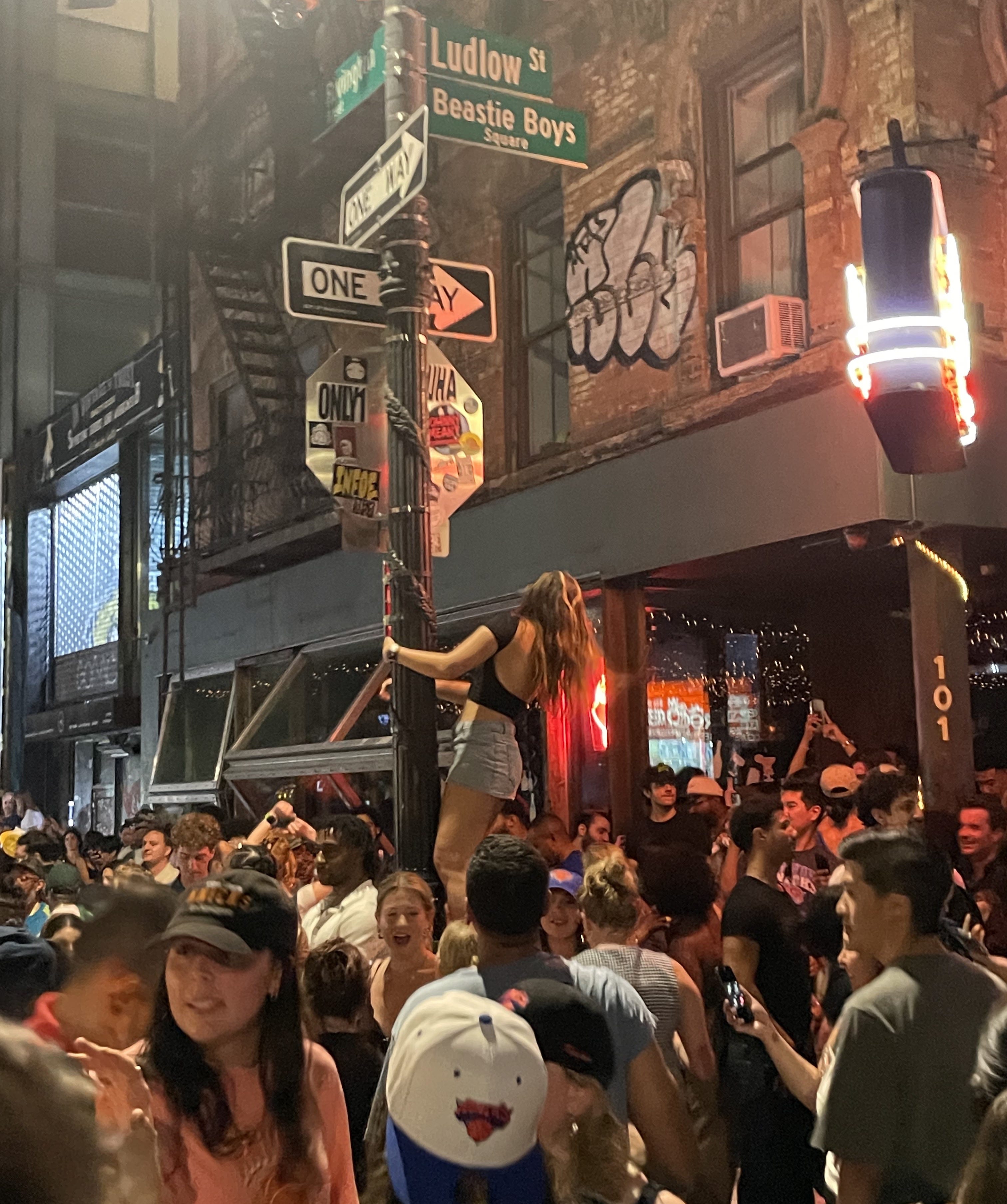
The minds of millions, Nomads and Nomad-adjacent, have been prompted into readiness, and the synapses operate responsively to the same signals. Perhaps this is why The Matrix easily provokes questions of a simulation. Even the most colorful of personalities of our time can come across as NPCs awaiting their download of instructions.
The Nomad’s physical world is like a migrating domination. To woo Nomads, urban locales mirror their cores, reflecting the flat white world. Successor cities of the hippie trail may include new far-flung destinations or trendy neighborhoods in global cities, but in reality, constitute nearly every urban square on the planet.
Golden visas, free zones, and financial centers all enable the accumulation of capital that funds the growth of cities of the Nomad. In these locations, you will also find many Russians, monied men, and relics of the crypto era.
The Nomad has a conflicted relationship with the construct they are ostensibly opposed to: the American empire. Without that empire, there is no Nomad. Nationalism, borders, cultural orthodoxy, local laws – these are obstacles in the path of the Nomad.
Once you see Nomads as a vanguard of cultural emissaries for the global empire, it is hard to unsee. The American empire, global and borderless, is predisposed to the nomadic.
Heart of the Physical Universe
Instagram showcases the life of Nomads, surfing the beaches of Canggu, partying in Dubai, being mindful in Tulum, or looking for what’s next. Something is revealing about these hermetically sealed yet welcoming enclaves with rootless residents and disappearing roots. The refuges provide a respite from the business and busyness of the world, while still offering familiarity.
The assembly line of the 9-to-5 that paced the last century is antiquated. In a world that has moved on, the young do not know where to turn to for connection. The traditional structures of most local environments betray them: churches, communities, politics. While the digital landscape promotes a universe of connection, it is the nomadic physical network that makes connections real.
Those real connections have now become multi-generational through families of Nomads. There are countless millions whose identity from birth is that of a Nomad, and those Nomads now have new little Nomads; we are three generations in. The global tribe of Nomads is only growing, even if they still hold passports of the provinces of the empire.
Ultimately, however, it is still a blank slate, and an unintegrated whole. The encounter culture still needs a culture to encounter. And a culture comes from local roots and local connection, sustained over time in a land. The basis of the Nomad is at odds with its ethos. In some ways, however, the Nomads are becoming nation-like.
The mantras transmitted through the uplink in New York become valuable in this regard. Black Lives Matter is not about America. It is a hymn for the Nomad everywhere. A syncretic post-faith of a creator spirit centers where religion is absent. New priests and priestesses emerge, like the therapist, the yogi, and the doula.
You may think this is unsustainable. Cities will turn against the Nomads. Countries will expel them. Perhaps. But the forces of American empire are slowly transforming a world of nations into a world of a pseudo-composite nation that looks very much like the Nomad nation. Many guardians of the order have already embraced this identity, culture and sense of belonging.
Go to Davos, TED, SXSW or Burning Man this year and next.
What do you see?
New Horizons
The acceleration of AI is hastening the convergence. It is simply too easy to design and build, so all templates and styles are instantly global. Ideas transport instantaneously. There is no language barrier. There is no intelligence barrier. The café in Porto can become the café in Portland, and vice versa, within a day. If anything, the world will become more nomadic very quickly, in an exponential turn.
The Nomad*, carried along the contours of empire, stands in rebellion against the natural order. Populations inherently yearn to be free and define themselves; to grow, to thrive and not be subsumed, dominated and diminished. In that sense, a rebellion is quietly underway in the collective consciousness against the nomadic character of the American empire (see here, here, and here). It is local, perhaps nationalist, but also traditionalist.
This is setting up a devil’s dilemma. The traditionalism and nationalism of the past cannot cater to the modern era we are entering, full of new geopolitical and technological realities – an age of renewed sovereignty. Yet the nomadic character is also equally ill-equipped to help humanity thrive.
The way forward may be a third path that integrates features of nomadism, while rooting itself organically and differently. The nomadic network is instructive as a laboratory at its most base level. It is fostering a rethinking of societal organization when existential questions are at play.
It is worth exploring: at a time of demographic decline, sexual incelarity and deconstructed social order, why does connection thrive in nomadism? Human connection is the basis for renewed communities, nations and sovereignty. In that way, nomadism may be indispensable to the future of nationalism.
While Nomads may dissipate over time, that moment is not now, and not yet. They remain ascendant around the world.
And so the nomadic neoculture lives on.
Do you have your multipass?
*The author discloses that he is part-Nomad and self-interrogating