
This is the fourth article in the TL;DR section. These will be published sporadically, becoming a library over time that underpins the geopolitical and technological currents covered in the feature essays on the Home Page.
Houellebecq pushes the reader out of their comfort zone to an Islamic Europe that speaks to the rudderless nature of Western society and its political elites.
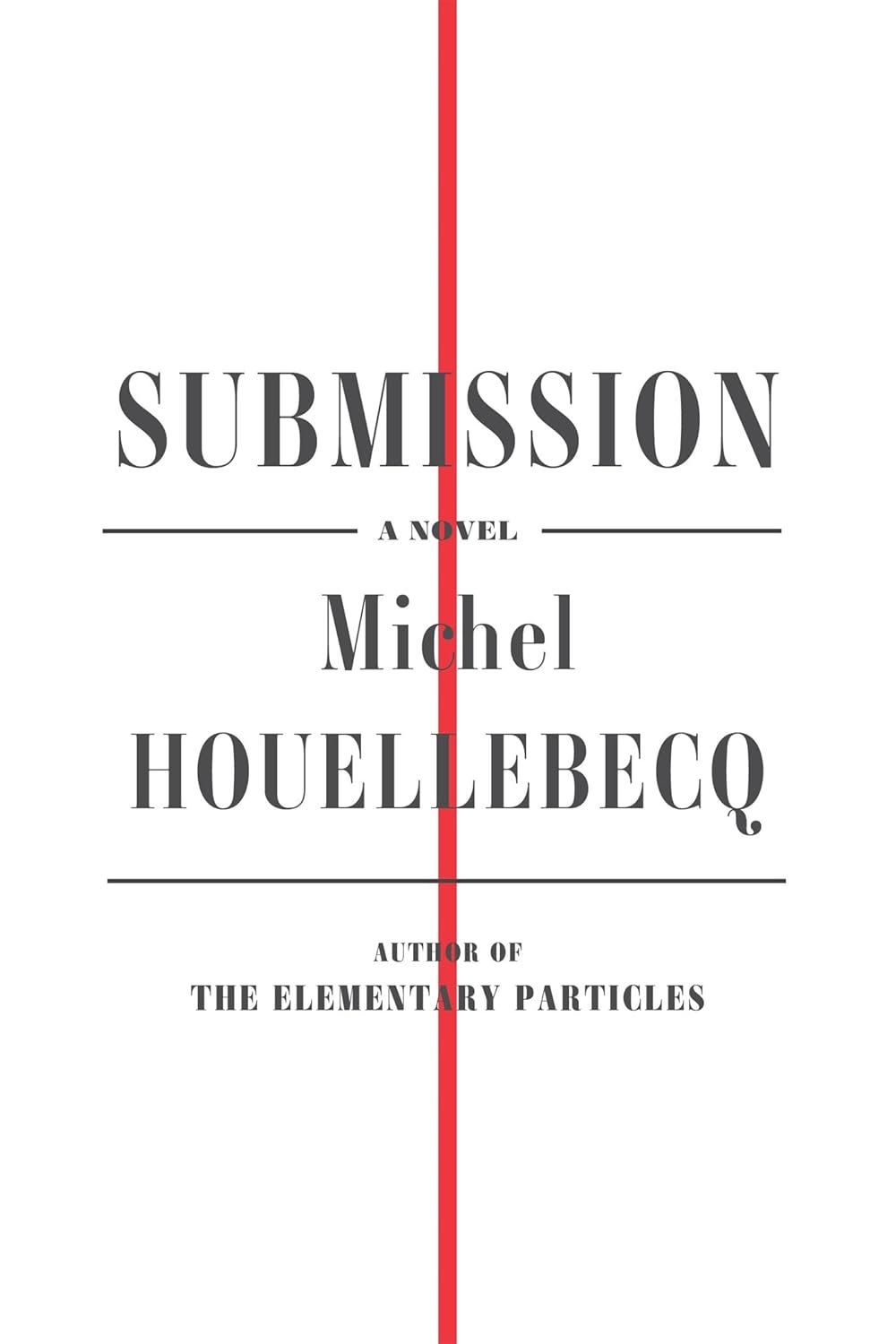
Submission. By Michel Houellebecq (2015)
“From outside, nothing about the university looked different, except for the gilded star and crescent above the doors, next to the big inscription ‘Université Sorbonne Nouvelle-Paris III.’ Inside the administrative buildings, the transformations were more visible. In the waiting room, one was welcomed by a photograph of pilgrims making their way around the Kaaba, and the offices were decorated with posters bearing hand-lettered verses from the Koran. The secretaries had changed, I didn’t recognize any of them, and they all wore veils.”
p. 147
The Read
Submission is written across five sections that chart the hypothetical takeover of France by an Islamist movement through the ballot box. Over the course of the novel, the national Muslim Brotherhood party wins elections and then reaches political compromises with rival parties. In the book, similar trends are taking place throughout Europe.
The satirical story is written through the eyes of Francois, whose last name we never learn. A professor at Sorbonne University, which later goes through its own metamorphosis, becoming the Islamic Sorbonne University. While political in nature, the book is as much about modern society, femininity, and masculinity as it is about political movements.
Eventually, France submits to the new religious force, as do most institutions and individuals. The many vignettes of conversation, including Francois’ self-interrogation, rival the plot in defining the core of Submission.
Between the Lines
When Submission was published in 2015, it was unique and a revelation. It went into the taboo and came out the other side, scathing in its satire of all political sides. In that, Houellebecq was a literary oddity in pushing through thinking where others dared not go. But ultimately, the novel is set in the year 2022, which has come and gone.
In that sense, Muslims are even more victorious in Western capitals. But Islamism is less so. Today, a syncretic social-left Islamic culturalism is much more prevalent. In that sense, Houellebecq could have pushed his own imagination further on what would truly happen in the political square.
Ultimately, where Submission may have longer staying power is its sharp probing of the modern man, and the nature of (failed) masculinity, in the public square and behind closed doors.
Long or Short?
Go long on Submission but be prepared to read with an open mind for the political tone and a prepared frame for the more vivid descriptions.