
[This essay is the long read, which could easily be a short book. It is intended to be digested in several sittings and also returned to, during and after the ‘New Gulf War.’ You can go directly to the Epilogue, current as of March 11, 2026.]
Contents
II. An Abridged History of Iran and American Power
A city where kings are but lovers crowned,
A land from the dust of which friendship springs-
Who has laid waste that enchanted ground?
What has befallen the city of kings?
- Hafez (True Love)
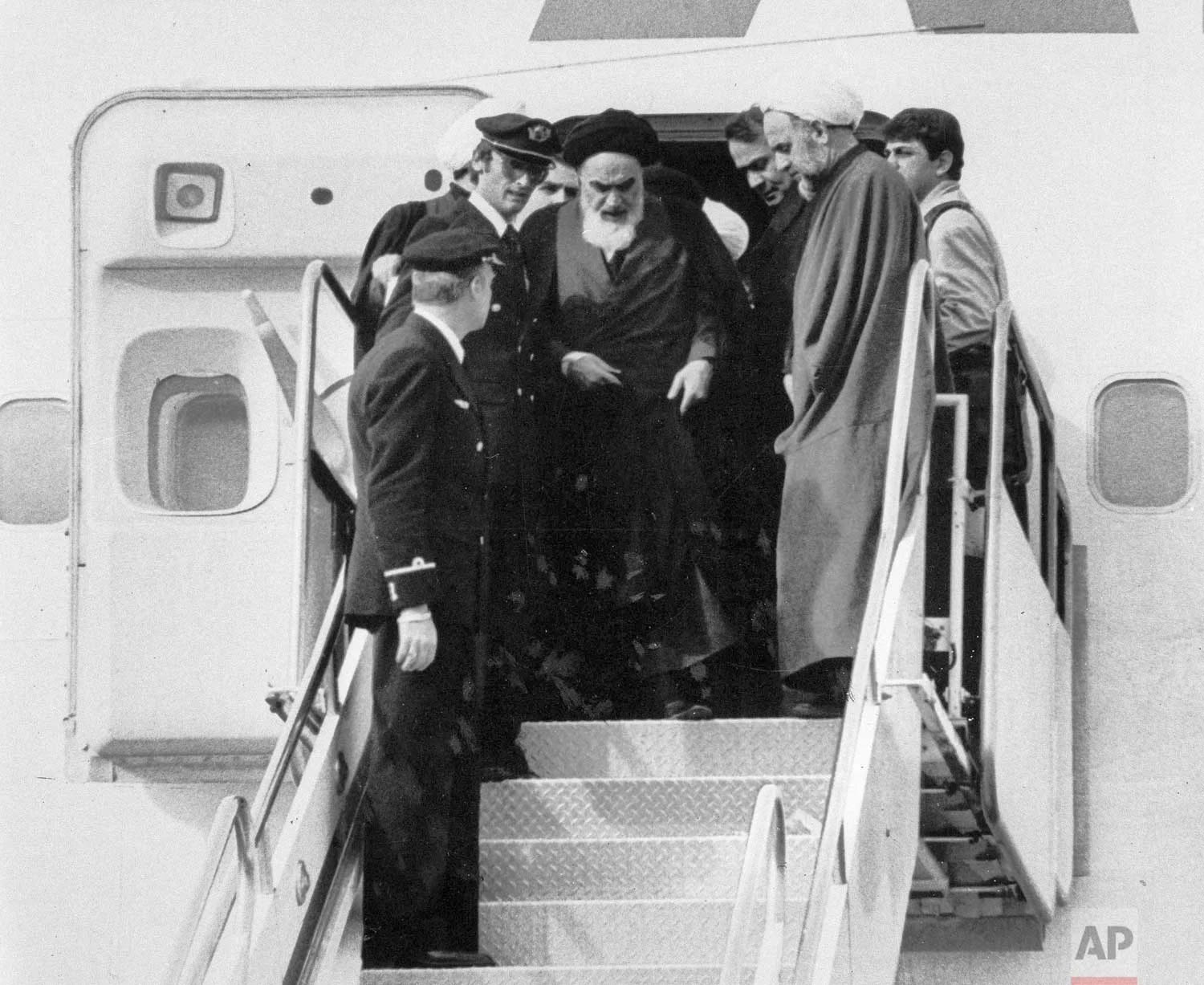
On February 1, 1979, stepping onto the tarmac at Mehrabad Airport, Ayatollah Ruhollah Khomeini received a rapturous welcome. While accompanied by a few aides, many of his closest supporters had remained in Iran, organizing on the ground while also spending time in and out of prison. One of them was 38-year-old Ali Khamenei, who had been tortured repeatedly by the notorious intelligence services of the Shah, SAVAK. Khamenei, who was ready to stand by his mentor Khomeini, also had a young family of his own. His second son, Mojtaba, just ten years old at the time, would now be reared in the Islamic education of a new Iran.
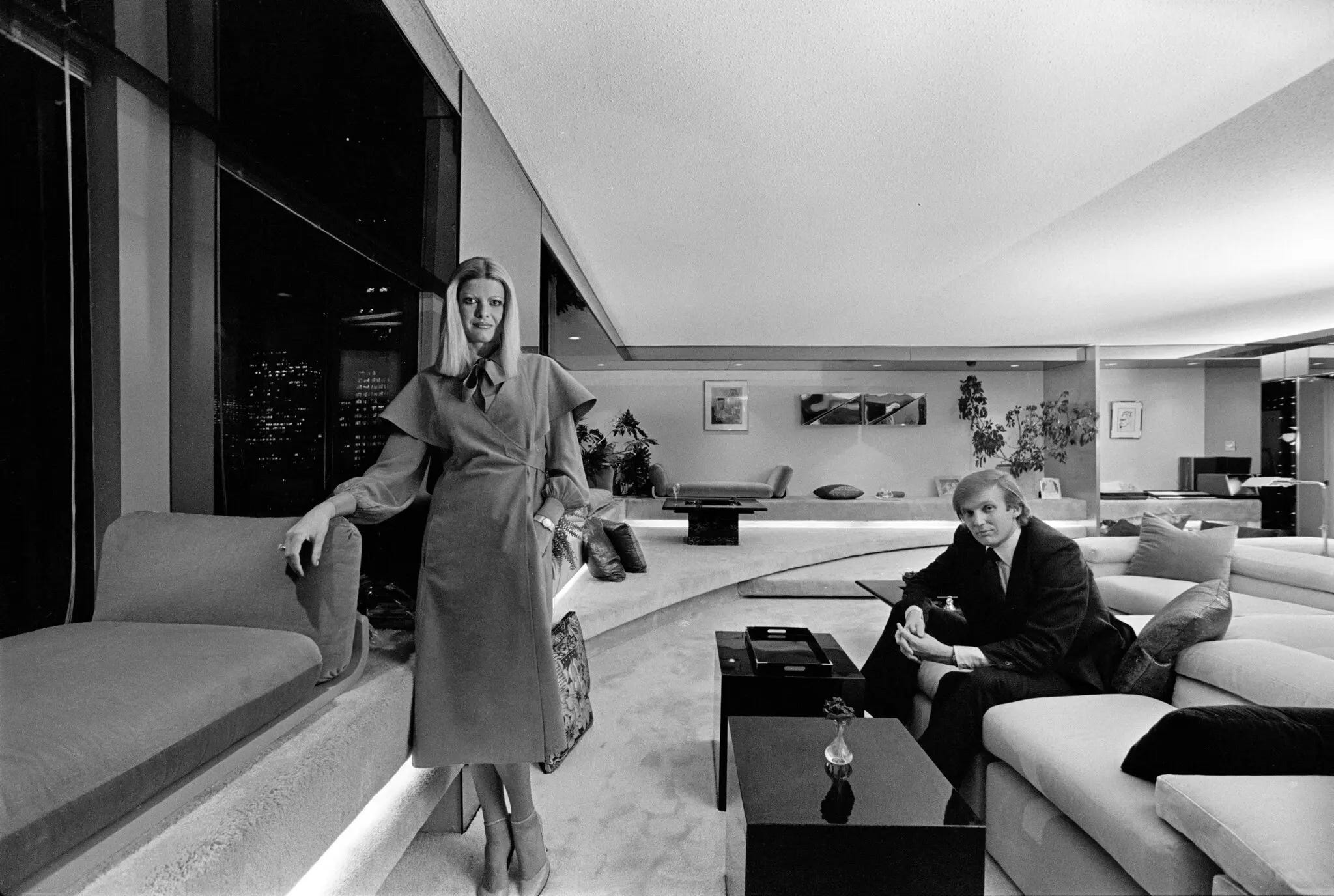
Half a world away, one of New York’s most celebrated Art Deco buildings was revealed on the front page of the January 26th edition of The New York Times to be acquired by a previously unheralded 32-year-old real developer, Donald Trump. It would become the site of a building that would reshape the 5th Avenue skyline: Trump Tower.
Meanwhile, in Jerusalem, 30-year-old Benjamin Netanyahu was organizing the first Conference on International Terrorism for the Jonathan Institute, named after his late brother, who had died in the Israeli operation at Entebbe a few years earlier. It would be a landmark event, attended by future officials in the Reagan administration. He would deliver these opening remarks to the dignitaries present later that year:
“This Conference was called to serve as the beginning of a new process — the process of rallying the democracies of the world to a struggle against terrorism and the dangers it represents.”
Badr Al Busaidi was just 18 years old, studying with private tutors in London in preparation for his education at Oxford University. The son of an advisor to the past two sultans of Oman, a vast career lay before him at a pivotal time for his country.
-----
On a late Thursday evening on February 26, 2026, Al Busaidi, now Oman’s foreign minister, realized that the talks in Geneva that his country had facilitated between Iran and the United States were faltering. While Iran’s foreign minister would be reporting back to Tehran and the Supreme Leader, Ayatollah Ali Khamenei, about next steps, Al Busaidi knew that the mercurial American president may not wait that long to make his next move.
After he raced to Washington to meet with Vice President JD Vance, Al Busaidi also stopped to give an interview on American television. If there were any way to change the mind of President Donald Trump, it would be through the screen. As he sat across the studio from Margaret Brennan, the host of Face the Nation, Al Busaidi made his case.
“The single most important achievement, I believe, is the agreement that Iran will never, ever have nuclear material that will create a bomb.”
While the interview would air on Sunday, it was released online on Friday evening. As the clip circulated, the American military had well-positioned assets in the region to strike Tehran. The stakes were high. What Al Busaidi did not know, and few did, was that the die had already been cast.
Earlier on Monday, President Trump had received a call from the Israeli prime minister. Benjamin Netanyahu knew how to deliver a win for the president. He informed him that Israel knew the whereabouts of Ayatollah Khamenei in Tehran on Saturday morning, and that he could be reached. While the president would give the Geneva negotiations later in the week one last try, the decision, in some sense, had already been made.
At 1:15 am EST Saturday, February 28, 2026, the U.S. and Israel launched an aerial assault on Iran. For over half of Iranians, the only leader of their lifetime was soon to be dead. Americans woke up to find a late-night post on President Trump’s Truth Social announcing that the United States had gone to war.
-----
What started on a Saturday morning with an aerial bombardment quickly evolved into a fully-fledged war across a dozen countries, and the tipping point reached a near irreversible situation. With no clear ‘offramp’ and the United States loath to end the conflict on a weaker footing, especially as it takes the long view towards Russia and China on the horizon, what will be the outcome?
In many ways, the war between Iran and the United States has been an inevitable one since the time of the Islamic Revolution, which pitted the two countries against one another. The last Shah, as he is known, came to power ahead of the famous Tehran conference in 1943, which cemented the importance of Iran and the Persian Gulf – and energy security – in the coming world order.
But war was avoidable – and was avoided until now. The governing systems in both countries, across political currents, have at many points in recent history sat around the table; then, almost by pattern, have always diverged just when a grand bargain appeared close.
For the first time, direct war was the result. All wars – and especially those in the Middle East – are shaped by the law of unintended consequences. Complexity is a feature. For the United States, there is no full resolution possible, only a renewed balance of interests.
Throughout its history, in both modern and ancient times, Iran’s sovereignty has ebbed and flowed. Many great empires, orders, and countries have swept across the vast lands that the orientalists called Persia. But inevitably they were either subsumed by its sands, overcome by hidden forces, or kept at bay – even when they for a time conquered the territory.
Today, Iran is not a great power, unlike Russia and China. It is, however, firmly in the path of American power. The war launched in 2026 is bringing to the surface undercurrents of Iran’s civilizational path, but it is also revealing the limits of American power for all to see.
Iran in Context Over Time
The Iran we know today is the product of the crisscrossing of civilizations across its land over time.
Threads throughout History
Mark Twain wrote in his novel The Gilded Age:
“History never repeats itself, but the kaleidoscopic combinations of the pictured present often seem to be constructed of the broken fragments of antique legends.”
Today, the abbreviated version of the second part of that sentence is “but it rhymes.” In reading the history of Iran and then its relationship with American power, Twain’s phrasing of the present as constructed from broken fragments of antique legends seems apropos.
The Islamic regime has held sway over a frozen dynamic of Shiism and Islamism.
Since 1979, through its efforts at regional hegemony and domination of Shiite communities and discourse, Iran has prevented the natural evolution of both ideologies and sub-national structures. This has led to frozen dynamics, particularly in Lebanon, Iraq, Bahrain, and Yemen. It has also placed global Shiism in a dynamic whereby clerical authority has been conflated with the state.
Nationalism and Islamic revivalism are recurring themes in Iran’s modernity.
The grandfather of Islamic revivalism was Jamal al-Din Al Afghani, originally from Iran. Within Iran, and particularly in the 1920s and again in the 1950s and 1960s, debates around nationalism, sovereignty, Islam, and progressive thought were firmly entrenched, apart from the revolution presided over by Khomeini. They continue to form an ideological alternative – even if dormant and uncultivated – beyond monarchism and theocracy.
The borders of Iran are more fluid than we may anticipate
From antiquity to the present, Iran’s borders were defined and redefined. Iran has mostly been a Turko-Persian construct, with various minority groups in the peripheries. This has led to territorial contestation and the loss of parts of what was once in the “Lands of Iran.” A weaker central government would bring to the fore some of history’s forces.
American power in the Middle East has always been tied to Tehran.
America’s leadership in the new world order began in Tehran in 1943. It faced off against Soviet influence in Iran before doing so on the Korean Peninsula. And it countermanded the British Empire there, before the Suez Crisis. One of the CIA’s first coups took place in 1953. Iran was the central pillar in the Great Game for oil under the Shah. And following the Islamic Revolution, America has arguably had more sustained military attention related to Iran than any other country in the world.
There is a divergence in the interests of the United States and Israel in Iran.
While America has a targeted set of clear interests in Iran, its foreign policy priorities diverge from Israel’s. Throughout modern history, the American preference has been for a strong, contiguous Iran that supports American priorities and its allies in the Middle East. Iran, itself, has always viewed America as its greatest enemy and Israel as a secondary concern. For Israel, a weak Iran that does not ally with other geopolitical rivals, such as Turkey, is more paramount.
The threads of the past shape today’s geopolitical decision-making in ways that are still overlooked.
Contemporary Iran
Iran has a population of over 90 million, with over half under 35 years of age. It is bordered by Pakistan, Afghanistan, and Turkmenistan in the East, Azerbaijan and Armenia to the North, and Iraq and Turkey to the West. The Caspian Sea has an effective maritime arrangement between Iran, Russia, Azerbaijan, and Kazakhstan. In the Persian Gulf, sometimes called the Arabian Gulf, and the Gulf of Oman, it has a maritime border with all six countries of the Gulf Cooperation Council (GCC): the United Arab Emirates, Kuwait, Qatar, Oman, Saudi Arabia, and Bahrain. The Strait of Hormuz, which sits on its coastline, is where one-fifth of the world’s petroleum flows on tankers.
The neighborly complexity has historically made Iran a crossroads of empires on the march and a subject of ethnic influence from the East and West. The idea of Iran as Persian is itself a misnomer. While a majority of Iran is ethnically Persian (slightly upwards of 50%), the remainder consists of other groups with rough estimates: Azerbaijani (20%), Kurds (10%), Baloch (5%), Lurs (5%), Mazanderani/Gilak (5%), Arabs (3%), and Turkmen (2%).
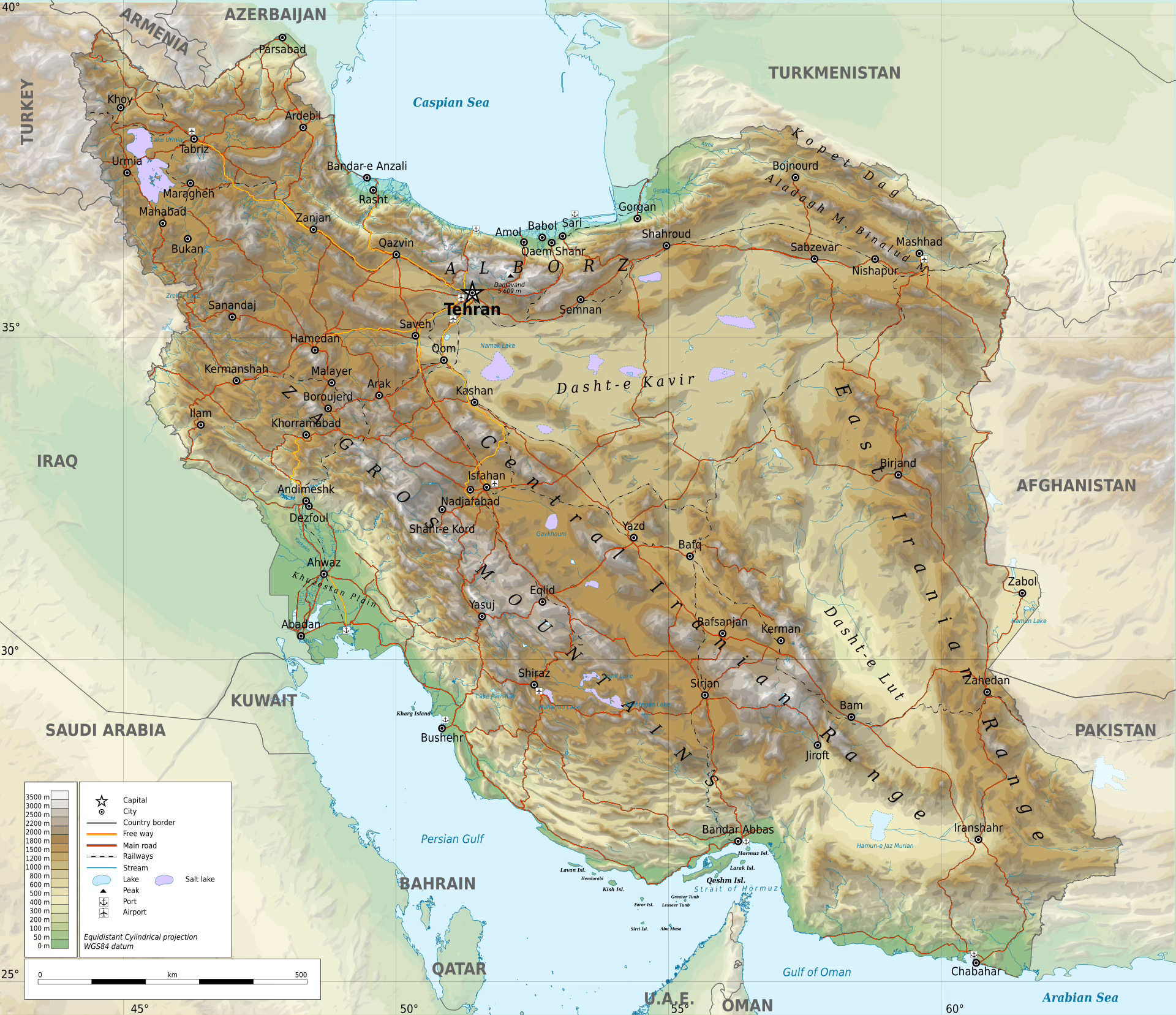
There are 31 provinces in Iran. One third of these share land borders with other countries. These are the provinces also where significant minorities live. However, it should be made clear that the Twelver Shiite faith is mostly a unifying constant. At least nominally, 90 percent of the country is Twelver Shiite. There are small minorities of Sunnis, Christians, Jews, Zoroastrians, Baha’is, and Ismailis.
Iran is an urban country, with 70% of its population living in cities. Tehran is by far the largest city, with a population of nearly 10 million people. Mashhad, the next most populous city at around 3 to 4 million people, is predominantly Persian. The largest minority-led city is Tabriz (Azerbaijani) in the North, followed by Ahvaz (Arab) in the South. Kermanshah is the largest Kurdish city, and Zahedan is the largest Baloch city.
The ethnic stratification of Iran parallels in part the economic divides of the country, with the peri-urban peripheries where minorities often reside being somewhat excluded by the centralized commerce in urban centers.
It is hard to assess Iran’s overall economy because it has been under progressively crippling sanctions for nearly 5 decades. It remains an oil- and gas-rich country, accounting for 10 to 15% of global reserves, which in turn account for upwards of 20% of its GDP and 80% of government revenue. One of the main features of its economy today is the dominance of government-related entities, whether private companies or foundations.
While Iran’s population remains highly educated, there has been a recent rise in high school dropouts. As with most middle-income countries in the region, it has had a rising drug addiction problem. High levels of continuing youth unemployment and various crises – most recently the water shortage – contribute to sporadic economic protests that can quickly become political.
Of course, a significant number of Iranians now live in the diaspora. They number nearly 5 million, which seems large but represents only 5% of the total Iranian population. They are predominantly in the West and the Gulf, with the United States estimated to have a diaspora of 750,000, up to half of whom reside in California. Many of them are religious minorities, adding to the complexity of how closely they represent their relatives back home.
This is what we see about Iran on the surface, but of course, it is much more.
An Abridged History of Iran and American Power
Before America, there was Iran.
Ancient Iran (550 BCE-650 AD)
The response to authoritarian Islamism in Iran deepens the lore of a primordial Iran, one that predates not just the Islamic Revolution, but Islam itself. Like many nationalist currents in the Middle East that emerged in the 20th century, it is an exercise in rebuilding the nation along its ancient dynamic, imagined or real.
For many Iranians seeking change today, there is a desire to harness the spirit of pre-7th-century Iran to build the future. Would the United Kingdom define itself only by the English language before its French influence and discard Christianity, null and void, as it came through external interlopers? Iran is best understood not as the genesis of a civilization that existed 2,500 years ago but as the confluence of an evolving civilization across 2,500 years.
Iran’s geography has been a civilizational entrepot since 3000 BC. Many cities are mentioned in the Old Testament, such as Susa, which itself was founded in 4200 BC. Yet it is around the 5th and 6th centuries that Persia and the Persians emerged in earnest in the civilizational consciousness. This was when the Achaemenids rose to power, led at their height by Darius I and Cyrus the Great. It is when the ancient monotheistic faith of Zoroastrianism became a dominant religion.
Cyrus the Great is mentioned repeatedly in the Old Testament and is credited with enabling the Jews to build the Second Temple when he subdued Jerusalem. Due to the vast reach of the Achaemenid Empire, Persian culture spread across the Middle East and Central Asia. This footprint became the common ground for inter-civilizational routes. It laid the groundwork for global transportation and trade infrastructure, including the Silk Road.
This was the ground that Alexander the Great traversed as he ventured East. He conquered Persia and much more in just a decade. Alexander the Great’s reign was short-lived and was followed by the rule of the Seleucids for several centuries, a dynasty descended from a Macedonian general of his.
The Parthian and then the Sasanian empires ruled for nearly a millennium, marking a long era of Persian rule. That continuum established true Zoroastrian continuity, with strong reverberations to this day. Nowruz is practiced across dozens of countries by upwards of 300 million people, a practice that began its formal promulgation then.
The Sasanian court restored a strong contiguous Persian empire. They also created a unified structure for the Zoroastrian faith. The royal court adopted the Pahlavi script for writing Persian (Farsi). And the Sasanians introduced the term Iran, calling their empire Eranshahr.
Islamic Iran (651-1500)
Like Alexander the Great a thousand years earlier, the successors to Prophet Mohammed took the lands of Iran and the Sassanian empire in just over a decade. Today, this period is referred to as the Arab conquest and the beginning of Islamic Iran. After the death of the last of Ali ibn Talib (or Imam Ali), the last of what are termed the right-guided caliphs, Islam had a schism into Shiites and Sunnis.
The biggest difference between Shiite and Sunni Islam is the hereditary papacy (or imamate), which traces back to Imam Ali, the Prophet’s cousin, and his wife, Fatima, the Prophet’s daughter. His sons were Hussein and Hassan, who were subsequently killed. That origin story of martyrdom embeds a revolutionary eschatology within the faith.
In Twelver Shiism, this went a step further. Like most branches of Shiism (except for Nizari Ismailism), the imamate was extinguished (temporally) when there was no successor. In Twelver Shiism, this occurred with the twelfth imam in the late 9th century. It was said that the twelfth Imam, an infant, went into occultation. Today, he is known as the Mahdi, essentially the savior. In this ideology, he will return with the Prophet Jesus on the Day of Judgment.
While the Ismailis and Twelvers believe in hereditary succession, the Zaydis believe that an imam needs only to be chosen from the descendants of the Prophet’s family. In Yemen, a Zaidi Imamate had ruled for a thousand years but was upended in the 1970s by communist forces. The Zaidis are relevant again today due to the rise of the Houthis. Regardless, the vast majority of Shiite Muslims today are Twelvers.
Following the deaths of the first caliphs of Islam, the caliphate passed to the Umayyads in Damascus, then to the Abbasids, who ruled from Baghdad. The Abbasids leveraged the Shiite ideology but governed under Sunni Islam. Najaf, where Imam Ali was buried, and Kerbela, where his son Husayn was killed, are in modern-day Iraq. To this day, they are the holiest cities in Shiite Islam. This adjacency, in part, led to various elements of Shiite influence entering Iran around that time.
The first notable examples of this, emanating from the political sphere, were the Zaidi Alid dynasties in northern Iran in the 9th and 10th centuries. Then in the mid-10th century, the Buyids rose, effectively establishing the first Twelver Shiite dynasty. While an Abbasid caliph persisted, the Abbasid capital, Baghdad, was soon controlled by the Buyids.
While the Buyids were Twelver Shiites, they did not impose it as the state religion, where subjects were still predominantly Sunni. Even amongst the Shiites, there was a notable Ismaili population, given the rival Ismaili Fatimid empire that controlled Mecca at the time; one of its chief leaders, Hassan bin Sabbah, would soon set up in the fortress of Alamut (after the fall of the Buyids).
The Buyids ruled for a century as a Persian dynasty that came to power at the end of what is known as the Iranian Intermezzo. They were the first to blend Persian identity and Twelver Shiism, which would become a precursor for future rule in Iran. Yet they would also be the last non-Turkic rulers of Iran until Reza Shah came to power in the 20th century, nearly 1000 years later.
The Iranian Intermezzo was a renaissance for Persian culture and local traditions. During Arab rule, Persian was rarely used in official settings. The language itself transitioned from Pahlavi (a derivative of Aramaic) script to Arabic script. Yet during this period, lasting about two centuries, Persian literary influence returned with ferocity.
There were many dynasties that, at times concurrently and sequentially, assumed influence – the Tahirids, Saffarids, Samanids, and Ziyarids – and, finally, the Buyids. The Samanids patronized significant poets, including Rudaki and Ferdowsi, the latter who wrote the Shahnameh, or Book of Kings.
The city of Bukhara under the Samanids would become a center of global knowledge, giving rise to Ibn Sina (Avicenna), the father of modern medicine. Meanwhile, the Ziyarids also hosted Al-Biruni, one of the greatest polymaths of modern civilization. The Buyids also brought the pageantry of Persian traditions back into the ruler’s court, an influence that would shape many subsequent Turkic rulers of Iran, as Persian became the language of rulers across Central and South Asia for centuries.
The Turkic Ghaznavid dynasty arose from the Samanid slave guards. When they came from the East, they carried the banner of Sunni Islam and mobilized against the Twelver Buyids and other Ismaili factions. The Seljuq empire arose from the Oghuz Turkic tribes. The combined rise of the Seljuqs and Ghaznavids ended Twelver Shiite and Iranian rule for half a millennium until the Safavids. Still, the language of subsequent Turkic dynasties remained Persian.
It was the Mongol invasion in subsequent centuries that left an indelible mark of a loss of local sovereignty. Genghis Khan took Iran from the Seljuq successor state, the Khwarazmian Empire, in just two years in the 1220s. The Mongols would not complete their domination of Iran until their defeat in 1256 of the Nizari Ismaili proto-state’s fortress in Alamut.
For half a century, Iran was in a state of wilderness. Islam was precariously surviving. Local languages were under threat. And the public administration and institutions were not functioning. Slowly, the Mongols consolidated their rule into an Ilkhanate that encompassed modern-day Iran, Azerbaijan, and Turkey (and some neighboring states). Around this time, modern Turkey began to emerge as Turkic tribes settled en masse amid the chaos of the Mongol invasion of Anatolia, which eventually gave rise to the Ottomans.
The Ilkhanate was governed under Sunni Islam, although one ruler converted to Twelver Shiism for a decade. In the mid-14th century, the Ilkhanate disintegrated and was subsumed by Tamerlane and the Timurid Empire. The Timurids began to give way to various Turkmen confederations and had a loose grip by the end of the 15th century.
The overall Turkic period through the Mongols and Timurids did give rise to some of the greatest Persian philosophy and writings. This included Rumi, who made his way to Seljuk Anatolia; Omar Khayyam, in Seljuk Iran; and Hafez, who was in Shiraz during the Mongol Ilkhanate and subsequent periods. The Timurids turned Herat, in modern-day Afghanistan, into a global center for Persian culture.
During this period, religiously, there was a massive rise in Sufi orders. Sufism was neither Shiite nor Sunni in nature, although it held great veneration for Imam Ali. Throughout the Muslim world, starting in the 11th century, there was a fall in central authority, with no clear caliphate after the Abbasids, and the Mongol invasion, which decimated indigenous Muslim rule. The perceived separation of political and religious authority created a vacuum, particularly in Sunni Islam.
Three significant Sufi orders emerged in that era: the Qadiriyya, the Naqshbandi, and the Suhrawardiyya. Sufism allowed for a syncretic acceptance of the original Shiite leadership within Sunni settings. There was also a unique tie to the land of Iran. The Qadiriyya was founded in Baghdad by a Persian from Gilan. The Naqshbandi by a Persian (or Persian speaker) from Bukhara. The Suhrawardiyya by a Persian from Zanjan.
One of the most dramatic Sufi figures in history before its institutionalization was Ibn Al Hallaj, who the Abbasids famously executed for saying he was “the truth,” or God. He was from Shiraz. It was only natural, given these intersections, that after the Ilkhanate and estrangement from the ruling order, local Sufi orders in Iran multiplied. Significant ones also later emerged in Iran, such as the Kubrawiya and Nimatullahi.
The Shiite Empire (1501-1905)
In the late 15th century, Iran was once again in chaos, and Sufi orders were becoming local organizing mechanisms. The Safavid order began in the 13th century and later developed a positive relationship with the Timurids. It was under Shaykh Junaid in the 1450s that the movement took an overt Twelver Shiite character. The Safavids became increasingly politicized and militarized. A militant group of Shiite Turkmen tribesmen, the Qizilbash, mostly from the Caucasus, supported his initial military campaigns.
A Turkoman Sunni federation ruled Iran in the late 15th century, known as the Aq Qoyunlu. After the Battle of Shahrur, Ismail I, a grandson of Shaykh Junaid, proclaimed himself Shah of Iran in 1501 at the age of 14 and, over the next decade, conquered much of the traditional territory of past Iranian empires. Unlike previous empires, he made Twelver Shiism the compulsory religion for all subjects.
Around the same time, the Ottoman Empire came into its own in 1453, when it conquered Constantinople and defeated the Byzantines. While Ismail I established the Safavid Empire, as the first Shiite empire of substance since the Fatimids, Sultan Selim I defeated the Mamluks in Egypt and took control of the holy city of Mecca. It created the basis for a Turko-Persian rivalry.
Following an initial confrontation in 1514, the Ottoman-Safavid wars continued for over one hundred years, until a broad peace was concluded in 1639; aside from border skirmishes and flare-ups, this peace holds, in some ways, to this day. This, however, was not just a rivalry of empires, but also of Sunni and Shiite leadership for the Muslim world.
The Safavids invested heavily in leveraging Twelver Shiism to build their legitimacy as rulers. They also established a form of religious supremacy that led to the mass discrimination and exclusion of the Sunni population, at least in the initial years. And despite the Safavids starting as a Sufi order, they largely circumscribed previously flourishing Sufi orders.
While both the Safavid order and the Qizilbash espoused Twelver Shiism, neither was well-versed in its underlying ideology, nor did either have a body of formal scholars (or Ulema) in place. There was also no clerical establishment, either to justify the divine nature of Safavid rule or to impose a standard religion on the population. Major centers of Twelver scholarship were in Iraq and Lebanon, and ulema relocated to Iran. They, in turn, trained religious representatives who were sent to centers throughout the country.
The most eminent Twelver scholar to date was the 13th-century Iraqi scholar Muhaqqiq al-Hilli. He addressed the issue of clerical authority in the absence of an Imam, a vital question for Twelver Shiite Islam. His interpretation delegated all matters of interpretation from the Hidden Imam to clerical representatives, but not political authority or leadership.
Muhaqqiq al-Karaki, a Lebanese cleric brought to Iran by the Safavids, innovated on this concept, elevating the role of the jurist (mujtahid or faqih) in proximity to the state. From the outset, the need was political: The Safavids’ first battle with the Ottomans was lost, and they needed stronger internal legitimacy amid potential factionalization.
While al-Karaki did not go far in creating the rule of the jurist, or vilayet-e-faqih as Ayatollah Khomeini would support many centuries later, he did expand on the delegation of divine authority to clerics as a sub-stratum of governance. He went so far as to say clerics needed to play this role. His book, Jami’al Maqasid, remains heavily influential for Iranian clerics today. But it was not without its critics, particularly in Twelver circles outside Iran, not subject to the Safavid political order.
Over the next century, Twelver Shiism consolidated in Iran, and the ascendency of clerics served as a bulwark against the Qizilbash functionaries, creating a new pillar of support for the Safavid Empire. In neighboring Iraq, successive waves of tribes also began converting to Twelver Shiism in greater numbers. The net effect of the Safavid Empire on one hand and the Ottoman Empire on the other was the gradual disappearance of heterodox Sunni and Shiite communities in the core of the Muslim world.
Ismailism disappeared as an organized force. Zaydism was largely confined to Yemen, where an Imamate ruled it until 1962. Most of all, looser Sufi orders, more localized traditions, and amorphous offshoots dissipated in successive centuries.
The Safavids’ main impact beyond the religious dimension was the reestablishment of a Persian ethos and the revival of Iran’s formal political identity from Sassanian times.
There was a concurrent literary and philosophical renaissance, known as the philosophical period, in the early 17thcentury in the Safavid Empire, which brought to the fore epochal thinkers such as Mulla Sadr. However, its main impact was felt in art and architecture, a legacy that remains throughout Iran today.
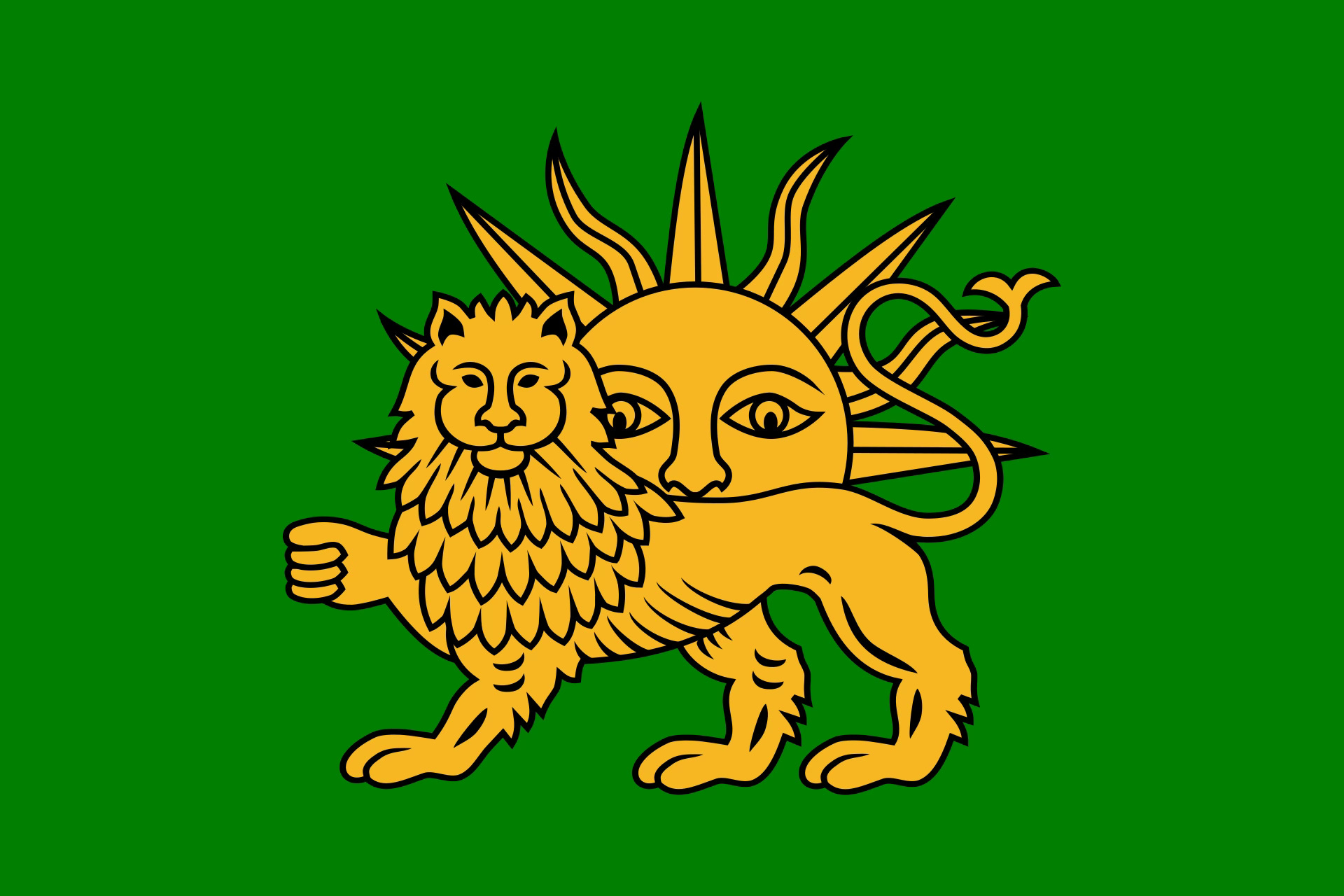
As the Safavids collapsed in the 1700s, giving way to the middling dynasties of the Afsharids and Zands, the religious evolution of Twelver Shiism unfolded in nearby Iraq. Without Safavid backing, spiritual centers in Mashhad, Isfahan, and Qom declined, and clerical authority reverted to Najaf and Kerbala in Iraq, which was under Ottoman control.
The Safavids elevated jurists and formalized the khums (or “fifth”) system of religious taxation. In Iraq, scholarly debates fostered a hierarchy of authority among clerics that emphasized the role of finding a single jurist as a point of reference. This would formalize clerics’ standing in providing interpretation (ijtihad) for modern times. It would become the basis for a cleric being a reference or marja.
The Qajar dynasty emerged from the Turkic Qajar tribe, which had been part of the Safavids’ initial fighting force, the Qizilbash. They had maintained their cohesion in lands around Astrabad, which is today, Gorgan, in the north of the country. They defeated the Zand dynasty in a final battle in 1794 to reconsolidate Iran, and the first Qajar monarch, Agha Mohammed Khan, began calling himself the Shah of Shahs, or King of Kings.
The 1800s were marked by the declining relevance of the Persian polity amid global empires, with the British advancing along the border in Afghanistan and the Russians from the North; the Qajars were fighting two empires simultaneously. It was a century of curtailment. The result was the loss of Western Afghanistan to the British and the Caucasus to the Russians. They would never be recovered.
Domestically, the decentralized governance led the clerical establishment to accumulate even more power. Equipped with the empowered role that they had received under the Safavids, but without the need to be incorporated into the state, they became an independent power base.
Clerics and related institutions began amassing tremendous wealth in Iraq and Iran, in the face of a weakened state structure, but also due to increased global trade links that generated transnational religious networks. The khums system generated revenue, and more Shiite communities sought to follow noted clerics.
In the 19th century, the idea of a single reference point for each follower, or marja, gave rise to the notion of marja taqlid, or one’s obligation to emulate a marja who would be above all others. The first of these ‘grand marjas’ was Murtadha Al Ansari, who was based in Najaf (although he had been born in Dezful, Iran). His universal recognition accrued when most other senior clerics of his rank had passed. But like many of the Iraqi-based clerics, his role was religious, not political, and he was away from his native country, based in the Sunni Ottoman Empire.
The successor to Ansari as the marja taqlid (later a title of grand ayatollah) was Mohammed Shirazi, still based in Ottoman Iraq. In Qajar Iran, the clerical establishment and merchant class began to develop closer links in the late 1800s, particularly due to the vast landholdings held by clerics as waqfs (religious endowments). When the Qajar Shah granted the British Empire (through a business representative) a tobacco concession, it inflamed the merchant class, prompting significant protests.
It was around this time that a nascent movement of Islamic revivalism and modernism was advocated by leading thinkers, notably Jamal al-Din al-Afghani. Al Afghani often portrayed himself as a Sunni Muslim from Afghanistan, but he was in fact born to a Shiite family in Asadabad, Iran. Afghani criticized the tobacco concession on an intellectual anti-imperialist ground.
Soon, protests emerged opposing foreign encroachment. Afghani wrote several letters to Shirazi, urging him to use his authority to intervene, which he did (whether incidentally or as a result is not known). After multiple entreaties from Shirazi to the Qajar Shah to withdraw the concession, which he did not, Shirazi issued a fatwa. The concession was subsequently dropped. It was the first real exercise of jurist influence over the matters of the Iranian state (at that time, the Qajar empire), in a spirit of Iranian nationalism.
But it would certainly not be the last.
Modern Iran (1906-1952)
Entering the modern era, Iran, like many successor states to great empires, sought to become a republic after the American Revolution and the rise of European nationalism. In 1906, it had a revolution of its own that established a constitutional monarchy. The short-lived constitutional revolution followed the assassination of Naser al-Din Shah, the Qajar monarch who had issued the Tobacco concession. It was also around this time that certain clerics began to be called Ayatollah with regularity (simply meaning “sign from God”). The leading jurists at the time, notably Ayatollah Akhund Khorasani, spoke out in favor of democratic rule in the absence of the Mahdi or the hidden imam.
As Khorasani led the clerical establishment to support democratic change against the ruling Qajar Shahs, a later cleric, Sheikh Fazlullah Nouri, who came to oppose the constitutional change, was executed by a constitutional court. He is today recognized by the clerical establishment as a hero for opposing Western-style democracy. Yesterday’s clerical establishment was just as similarly divided as it is today. There is no one unified position.
Similar to the ongoing tug-of-war in the Ottoman Empire, the old political guard remained strong. While the Qajar Shah had approved the new constitution, he died shortly after signing it. In 1907, the British and the Russians signed a treaty that effectively divided Iran into their respective spheres of influence. The Russians ultimately helped defeat constitutionalists, and by 1911, the short-lived constitutional monarchy ended. By that time, multiple concessions, including an oil concession to the British, had been signed and would shape the country’s development for the next century.
Following World War I, the Qajar dynasty was weak, but the Soviet Revolution in Russia also fostered a new dynamic. With new Bolshevik threats, a British General, Edmond Ironside, supported Reza Khan, who commanded a small garrison and led a coup to seize power, which he did in 1921. By 1925, he had installed himself as the new Shah and had placed the Pahlavi dynasty under the 1906 constitution, which, while not fully active, remained the law of the land until the 1979 Islamic Revolution. It was not just the end of the Qajar Dynasty but also the end of the age of empires in Iran.
Reza Khan was not ethnically Persian; his mother was from the Caucasus, and his father was an ethnic Mazanderani. Initially, he was the war minister, and politician Zia ol Din Tabatabaee served as the prime minister, but that was short-lived. He desired to firmly establish an imperial autocracy. In the mold of Ataturk in nearby Turkey, he also undertook modernization efforts, building a railroad and founding the University of Tehran.
The Shah was a secular ruler and was seen as an anti-clerical figure. He supported many reforms at odds with them. He passed laws requiring Western clothing and the mixing of genders. While he passed laws removing clerical authority in family courts and other matters, he did not affect their landholdings.
As such, clerics within Iran adopted a quietest position, similar to their counterparts in Najaf. With the founding of a seminary in Qom by Abdolkarim Haeri Yazdi in 1922, Iran began to develop its own clerical base. This would become critical to its future leadership of the global Shiite community. Ayatollah Yazdi was followed to Qom by a young student, Ruhollah Khomeini.
During World War II, following some losses against the Germans, the Shah’s son, Mohammed Reza Shah, was being positioned to depose his father. There were accusations made against the Shah of sympathies with the Germans, as he had exchanged several letters with Hitler in the 1930s. The USSR and Britain leveraged the younger Shah’s reign to restore Iran’s role as an oil supplier for the allies, and the two countries, in effect, jointly ruled Iran during World War II. The famous Tehran Conference, held in 1943, brought together President Franklin Delano Roosevelt, Soviet leader Joseph Stalin, and UK Prime Minister Winston Churchill for an iconic photo.
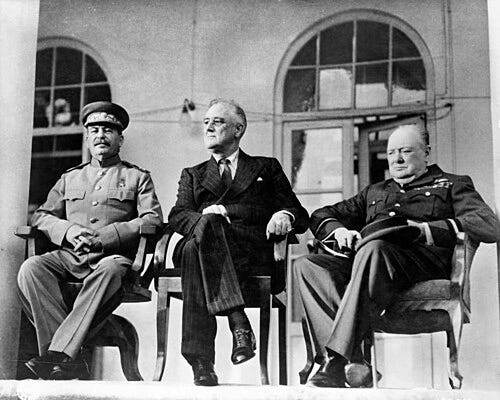
From that moment, it was clear that Iran played a central role in the emerging world order, due to its geographic position and oil reserves. The Anglo-Iranian Oil Company, which managed the supplies, eventually became British Petroleum (BP). After World War II, the U.S. and the USSR clashed in what became known as the Iran Crisis in 1946. The struggle for control of Tehran culminated in the Western alliance’s capture of the city, and Soviet troops withdrew to the north.
The younger Shah sought to continue reforms, but also initially provided a political opening to opponents of the monarchy. He allowed for the return of diverse political parties and empowered the parliament’s role in governing. He also relaxed some of the religious restrictions around dress, madrassas, and celebrations that his father had imposed. The entreaty to the clerics coincided with the death of Ayatollah Yazdi. In 1945, his successor, Hossein Borujerdi, was invited to Qom from his hometown of Borujerd and began developing the city into a truly global Shiite center.
In parallel, the specter of religious violence appeared. In the 1940s, a shadowy group, Fadaiyan-e Islam, had led a spate of assassinations, including that of famed secular intellectual, Ahmad Kasravi. Yet, this seemed to be an outlier at the time.
The initial threat to the Shah’s rule did not come from the religious establishment. It came from leftist nationalist forces. The first parliamentary elections were contested by various parties, including Western-allied parties such as the National Will Party, led by Tabatabaee, who had returned from exile after falling out with the younger Shah’s father.
By the end of the decade, a nationalist fervor was in the air. The key figure was Mohammad Mosaddegh. Mosaddegh was a minister in the short-lived government in the early 1920s following the coup that removed the Qajar dynasty. He opposed the return of monarchy in 1925, and left politics at the time, returning to contest elections in the renewed opening led by the Shah’s son in the 1940s.
Mosaddegh’s father had served as a Vizier to a Qajar Shah, and his mother was a Qajar princess. But he had a unique East-West orientation; he had received a PhD in political science from the University of Switzerland in 1913, an unprecedented achievement for an Iranian at the time. He became both popular and politically adept, and in 1951, he was appointed Prime Minister and leader of the National Front movement.
He quickly sought to nationalize the previous British oil concession, which was due to expire in 1993. He also paired that with other social policies, including land reform. After the controversial 1952 parliamentary elections and a confrontation with the Shah around the appointment of ministers, Mosaddegh was not named Prime Minister. As the new government sought to reverse the nationalization of oil, massive street protests broke out.
At that time, many clerics served in parliament. While not a unified bloc, it spoke to the current of combining religious and political legitimacy. Ayatollah Abol Ghasem Kashani called for the Shah-imposed government to fall, and a frightened Shah, who had already faced assassination attempts, called on Mosaddegh to resume the prime ministership, which he did.
Kashani became the Speaker of the Parliament. It was always a tenuous alliance among nationalists, clerics, and leftists, all in one coalition; this also included the communist Tudeh Party, which had no seats but tremendous mobilizing power. As echoed in subsequent decades, the partnership also fell apart in 1953. By the time a coup emerged to remove Mosaddegh from power, he had already lost the support of Ayatollah Kashani.
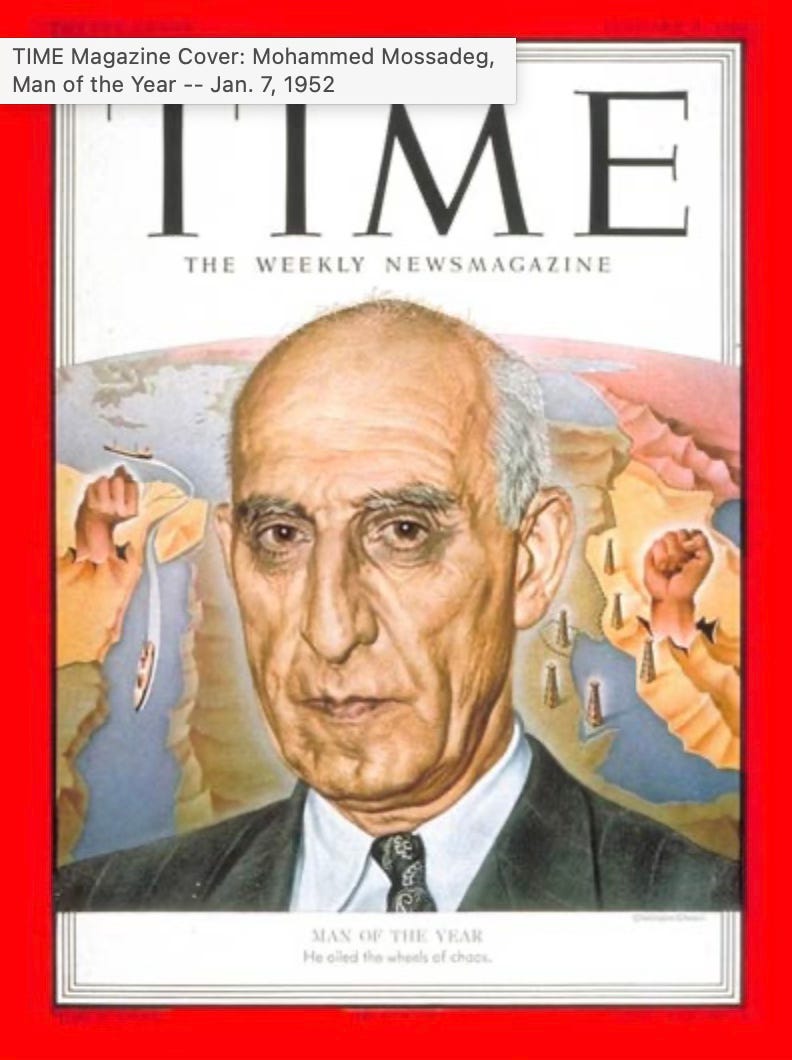
The success of the famed coup, led by the CIA, was in part due to the American operatives, led by Kermit Roosevelt, as covered in All the Shah’s Men. But it was also a result of growing political opposition to the consolidation of Mosaddegh’s power, who was governing under emergency law, and of the rising economic despair caused by the suspension of British concessions, which affected core industries. Within 10 days of the protests starting in August 1953, the Shah fled to Rome and returned with the backing of CIA officers and General Fazlollah Zahedi, who would become his new Prime Minister.
The aftermath of the 1953 events was telling. The clerical establishment, led by Ayatollah Borujerdi in Qom, remained at their quietest. The political space was fully closed, with Iran soon to become a uniparty state under an authoritarian monarchy. But most of all, it ushered in an American era in Iran.
The American Era (1954-1978)
Iran quickly became central to the new American security architecture in the Cold War. Upon Israel’s formation, it was shunned by much of the Muslim world and particularly Arab countries. As most of those countries, particularly Syria and Egypt, which were allied with the Soviet Union, the United States found common cause with three countries to effectively shape the region as junior partners: Turkey, Israel, and Iran.
This was the dynamic that held until 1979. Turkey recognized Israel first in 1949, and was followed by Iran in 1950 (although somewhat hidden from view). They formed part of a peripheral alliance and what was formalized as the ‘phantom pact’ between Israel, Turkey, and Iran. The intelligence services of all three countries collaborated closely, and they co-developed weapons, including missile technology. In 1986, it was revealed that Moshe Dayan led efforts to develop nuclear-capable missiles in the mid-1970s with Iran, and they had developed an advanced prototype.
From the 1950s to the 1970s, the Middle East, like most post-colonial settings, was increasingly dominated by leftist ideology, which had an anti-imperial bent, in contrast to authoritarian states. Initially, anti-imperialism was not so much opposed to the United States as to the European powers, and America had taken an anti-imperial stance since President Woodrow Wilson’s Fourteen Points were announced in 1918, which supported self-determination partly to weaken European powers.
For example, in 1956, when Nasser nationalized the Suez Canal, the UK, France, and Israel attacked and seized the Canal back. Israel also seized the same lands it would later take in 1967, the Gaza Strip and Sinai. President Dwight Eisenhower forced the countries to retreat and return the territories they seized.
In Iran, the United States, following the 1953 coup, reduced the share of the British concession, with proceeds going back to the Iranians and to the United States. In that sense, it was dislodging an imperial vestige from the past. But it was also laying the groundwork for a new imperial footprint.
By the 1960s and 1970s, political anti-imperialism had shifted course, with the United States as the primary target and the Soviet Union, its chief rival, as the primary backer. Many of the militant and revolutionary forces at the time were leftist, Marxist, or communist. Palestinian groups such as the PFLP, DFLP, and even the PLO were decisively so.
This strengthened the hand of authoritarian governments, including the Shah, to crack down on any opposition linked to militancy, communism, or both. The communist-leaning Tudeh Party was banned, even though it was arguably the most popular. In the early 1960s, with the political space completely dominated by his leadership, the Shah sought to exercise his full authority and enacted the White Revolution in 1963. As with most developments throughout Iran’s history, the action precipitated a counterreaction.
The White Revolution was a series of top-down-driven reforms led by the Shah to modernize the country, accelerating what his father had initiated in the 1920s. It further cemented the country’s secular nature and sought to remove the vestiges of formal Islamic oversight over family and personal matters. A key component was women’s universal suffrage. The Shah also protected the rights of religious minorities, but also instrumentalized them when convenient, particularly Iranian Jews and Baha’is.
The clerical establishment’s response addressed the social issues, but not the political ones. In 1961, the leading marja Borujerdi had died. His successor was Mohammad Kazem Shariatmadari, another quietest cleric. A charismatic figure broke ranks and, in line with the tradition that had come to be expected, led a clerical revolt against reforms. His name was none other than Ruhollah Khomeini.
In a June 1963 sermon marking Ashura, the most prominent religious holiday, Khomeini berated the Shah and his government, accusing them not only of being anti-Islamic but serving Western and Israeli interests. It was a precursor to what would become familiar by the 1970s, but at the time, it was a dramatic, new tone. Khomeini was promptly arrested.
Major riots broke out, and hundreds were killed by the Shah’s forces in the streets in what became known as the 15 Khordad uprising. Khomeini was released but put under surveillance and essentially under house arrest. This did not stop his vocal opposition.
When the Iranian parliament passed a status-of-forces agreement in 1964 authorizing the presence of the U.S. military in the country, he condemned it. Khomeini was subsequently sent into exile, first to Turkey and then to Najaf, in the tradition of my clerics before him. In 1965, the Shah’s Prime Minister was assassinated by a young man linked to religious radicalism. It was another precursor to the political violence on the horizon.
According to recently released government documents, in 1964, the U.S. established contacts with Khomeini’s circle. It would become a recurring theme for the next 50 years. Hidden communication and sometimes coordination, even during times of outward confrontation between Iranian Islamists and the American government.
The evolution of the clerical establishment in Iran was also the culmination of 50 years in which their base of power was slowly eroded, first in the public sphere through their authority in religious matters, and then in the private sphere through their private holdings. The land reforms initiated by the Shah during the White Revolution would have significantly eroded their khums payments and reduced their independence. Khomeini sensed not only the threat but also the potential of the new base of clerical power in Iran itself, as the Qom seminary grew.
Ayatollah Khomeini’s star was rising at a time when the narrative was also shifting in the wider Middle East. Secular nationalists and monarchists ruled most of the Muslim world, and yet were mired in authoritarianism, poverty, and domination by foreign powers. In 1967, Israel seized the remaining Palestinian territories, including East Jerusalem, the Golan Heights, and the Sinai Peninsula, and this time held onto them after the war.
In 1969, the Organization of Islamic States was formed in response to an arson attack at one of the holiest sites in Islam, the Dome of the Rock in Jerusalem. A year later, Egyptian President Gamal Abdel Nasser was dead, giving rise to Anwar Sadat, who would subsequently make peace with Israel. Revolutionary leftism had created space for failed authoritarians, who were now giving way to Western-allied autocrats. There was a space opening for something new.
The idea of Islamist leadership was anomalous to the Muslim world at that time. Figures such as Jamal al-Din Afghani and his intellectual successors, Mahmoud Abdu and Rashid Rida, had probed it theoretically. By the 1950s and 1960s, political Islam was most aggressively being advocated by the (Sunni) Muslim Brotherhood, a movement founded in 1928 in Egypt by Hassan Al Banna. Other scholars, like Pakistan’s Abu Ala Mawdudi, had promoted a form of Islamic government. Yet, Islam had not taken root as a governing force.
One outlier, of course, was the Kingdom of Saudi Arabia. While Muslim in character and allied with the Wahhabi movement, it was still predominantly monarchial. Even Saudi Arabia’s outward nature of Sunni Islamism became much more pronounced only following the Islamic Revolution in Iran. It had previously sponsored many Salafi-oriented groups that were quietest in nature.
Following the execution of the Muslim Brotherhood leader Sayyid Qutub in 1966 in Egypt, political Islamism as it existed was also without leadership. Many Muslim Brotherhood movements adopted a quietest approach as they retrenched. Thus, it was no surprise that Israel and even the United States supported some Islamists as a bulwark against communist-linked opponents in the 1970s. Islamism, including the precursor to Hamas, was supported in the Palestinian territories by Israel to oppose the influence of the PLO. At that time, the idea that Islamist militancy could emerge and take over a state and govern it was simply not plausible (or in the political consciousness).
In the 1970s, two armed groups became active in Iran: The Organization of Iranian People’s Fedai Guerrillas and the Mujahedin-e Khalq (MEK). The Fedai were a leftist-Marxist group, and they undertook an attack in Gilan province in 1971, killing several soldiers. The ensuing decade saw intermittent, often escalating attacks by various groups.
The MEK was founded initially in 1965 by students from Tehran University. They were a leftist organization, but they also blended an Islamic revolutionary ethos with some Jesuit-based liberation theology. In 1957, the Shah had created a new intelligence directorate, SAVAK. It became increasingly involved in state repression and anti-guerrilla activities.
In the late 1960s and early 1970s, the Shah began to crack down even harder on political dissent. As the Freedom (or Liberation) Movement of Iran, which had taken the mantle of political representation of a more open Iran, was stifled by SAVAK, guerrilla movements took the lead. In the mid-1970s, the Fedai and MEK were successful in the assassination of various officials and several US advisors to the Iranian military.
SAVAK led a crackdown against these groups. The founders of the MEK were arrested, including Mohammad Hanifnejad, and were executed. The MEK then split in the 1970s into an Islamist and a Marxist faction, with the Marxists taking the lead. They bombed the headquarters of several Western companies, such as Pan-American Airlines and Shell Oil Company. Eventually, the Marxist wing became a separate organization, Peymar, and the original MEK fell under the leadership of Masoud Rajavi, who would participate actively in the revolution.
The Islamist-Leftist nexus played out most prominently in intellectual circles. The primary focal point and thinker of this phenomenon was Ali Shariati. In many ways, Shariati was a distinct but co-thought leader with Khomeini in the eventual revolution. Like many intellectuals of the time, he spent formative years in Paris in the 1960s, a hub of anti-colonial and revolutionary activity. He returned to Iran in 1964 and was arrested.
After his release the following year, he began speaking at Hosseiniyeh Ershad, an Islamic cultural center, which increased his popularity. The government shut down the center in 1972, arrested him again, and sent him into exile in 1977, where he died a month later. Shariati was buried in Damascus, close to the Sayyida Zainab mausoleum, a prominent Shiite shrine. Lebanese cleric Musa Sadr led the funeral prayers. The death of Shariati only further popularized his writings, which provided the intellectual underpinning for many leftist and student supporters of the revolution. But his death also left a void that was filled by the growing power of clerical Islamists.
By the mid-1970s, most leading intellectuals had been jailed, guerrilla movements curtailed, and all but one political party banned. The SAVAK was seemingly all-powerful. The Shah also had a largesse at his disposal due to burgeoning oil revenues following the OPEC oil crisis. In the Persian Gulf, the British had withdrawn in 1971 from the Trucial States, leaving Iran as the strongman, further strengthening the Shah’s hand and feeling of invincibility.
The Shah expanded his footprint in the region, seizing two islands claimed by the nascent United Arab Emirates. He grew his overall military presence, supporting Oman’s defeat of the Dhofar rebellion. He also exercised his power in Iraq by backing the Kurds; this relationship continued after the Shah as well. Overall, the Shah was ascendant, but he was also increasingly close to Western interests. Iran grew in the 1970s to become Israel’s primary oil supplier.
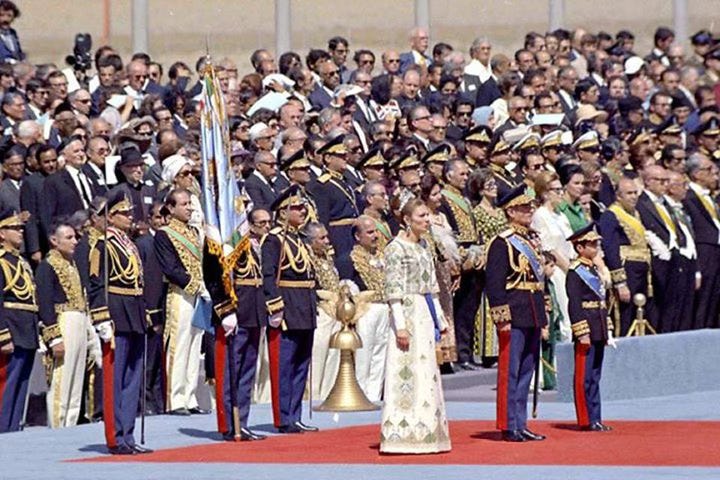
The focus within Iran was increasingly on state repression and excess. While the video of the Shah’s famous 1971 celebration of 2500 years of Iranian history has made the rounds, it was the more mundane corruption of government officials and the growing inequality that would serve as the flashpoint.
A new politics began to emerge in opposition. During the Safavid and Qajar dynasties, the clerical establishment had a formal but clear role. Even in the Safavid empire, while they were closely intertwined with the state and held significant oversight roles in society, politics, and governance remained the domain of kings. In modern Iran, the clerical establishment vacillated between quietism and political activism.
The revolutionary ethos of Shiism against injustice, however, made quietism a challenge to sustain. In Iraq, without a Shiite majority, this might make more sense. But in Iran, how could the religious establishment not intervene? The debate within Iran’s clerical establishment coalesced around three groups.
The first group was led by the quietest clerics, notably the leading marja in Iran, Mohammad Kazem Shariatmadari. He aligned with Abu al-Qasim al-Khoei, the most senior Shiite religious leader globally in the 1970s and 1980s, who lived in Iraq. This group constituted the majority of clerics. They continued to advocate traditional roles in the social and cultural realms.
The second group supported direct political engagement. That in and of itself was not new, given the history of clerical engagement in the 1906 constitutional revolution, for example. This group included a range of figures within Iran but, notably, outside it.
In Lebanon, a mid-level cleric, Musa Sadr, took on a leading political role and, by the 1970s, emerged as the most well-known Shiite leader in the Middle East. The Shiites in Lebanon were politically disenfranchised compared to the Sunni and Christian communities. Sadr mobilized and founded the Amal Movement, a political group that eventually formed an armed wing. Amal’s initial antagonist was not Israel but the PLO, which was present in South Lebanon.
In 1978, Sadr disappeared, apparently at the hands of Gaddafi, in 1978 during a trip to Libya. It was shortly after he had sharply turned against the PLO after Israel’s Litani Operation in the South of Lebanon. Another Lebanese cleric was Muhammad Hussein Fadlallah, who would become the most senior cleric in Lebanon in the 1980s and 1990s. He would become a key spiritual guide to members of Hezbollah, although not an operating leader himself. Both Fadlallah and Sadr drew inspiration from Iraq’s activist cleric, Mohammed Baqir Sadr.
Iraq’s Sadr could be said to be the true intellectual architect of Shiite religious politicization in the modern era. He wrote treatises on an Islamic alternative to both Marxism and capitalism. In the 1950s, the Islamic Dawa Party was formed, and Sadr became its intellectual guide. As Saddam Hussein took control of Iraq, the Party was suppressed, and Sadr was eventually arrested and executed in 1980.
In Bahrain, a Shiite-majority country ruled by a Sunni monarchy after independence in 1971, several clerics were elected to parliament. Notable among them was Isa Qassim. The Shah had claimed Bahrain as an Iranian territory, but in a plebiscite, the population supported independence. In 1975, the parliament was suspended, laying the groundwork for autocratic rule that set the country on a trajectory of constant turmoil, especially following the Islamic Revolution in Iran.
These two intellectual currents of Shiite religious thought were soon to be outflanked by a third, led by Ayatollah Khomeini. Around 1970, Khomeini delivered a set of lectures on an unorthodox concept: Vilayet-e-Faqih, or the rule of the jurist. The case was for an Islamic theocracy, in which a cleric would rule the country. Most of his predecessors who supported politicization either supported political liberalization or the separation of clerical authority from clerical rule.
Khomeini’s concept was also a broadside against the quietest clerics. In that way, while not publicly critical, the more senior clerics marginalized him. After the Islamic Revolution, many figures would go on to support the vilayet-e-faqih, such as Isa Qasim, but before 1979, this support was scarce. Thus, Khomeini was waging a two-pronged propaganda campaign in the 1970s: one that targeted first the religious seminary community and later one that targeted ordinary Iranians.
His network spread this message through a new technology at the time: cassette tapes. Akin to a manual form of social media, Khomeini went increasingly viral through these recordings as the 1970s progressed. Through his base in Najaf, he had a close group of aides and family members who helped establish an organizational structure. This allowed him to reach out to a pan-Shiite community, particularly in the Arab world, as well as to political figures and the media.
Back in Iran, a group of clerics began organizing on his behalf, particularly by spreading his cassette tapes. His status as a lower cleric, along with that of his acolytes, gave them an advantage with the student generation. His rise also empowered his followers within the clerical community, enabling them to skip the decades it would normally take to reach prominence and position.
Many figures orbited his circle, but it is worth noting several, both within and outside Iran, who would go on to play important roles in the revolution and the new structure. Within Iran, this included two who died quickly after the revolution. The first was Morteza Motahari, who helped mobilize clerics and spread ideological messages. He led the Council for the Revolution in 1979 but was killed by the mysterious Furqan Group, which was outwardly anti-clerical but Islamist. The second was Mohammed Behshti, who created a clerical political network, led the initial Islamic Republican Party, but was killed in 1981by the MEK. Many thought Beheshti might succeed Khomeini.
Three others were instrumental before and after the revolution. Hossein-Ali Montazeri was a senior cleric and former student of Khomeini’s; he was imprisoned for a long period in the 1970s. He would be named as his successor in the 1980s but was outmanoeuvred from that role by two individuals just before Khomeini’s death. Montazeri would go on to become a persistent critic of the Islamic regime in Iran in subsequent years.
Akbar Hashemi Rafsanjani was a key bridge between the business community and the clerical establishment. He was also in and out of prison. After the revolution, he served as the Speaker of Parliament and eventually became president.
Ali Khamenei, a former student and preacher who spread Khomeini’s messages, was the other. He was the elected president of revolutionary Iran in 1981 after the impeachment of one president and the assassination of another. Khomeini himself was almost assassinated just before assuming the presidency by Furqan.
Khamenei and Rafsanjani were close and ran many of the internal networks mobilizing support ahead of the revolution. When Khomeini eventually returned to Iran, he had spent nearly 15 years on the outside, leaving him reliant on his confidantes. Khamenei was also an ideological bridge to Islamic militancy. He was known for earlier translating Sayyid Qutub’s works into Persian.
Ayatollah Khomeini’s group became increasingly engaged with the wider political revolutionary movements in the Middle East. His close circle in Najaf, who served as emissaries, included his sons and personal aides, but otherwise very few who would go on to have significant roles after the revolution.
Mohammad Montazeri, the son of Hossein Montazeri, was a key organizer linking Khomeini with Palestinian and regional militant movements. Ali Akbar Mohtashami-Pur was active in building links with militant Palestinian groups in the region. He would later become ambassador to Syria after the revolution, building on these ties to help form Hezbollah.
There is the sense that both Montazeri and Mohtashami viewed Musa Sadr negatively. Sadr himself had maintained close links with the Shah, even sending him a letter with advice on countering Khomeini. In some ways, Musa Sadr viewed himself as a future leader of the Shiites in the region, especially given his joint Arab and Persian lineage. He was also against the concept of vilayet-e-faqih.
At the time of Sadr’s disappearance in Libya, Montazeri was becoming closer to Gaddafi. In later years, another supporter of the revolution who trained with Palestinian guerrilla fighters was revealed to be in Libya during Sadr’s disappearance. His name was Jalal al-Din Farsi. After Sadr’s death, one of his close advisors, Mostafa Chamran, would join the revolutionary movement. Chamran was one of many Iranians living in America. He would go on to become the Islamic Revolutionary government’s first defense minister.
In that brief period, the nascent indigenous leadership and organization of Arab Shiites vanished and would soon come to be dominated by the weight of the Islamic revolution in Iran.
Revolution and Aftermath (1979-1989)
Mostafa Khomeini, the Ayatollah’s eldest son, died in unclear circumstances in Najaf in late October 1977. The death was seized upon and attributed to agents of the Shah. The death and subsequent 40-day mourning period became a rallying cry, leading to many protests.
In January 1978, at the end of the month of Muharram, which is marked by religious commemoration of the death of Imam Hussein by the Shiite community, a controversial article appeared in the national newspaper entitled. The article directly attacked Ayatollah Khomeini. It immediately sparked protests and became a rallying cry across the country, underscoring the depth of his popularity.
The cycle of mourning became an instrument for further mobilization of protests. At each protest march, students and others would be killed at the hands of the Shah. Then, when memorial services would be held 40 days later, it would be another rallying cry for protests. The cycle engulfed the country in a state of permanent protest and even turned the quietest clerics, like Shariatmadari, against the Shah. In the summer, the Shah responded by offering the opposition a plan for political liberalization and adopting a more Islamic-leaning set of policies.
Then, on August 19, 1978, a fire in the Rex Cinema in the southwestern city of Abadan killed hundreds of moviegoers. An arsonist had barricaded the doors, and rumors abounded that it was done at the direction of security forces. The subsequent protests prompted a harder reaction from the government, which declared martial law.
This then led to Black Friday, when security forces killed dozens of civilians in the heart of Tehran. The protest movement was also supported by many Iranians living abroad, including in the United States. At that time, Iran sent the highest number of university students to America, accounting for up to 50,000 just before the revolution.
By November, in a State Department cable, the US Ambassador said that the Shah “was doomed” and that a deal should be done with Khomeini. The Carter administration ultimately encouraged the Shah to depart Iran after reviewing all other options, including military support. Khomeini had overstayed his welcome in an increasingly restive Iraq, and Saddam Hussein expelled him from Najaf. The Ayatollah found refuge in a suburb of Paris, Neauphle-le-Château. There, he held court with innumerable journalists and recorded cassette tapes featuring diatribes against the Shah, which were then smuggled back into Tehran.
It was in Paris that he assembled a close-knit team to help him assume power on his return. In later years, it would be apparent that the technocratic nationalists that he brought into his circle were never truly considered by him to be true members of the revolution. One of Iran’s perennial opposition statesmen, Mehdi Bazargan, visited Khomeini that November. While instrumental in the 1953 Mosaddegh government and the oil nationalization efforts, Bazargan had remained in Iran following the coup and the eventual political crackdown. A co-founder of the Liberation Movement of Iran, he maintained relations with the army.
Ebrahim Yazdi became Ayatollah’s closest political aide in Paris and handled strategy and foreign contacts. He had been active in the Liberation Movement of Iran. Sadegh Ghotbzadeh was another Iranian with an American education who became closer to Khomeini in Paris. He served as a translator when Khomeini returned to Tehran and would later become the foreign minister. Abolhassan Banisadr, another nationalist leader, joined Khomeini in France and would later become the first elected president of the revolutionary government.
On January 15, a US political envoy met with Ebrahim Yazdi in France to discuss the transition. America still had a significant commercial presence in Iran and several military representatives, and it wanted to safeguard these with the new leadership. The Shah left Iran the next day, never to return. He would first find his way to Egypt. On February 1, 1979, Ayatollah Khomeini returned to Iran triumphantly and vividly, as he greeted supporters at the airport. He appointed Mehdi Bazargan as interim Prime Minister to lead a transition on February 4, 1979.
The United States began to reorient immediately. In June 1979, it issued the Persian Gulf Security Framework, which marked America’s modern engagement with the Gulf States and the establishment of military bases of significant reach in the region. It was bolstered by what became known as “The Carter Doctrine”, which read:
“An attempt by any outside force to gain control of the Persian Gulf region will be regarded as an assault on the vital interests of the United States. It will be repelled by the use of any means necessary, including military force.”
This statement was formalized in one of President Carter’s final directives on January 15, 1981, before leaving office.
The Carter administration’s policies led to the creation of a rapid deployment task force that ultimately became what is known today as Central Command, or CENTCOM, in 1983. CENTCOM has served as the primary coordinating body for almost every major U.S. military deployment over the past 40 years. CENTCOM, while responding to the threat of Iran, intentionally excluded Syria, Lebanon, and Israel at the outset. This changed in 2004. Israel was then moved from the European Command to CENTCOM in 2021. In that sense, the centrality of U.S. efforts in the region was first closely tied to energy security.
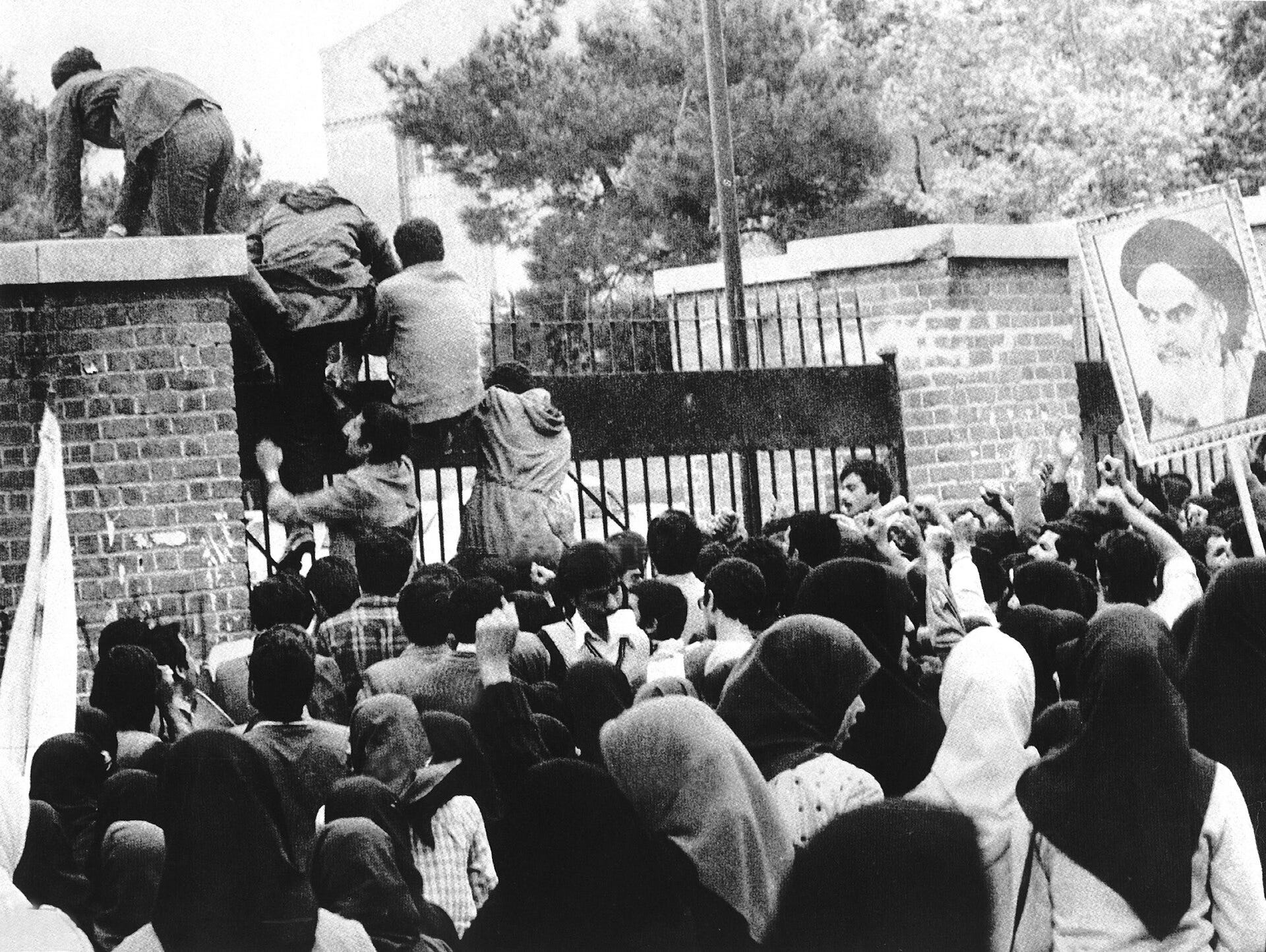
The attitude of revolutionaries towards American and Western diplomats was one of open hostility. There had already been a partial takeover of some embassies in the Spring. In November 1979, a new group of students took over the US Embassy after the Shah was let into the United States for medical treatment. When Ayatollah Khomeini blessed the takeover after the fact, it led to the resignation of Bazargan and the entire interim cabinet.
It marked the beginning of the end of the fragile coalition of nationalist, leftist, and Islamic revolutionaries. In that sense, the hostage crisis was as much an internal tool as an external display. Yet it was seared into the memory of all Americans. Already reeling from high gas prices, there was open antagonism towards Middle Eastern countries.
The hostage crisis became a 444-day saga that in many ways propelled Ronald Reagan to the presidency in 1981, especially after the failure of Operation Eagle Claw. This rescue plan instead resulted in the deaths of U.S. service members in a helicopter crash. The hostage crisis ended on January 20, 1981, at the onset of Reagan’s presidency.
In New York at the time, a young Donald Trump was the talk of the town as he was building what was purported to be the city’s most luxurious tower, Trump Tower. During his first-ever extended national interview with Rona Barrett, the real estate developer was asked if he would ever run for president. He spoke at length about the Iranian hostage crisis:
“In that conversation, he spoke to America’s “potential” and the idea that the country could go on to regain what it once was, so that it “gets the respect of other countries.” He also provided a probing reading of the Iranian hostage crisis and the Iran-Iraq war, shedding light on the peace-through-strength inclination that would echo later in his political career.” – Trump 2.5: A Primer
At the outset of his second term, many decades later, Donald Trump announced the release of Israeli hostages from Gaza. And at the beginning of 2026, after a perilous operation in Venezuela to arrest and extract the president, he remarked, “You know you didn’t have a Jimmy Carter crashing helicopters all over the place.”
After the resignation of the interim government, a massive crackdown began. It was around this time that figures like Sadegh Khalkhali, an early disciple of Khomeini’s who had dabbled in Islamist militancy prior to the revolution, were ascendant. Khalkhali had been appointed as the leader of the Islamic Revolutionary Courts. Initially, he was carrying out summary executions of former members of the Shah’s regime, such as the former head of SAVAK. But soon he turned his sights to newer opponents.
In particular, the Kurds in Iran faced his scrutiny. While the Islamic Revolution pacified much of the country, the Democratic Party of Iranian Kurdistan (KDPI) launched an independence rebellion in March 1979. Eventually, the new government in Tehran would suppress the rebellion, and many of the forces would escape to Iraqi Kurdistan.
Khalkhali presided over the execution of Jewish businessman Habib Elghanian, which sent shockwaves through the Iranian Jewish community. A meeting held by several rabbis with Khomeini in the days after afforded essentially protection moving forward, at least for non-Zionist Jews. For many other minorities, the regime established a period of suffocation that continues to this day. This was especially true for non-Twelver Muslim minorities, Sufi orders, and the Bahai community.
In 1980, Abolhassan Banisadr became the first elected president of the Islamic Republic of Iran, with Khomeini’s blessing. It was clear, however, that there were parallel institutions to the civilian government, driven by new Islamic bodies. This period, from 1981 to 1982, was marked by civil strife in Iran. It led to the arrest and execution of thousands, the purge of an even greater number, and the departure of many Iranians from the country who believe in a democratic but not Islamically authoritarian Iran. It was not a one-way battle.
On June 28, 1981, a bomb exploded at the headquarters of the Islamic Republican Party. Some of the most prominent members of the revolution were killed, including Mohammed Montazeri and Ayatollah Beheshti. The assassination attempt on Ali Khamenei came that same month, but he survived.
Banisadr was subsequently impeached by one of the many entities of the new structure and went into hiding. Later that summer, President Mohammad-Ali Rajai, who had succeeded Banisadr, was assassinated. Most of these attacks were believed to have been led by the MEK following the Guardian Council’s exclusion of Masoud Rajavi from politics. In October 1981, Ali Khamenei was elected president.
The Iranian hostage crisis spurred another creation for the U.S., which was called the Intelligence Support Activity (ISA) and is today known as Task Force Orange. In addition to human and signals intelligence, the group would also go on to participate in various covert operations, including within Kurdish areas in Iraq and Iran.
Iran also repurposed its military and intelligence services during the revolutionary time. The main branch established was the IRGC, led by its special operations division, the Al Quds Force, which focused on territory outside Iran. The IRGC, formulated in the Spring of 1979, was led in part by two Iranian Americans, Mostafa Chamran and Mohsen Sazegara. Mohsen Rezaei also joined early on and would go on to play a leading role. But the Ministry of Intelligence (MOIS) was also active, repurposing intelligence links and capabilities established by the SAVAK. It became known as VEVAK.
The Iran-Iraq War, sometimes known as the first Gulf War, started in September 1980 when Saddam Hussein invaded Iran. It continued and ended in a stalemate eight years later, leaving up to 1 million dead. The war allowed Khomeini to foster a new Shiite-infused nationalism, while also targeting domestic threats even further. In that vein, he led a crackdown on the longstanding Tudeh Party. The war opened the opportunity for regional expansionism through proxies. In Iraq, this included arming both the Kurds and a guerrilla unit of the Supreme Council for Islamic Revolution in Iraq, called the Badr Corps.
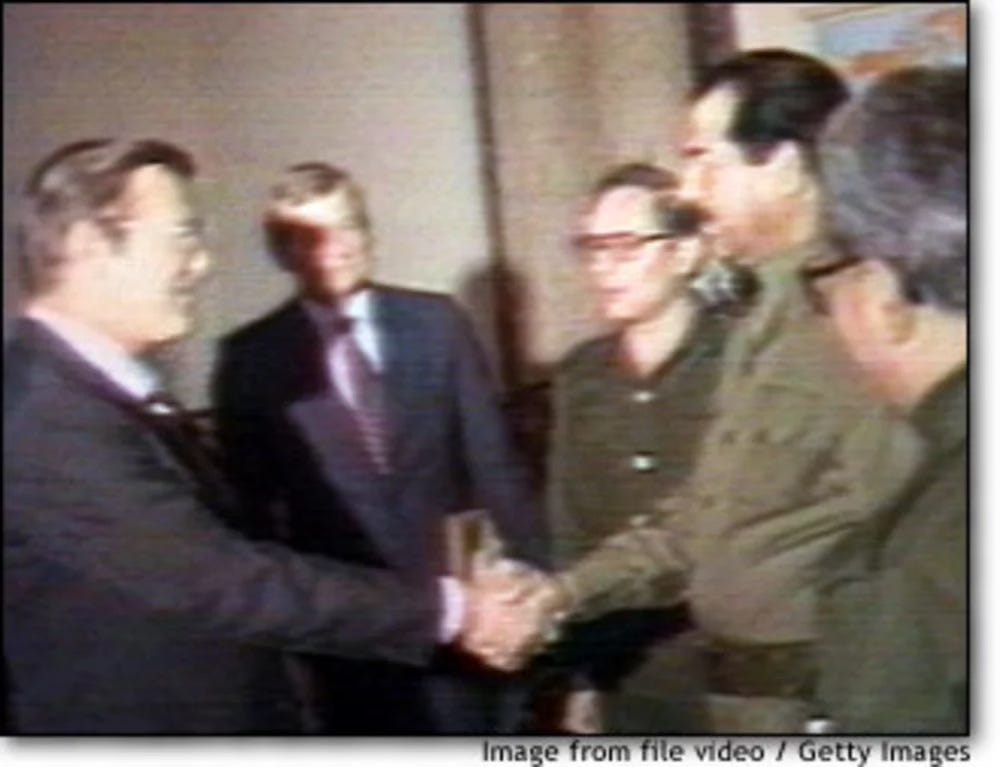
For the United States, the decision was made early on to support the Iraqis, including with weapons and other intelligence support. The U.S. remained silent when, later in the decade, the Iraqi army used chemical weapons in Halabja. In the 1980s, as the Soviet Union began to weaken, the American military devoted significant attention to combating Iran. The base Diego Garcia in the Indian Ocean went through major upgrades to support the air effort, which would later become critical for the 1991 Gulf War and subsequent operations against Iran. President Reagan appointed one of his key advisors, Donald Rumsfeld, as a special envoy to Iraq. He famously visited Saddam Hussein in 1983.
In Lebanon, the situation became even deadlier as the indirect confrontations between the United States and Iran picked up pace. The U.S. deployed Marines in 1982 as part of a peacekeeping force. By the early 1980s, there were a dozen separate Iranian-backed Lebanese militias. The IRGC began training recruits at specialized camps in the Bekaa. Deeper links were developed with Libya and Syria in this effort.
Initially, the attacks undertaken by these new Islamist militants targeted Israeli forces who had remained in Lebanon despite the PLO’s withdrawal in 1982. It was during this period that a core group was recruited that would eventually lead Hezbollah, once formally formed, a decade later. That included Imad Mughniyeh, who was perhaps the most instrumental of them all. One of Mughniyeh’s cousins, Mustafa Badredinne, and then brother-in-law, also received training in Lebanon and would succeed Mughniyeh upon his assassination by Israel decades later. With the U.S. engaging on the Iraq side to target Iranian forces, Iran decided to play the same role in Lebanon to target American forces.
This began a long period that continued in multiple theaters, particularly in later years in Iraq, whereby the IRGC facilitated, supplied, and sometimes even ordered proxy groups to attack American forces. In October 1983, suicide car bombs hit the U.S. Marine Barracks and French military station, killing 241 American and 58 French personnel.
While the U.S. did not immediately respond militarily, two years later, the CIA would orchestrate a bomb blast in Beirut targeting Ayatollah Fadlallah, killing 80 people; Fadlallah was not present. Americans in Lebanon soon faced a spate of kidnappings, bombings, and counterattacks. Quixotically, during this time, Iran-US engagement, negotiations, and arms trading actually grew. Lebanon and Iraq became the theaters that brought Iran and the United States closer together and drove them further apart.
The Iran-Iraq war had become a stalemate by the mid-1980s, but with an escalating series of attacks in the 1980s. After Iraq began hitting Iran’s oil facilities on Kharg Island, the Iranians threatened to shut down the Strait of Hormuz. But they also began to target oil tankers directly. In what became known as the Arabi Island incident in 1984, the Saudis shot down an Iranian fighter jet that had violated their airspace. It set a precedent that would stave off direct attacks on Saudi territory in subsequent years. The Gulf countries and the US began a new phase of military collaboration.
Iran would specifically target tankers from countries seen as the main backers of the war, notably Kuwait. Lloyds of London either dramatically increased premiums or refused to issue insurance, and over the course of the decade, hundreds of ships were attacked. Kuwait entered into an agreement with the United States for the naval protection of its ships in Gulf waters against Iran. The deadliest incident was a case of friendly fire, when 37 US sailors died in a missile attack not from Iran, but an errant Iraqi fighter jet in 1987 on the USS Stark.
President Reagan authorized broader naval engagement to ensure safe passage in the Strait of Hormuz and associated waterways. The U.S. ships accompanying Gulf ships were increasingly targeted by Iranian sea mines. This led to Operation Praying Mantis, the largest naval surface battle for the U.S. since World War II, in 1988. It was the last true navy-to-navy battle the U.S. has had, and in some ways, the sinking of an Iranian ship off the coast of Sri Lanka in 2026 harkens back to that event.
When a US naval ship shot down a civilian airliner in Iranian airspace just months after Operation Praying Mantis, it had the effect of cementing de-escalation on all sides moving forward. Everyone had had enough. A month after that incident in which 290 civilians died, Iraq and Iran entered into a ceasefire of the nearly decade-long war that cost one million lives.
Iranian activities and subterfuge in Gulf countries also occurred covertly throughout the 1980s. These efforts notably targeted Bahrain, Saudi Arabia, and Kuwait. Largely, the UAE, Qatar, and Oman were not subject to this. Bahrain had a majority Shiite population that was increasingly susceptible to clerical advocacy. Saudi Arabia’s oilfields were in the Eastern Province, with a majority Shiite population. Kuwait was, of course, home to significant Western assets, and while its Shiite population was not in the majority, it was a substantial minority of 20-25%.
In Kuwait, a series of bombings over the course of the decade killed 25 people across U.S. installations, cafes, and other facilities. They were tied to a later Hezbollah operative, Mustafa Badreddine. He would escape in a jailbreak during the Gulf War and was killed in 2016 while operating in Syria. In Bahrain, there were smaller-scale attacks as well as an earlier coup attempt. There were recurring incidents at the hajj in Saudi Arabia, particularly in the late 80s, that authorities blamed on Iranian elements.
Despite all that was occurring, in the mid-1980s, the U.S. had started to initiate arms sales to Iran in exchange for hostages held in Lebanon and other concerns. It was, in fact, the Israelis who were initially sending arms to Iran. Their go-between, an Iranian named Manucher Ghorbanifar, also became a central figure in the Iran-Contra affair. In exchange for 500 Tow missiles that arrived via Israel through Ghorbanifar, but then backfilled by the United States, they received one hostage from Lebanon.
Over time, the relationship was revealed to be far more extensive than originally thought. It included direct intelligence sharing, for example, on Iraqi positions given to the Iranians. This led to an increase in meetings, first through intermediaries and outside the United States. In early 1986, former national security advisor Robert McFarlane and a presidential envoy took a delegation to Iran.
And then on September 19, 1986, a delegation of IRGC representatives flew to Washington, D.C. to meet with White House official Oliver North, including a nephew of Rafsanjani. Key actors who facilitated dealings with the Americans included Rafsanjani, Mir-Houssein Mousavi (who later became a leader of the Green Movement), and Hassan Karoubi.
The Iran-Contra affair led to a significant scandal in the United States when it came to light and was an eventual embarrassment for the Reagan administration. That was partly due to off-the-books payments resulting from the arms sales to Iran. Yet it also showed that Iran and the United States could both battle one another, while also dealing behind the scenes.
The Islamic Iranian Intermezzo (1989-2000)
As the Iran-Iraq war was coming to a close in 1988, the regime in Tehran was moving from a revolutionary to a stable setting. It would need to focus on domestic affairs and on consolidating the state apparatus. Moreover, the factionalization that occurred under the Supreme Leader was not sustainable without clear leadership. Khomeini was aging and would soon hand over power.
This would be the first test for Islamic Iran, which was built around a theocracy. While there was contestation over Khomeini as the leading Shiite jurist – that title, for most global Shiites, remained with Ayatollah Al Khoei in Iraq – he was the most charismatic religious leader in the public sphere. The choice for succession would have to be someone of strong political leadership or impeccable religious credentials.
That was supposed to be Hossein Ali Montazeri. He was also the designated successor. But in 1988, he had a falling-out with Ayatollah Khomeini following the Iran-Contra affair, which ended Montazeri’s path. Otherwise, a moderate, he viewed the engagement with the Americans as tantamount to treason. Mehdi Hashemi, a confidante of his late son, learned about a meeting in Tehran during a U.S. delegation’s visit earlier in 1986.
Hashimi leaked the story to the Lebanese press, and it sparked the scandal in the United States, leading to embarrassment for the Reagan administration. Hashimi was tried and sentenced to death. When Montazeri tried to intercede through an exchange of letters with Khomeini, he was summarily dismissed as Deputy Supreme Leader in Khomeini’s public response.
It was hard to know what else was unfolding behind the scenes as the leadership transition approached, but Rafsanjani and Khamenei appeared to be orchestrating their rise to power. Montazeri had become a liability for the future of the revolutionary system. While he was popular, he was not as ardent an Islamic theocrat and was not as effusive aboutvilayet-e-faqih in its absolute form (mutlaq).
Ayatollah Khomeini died in 1989. A constitutional revision process was underway that was passed shortly after Ali Khamenei’s ascension to Supreme Leader in June 1989. The lines between the Guardian Council and the Expediency Council were delineated to hold power above the political process, effectively disempowering the majlis (parliament) and the presidency, as the bodies could review legislation, veto candidates, and exercise other responsibilities. An Assembly of Experts was tasked with electing and supervising the Supreme Leader.
In 2018, a video leaked from the Assembly of Experts session that elected Khamenei highlighted concerns about his election as Supreme Leader, including that it was originally intended to be temporary. The revised constitution removed the requirement for the Supreme Leader to be a marja-e-taqlid. Khamenei’s legitimacy would derive from his political and military control rather than from his religious standing.
Ayatollah Khamenei’s long-time collaborator, Rafsanjani, was elected president in 1989. While ever the pragmatist and focused on finding common ground with the United States, he was also liberalizing the economy at home. A new Tehran was emerging: literate, urban, and business-minded. While many benefited from the war dividend, others remained part of the rural poor, or were now in the cities but on the outside, looking in at the new excesses of both regime operatives and traders enriching themselves, while inflation abounded.
The political cycle played out on both sides of the world. The U.S. held an election in January 1989 that brought George W. Bush to power. It was a time of a sea change in the world order. The Soviets withdrew from Afghanistan, and by the end of 1989, it was clear the Cold War was ending with the fall of the Berlin Wall.
The United States shifted its posture as it ushered in an era of Pax Americana and a new role in the Middle East. National Security Directive 26, issued by President George HW Bush on October 2, 1989, outlined the emerging strategy towards Iran, Iraq, and Persian Gulf allies. It laid the groundwork for what would begin to unfold in the early 1990s. The focus was clearly on energy security and the protection of the Gulf Cooperation Council states.
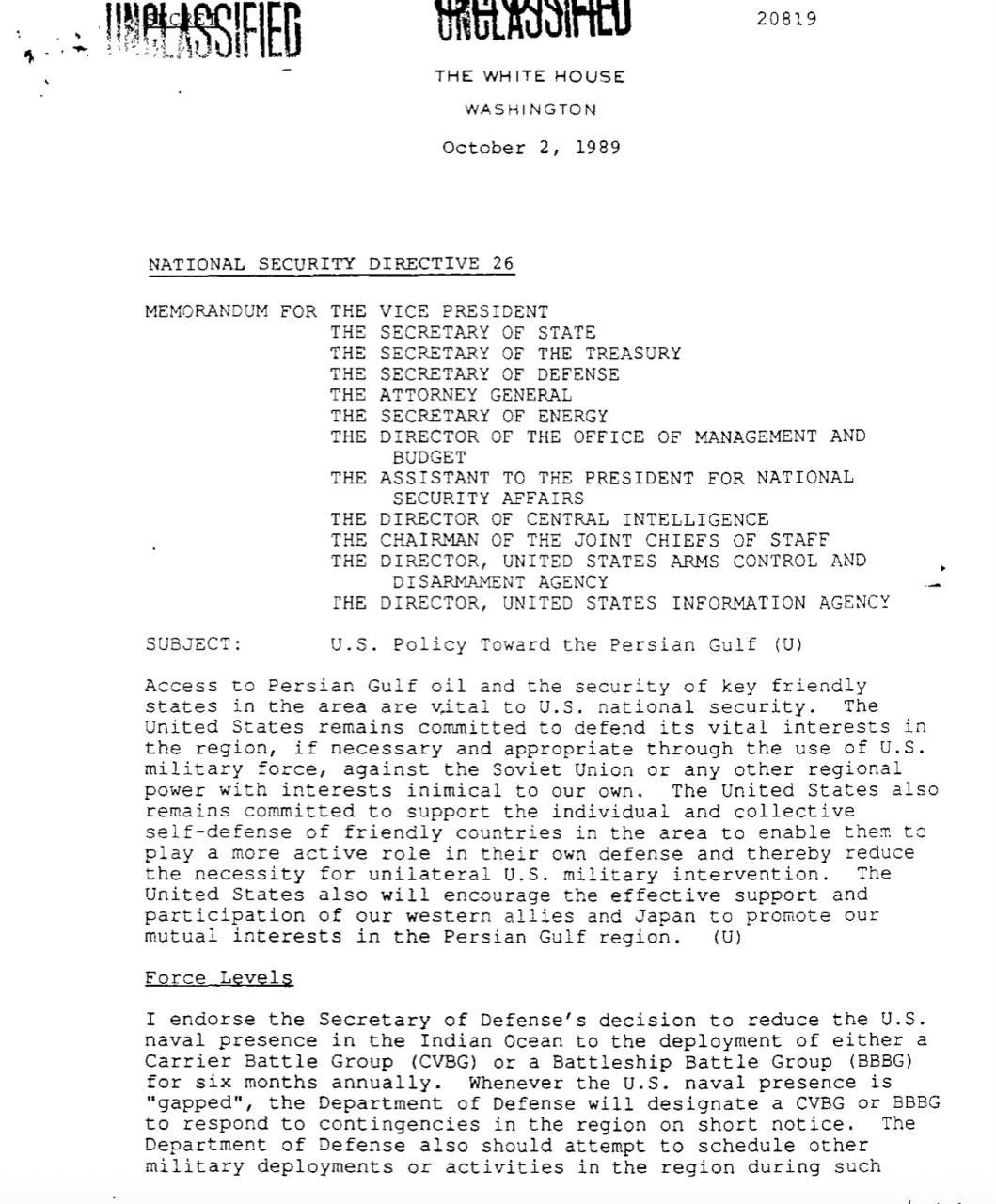
In that environment, Rafsanjani saw an opportunity. When President Bush sought to resolve the case of the remaining American hostages, Rafsanjani agreed, and a young diplomat, Javad Zarif, was tasked with leading the negotiations with the UN intermediary, Giandomenico Picco. Also involved was Hossein Mousavian, who today is based at Princeton University.
As President Bush’s term progressed, they were open to Iranian engagement but had other priorities. The Mujahideen in Afghanistan began to move into new theaters of operation. The Soviet Union and Yugoslavia were dismembering, with conflicts erupting in Chechnya and Bosnia, and challenges emerging in a new Europe. Meanwhile, a new form of Salafi-jihadist terrorism was emerging. When Iraq attempted to seize Kuwait, the entire notion of Iran as a preeminent concern dissipated.
Rafsanjani’s enthusiastic backing for the engagement led to the eventual release of all the hostages, with journalist Terry Anderson being the final hostage released in 1991. Yet, in the end, no reciprocation came from the White House. The priority of the administration following the Gulf war and weapons deal with the GCC countries was now squarely on the Israeli-Palestinian peace process following the Madrid Conference. But there were also broader concerns now.
In February 1992, Israel assassinated the secretary-general of Hezbollah, Abbas Musawi. In retaliation, a group calling itself Islamic Jihad Organization, reportedly linked to Iran, bombed a Jewish center in Buenos Aires, killing 29 people on March 17. Iran wanted to compartmentalize progress. For the Bush administration, this was not possible. This moment indicated that progress between Iran and the United States in one area risked being undermined in another.
As the Clinton Administration took office in 1993, the region’s landscape was changing. Like his predecessor, President Clinton focused on the peace process and hosted the iconic signing of the Oslo Accords in his first year in office. For Israel, Iraq was fading as a preeminent enemy, and the PLO was largely contained. Negotiations with Syria under Hafez al-Assad were ongoing. Libya, which was a strong adversary in the 1980s, was heavily constrained by sanctions. It was increasingly clear that by 1993, Israel’s threat was from sub-state groups in Lebanon and the Palestinian territories.
Iran itself had not backed away from supporting transnational proxy groups; it was doubling down on them. It began to support Hamas financially and operationally in the early 1990s, and through Syria, facilitated connections with another proxy force, Hezbollah. The first suicide bombing in the West Bank took place in 1993, and more continued throughout the decade.
Rafsanjani, ever the pragmatist, continued to make overtures to the United States. In 1995, apparently with the Supreme Leader’s blessing, he offered the American oil company Conoco a $1 billion contract to develop an oil field. The Clinton administration blocked it. Congress then passed legislation further restricting trade with Iran. For Rafsanjani, it was a failure, but for the Ayatollah Khamenei, it was as expected.
As with his predecessor, Khamenei would keep one hand outstretched to the Americans to speak, while continuing to support hostilities in the background. Nowhere was this truer than in Saudi Arabia. In 1996, a terror attack on the Khobar Towers by a group calling itself Hezbollah al Hejaz killed 19 people. The complex housed U.S. military personnel. It took place amid intense negotiations over a Saudi-Iranian rapprochement. U.S. authorities identified the perpetrators the following year, who provided evidence of Iranian involvement.
In 1997, a reformist candidate, Mohammed Khatami, decisively won the presidential election in Iran with the backing of women, students, and liberals. A generation with limited recollection of the Shah was now becoming a rising share of the electorate. That same year, Mohsen Rezai was replaced by Yahya Rahim Safavi as chief commander of the IRGC. The next year, Qassem Soleimani replaced Ahmed Vahidi as commander of the Al Quds Force.
On the one hand, Iran was about to embark on a massive project of international dialogue and civilian-facing reform led by Khatami. And on the other hand, it was about to build a military juggernaut that would come to dominate the Middle East over the next decade, led by Safavi and Soleimani.
Increasingly, Iran was portrayed in Washington DC, especially by interests close to Israel, as the preeminent global threat by groups. This was anchored in either Israel-adjacent narratives or the neoconservative project. But the military establishment and Gulf allies echoed this concern, often driven by Iran’s own actions.
Following the Khobar attack in 1997, CENTCOM began preparing a contingency war plan with Iran that would take two years to complete. The ultimate objective? Regime change. In 1999, protests broke out primarily in cities, starting at the University of Tehran. They were the biggest demonstrations since the revolution. But they were quickly curtailed. And even President Khatami distanced himself.
The protests occurred during an explosion of modern Iranian intellectualism, journalism, and cultural expression. The Iranian film industry had always been of a high standard, but now it was exploring more topics. Hundreds of newspapers were established, often reform-minded and liberal. It was in the mid-1990s when intellectuals like Abdolkarim Soroush began shaping a new discourse about Islam and politics. It was an opening of vibrant debate. But the Islamic government repressed it heavily in the coming years, and many individuals went to prison or into exile.
Axis of Evil (2001-2008)
On January 20, 2001, President Bush assumed his duties in the Oval Office. His Iranian presidential counterpart would remain Khatami, who would be re-elected in June. Yet all would be different just a few months later. The September 11 attacks dramatically altered the stance in Washington towards the Middle East. Business as usual would not suffice. At the forefront of threats in the world was terrorism.
The perpetrators this time, however, were Sunni Islamists, not Shiite Islamists. It was an opening for Iran. The two biggest countries the U.S. was focused on were Afghanistan and Iraq. These were two neighbors whom Iran saw as part of its civilizational heritage. Iran wanted to expand its influence, and if that meant direct cooperation with the United States, it was ready.
The first ‘official’ meeting between U.S. and Iranian officials in two decades followed. Ryan Crocker led the relationship on the American side, and Javad Zarif on the Iranian side. This set forth a dialogue for months that operated across multiple forums, involving multiple touchpoints and spanning a range of issues, first focused on Afghanistan but, in those same meetings, also touching on other regional issues. There was no real overt change in U.S. policy nor in the IRGC’s regional activities.
In Afghanistan, the coordination, however, was significant, which included the Iranians providing the U.S. with Taliban troop positions ahead of the invasion. They began sharing intelligence on Al Qaeda prisoners being held by Iran. But suspicions remained, and then during the State of the Union address in early 2002, George W. Bush announced to the world who America’s enemies were: the axis of evil – Iran, Iraq, and North Korea.
When the U.S. invaded and removed from power another Iranian adversary in March 2003, it was not in coordination with Tehran. Following the invasion of Iraq and the immediate aftermath, the sights were on Iran and other rogue threats. In Libya, negotiations in late 2003 led to a subtle detente, with the country agreeing to forgo weapons of mass destruction. The war in Iraq was becoming problematic at the least, and there was no appetite in Washington for any military intervention against Iran.
In 2005, a new project led by administration officials Elliot Abrams and Liz Cheney was formed, called the Iran-Syria Working Group, which created an action plan to foment a popular uprising in Iran. This was at the same time that the State Department set up an Iran office in the Dubai consulate. As in the past, both sides would have one hand reaching out for diplomacy while the other lagged, moving toward a more aggressive posture, and then they would seem to alternate.
Zarif was by now the Iranian ambassador to the UN. In his palatial residence originally bought by the Shah, he would host dinners [disclosure: the author attended one of these], inviting policymakers and others, often with his wife by his side, reciting snippets of Persian poetry along the way. It was part of the same duality, in many ways a sleight of hand, since the beginning of the revolution. Zarif was leading the charm offensive. He even brought former Mohammad Khatami to Harvard University for a lecture on September 10, 2006. It was an attempt to counter the public message of the Bush Administration.
That would be harder than before, however, as the year prior, Iranians had elected a firebrand populist to the presidency, named Mahmoud Ahmadinejad, in a political earthquake. After two terms of a reformist president, like in many countries, the population wanted change. Ahmadinejad was a populist and enjoyed favor among the working and rural poor. Many had also lost faith in the reform movement that had failed to deliver results.
But overall, it was a clear sign of the Supreme Leader’s disapproval of the direction of the country’s relationship with its chief rival, America. Since 1989, he had endorsed the pragmatic, outreach-oriented approach, collaborating in Afghanistan, even militarily, on American intervention. The view in Iran was also that the country’s hand was getting stronger, just as America’s was getting weaker.
Ahmedinejad was not a cleric. And his rival in the election was Rafsanjani. The result demonstrated that Khamenei was clearly in charge. It also put not just reformists but also moderates on the back foot. The rise of Ahmadinejad empowered a new guard who were not necessarily ideologues or part of the clerical establishment. Rather, they were leaders backed by the IRGC, which was increasingly business-minded.
In 2006, Iran and the United States moved closer towards confrontation. In the summer, Israel and Hezbollah went to war, and Secretary of State Condoleezza Rice arrived in Beirut, famously declaring it “the birth pangs of a new Middle East.” But in the war, Hezbollah displayed unprecedented capabilities. The U.S. marched instead to the Security Council. It was able to have Resolution 1737 approved, which enacted sanctions on Iran for its nuclear program, and then, a few months later in 2007, it limited arms sales through another resolution. China and Russia refrained from exercising their vetoes.
Iran’s answer to this was to enrich even more uranium. They expanded the site at Natanz. But it was in Iraq that the confrontation increased. The one directing the rising attacks targeting U.S. soldiers through Shiite proxies was Qassem Soleimani.
In Iraq, the Arab centers of Najaf and Kerbala were always held in higher regard than Qom. Ayatollah Sistani was the undisputed marja of global Shiites. And with Saddam Hussein no longer in place, new powerbrokers could emerge in Iraq that could rival Iran. And, notably, one did: Moqtada al-Sadr. A cousin of Musa al-Sadr and hailing from the lineage of the highly respected Sadr family (his uncle was executed by Saddam Hussein in 1980), he immediately garnered support.
Qassem Soleimani partially co-opted the movement by enabling financing to flow to them. Just like Iran had done in Lebanon and elsewhere, it sought in Iraq to dominate the Shiite scene to forward its influence and displace all other actors. That often meant a more sectarian and aggressive approach.
Soleimani, however, was much more strategic than previous commanders. He was building an integrated type of regional deterrence. For years, Arab leaders had warned that Iran was building a ‘Shiite crescent’ to encircle American allies. It was part-conspiratorial and paranoid, but events precipitated by the U.S. brought it closer to reality. The Al Quds commander started to leverage the new base in Iraq to create a direct smuggling route from Iran, through Iraq, across Syria, and into Lebanon, now all connected through proxies and allies.
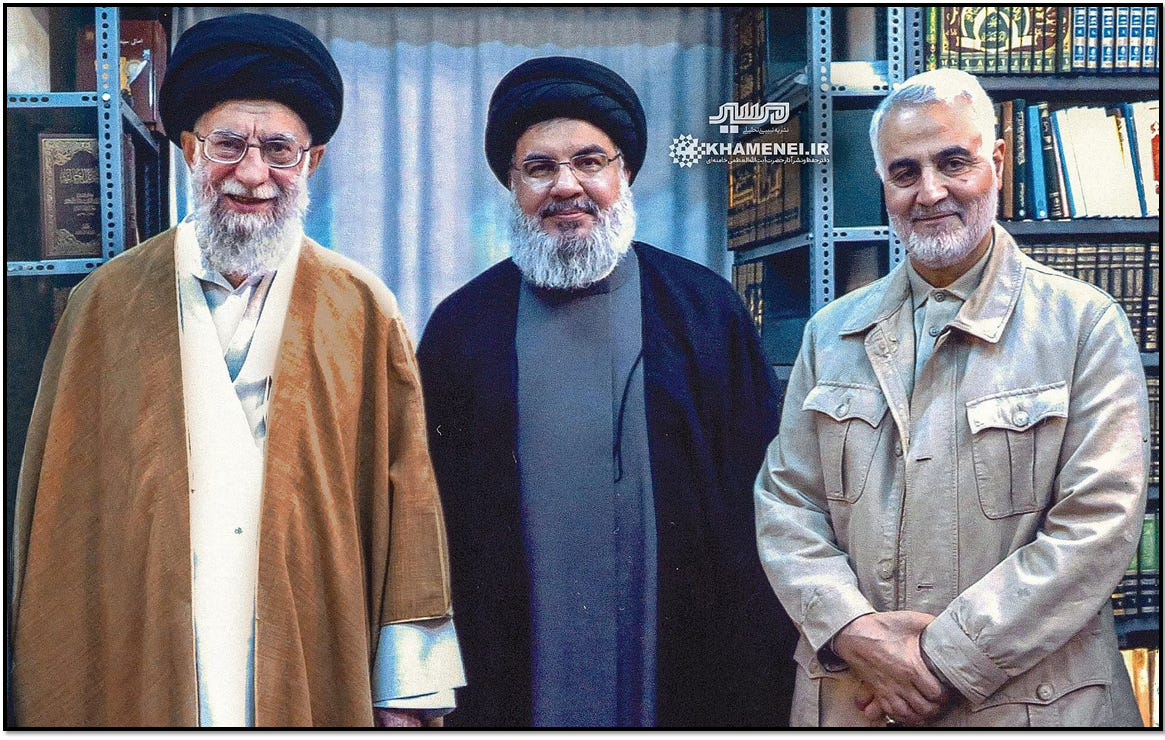
Art of the Deal (2009-2016)
In 2009, Ahmadinejad was re-elected, but the result was widely contested due to alleged fraud. His reformist opponent was Mir Hossein Mousavi, who had served as prime minister in the 1980s. Meanwhile, across the proverbial pond, in the United States, Barack Obama was also ushering in a new era.
Millions of Iranians flooded the streets in the summer amid allegations of vote-rigging. This was a generation that had come to age after not just the revolution but also the Iran-Iraq War. All they knew was the government that ruled over them, and they were not happy. With Hillary Clinton as Secretary of State and two young apparatchiks by her side, Alec Ross and Jaren Cohen, the administration supported the protests that emerged.
It would become known as the Green Movement and served as a precursor to the Arab Spring. It also gave Twitter an outsized profile as a mobilizing force. But the opening was short-lived. The regime crushed the protests as well as the reformist movement. Later that December, Ayatollah Montazeri died. With him vanished an original leader of the revolution who presented an alternative vision.
For the Obama administration, the Green Movement was a complication. The president had entered with the mindset of having a reset with America’s adversaries, including Iran. It was here that the interests of Israel and America began to diverge sharply. Early in his presidency, coinciding with a public Nowruz address, Obama had sent a private letter to the Supreme Leader. It went unanswered.
Yet, in October 2009, despite the Green Movement, the U.S. pursued direct engagement with Iranian officials. At a high-level meeting between William Burns, then Deputy Secretary of State, and Saeed Jalili, initial alignment was reached. It had not, however, been blessed by the Supreme Leader, who quickly undermined the framework. This hardened the Obama administration’s stance towards Iran during the first term.
In 2010, a major WikiLeaks release revealed that many of the Gulf countries Iran was looking to restore relations with were working closely with the United States to contain Iran. It only strengthened the already intractable views of hardliners within the regime. Khamenei, after three decades, was under no illusions. He never trusted the Americans nor the Gulf states.
As such, the aggressive posture of Israel was not initially a challenge as it strengthened the Obama administration’s hand in nuclear negotiations. A campaign of assassination of nuclear scientists began at that time. Also, Israel launched Stuxnet, a computer virus to disable key facilities. Meanwhile, groups such as Jundullah, a Balochi Islamist group, ramped up attacks, perhaps supported by some Gulf actors and Israel.
The Obama administration, for its part, led a stifling sanctions campaign against Iran. Much of that sanctions regime centered on the UAE. By 2010, Abu Dhabi, under its crown prince, the de facto leader, was starting to assert its leadership within the Gulf. The crackdown in Dubai on Iranian-linked entities was total. The United States even removed the MEK from its list of terrorist organizations.
At the UN Security Council, Israel’s Benjamin Netanyahu famously hoisted a crude photo of Iran’s nuclear progress in 2012. That same year, the Obama administration renewed sanctions in UN Security Council Resolution 2049.
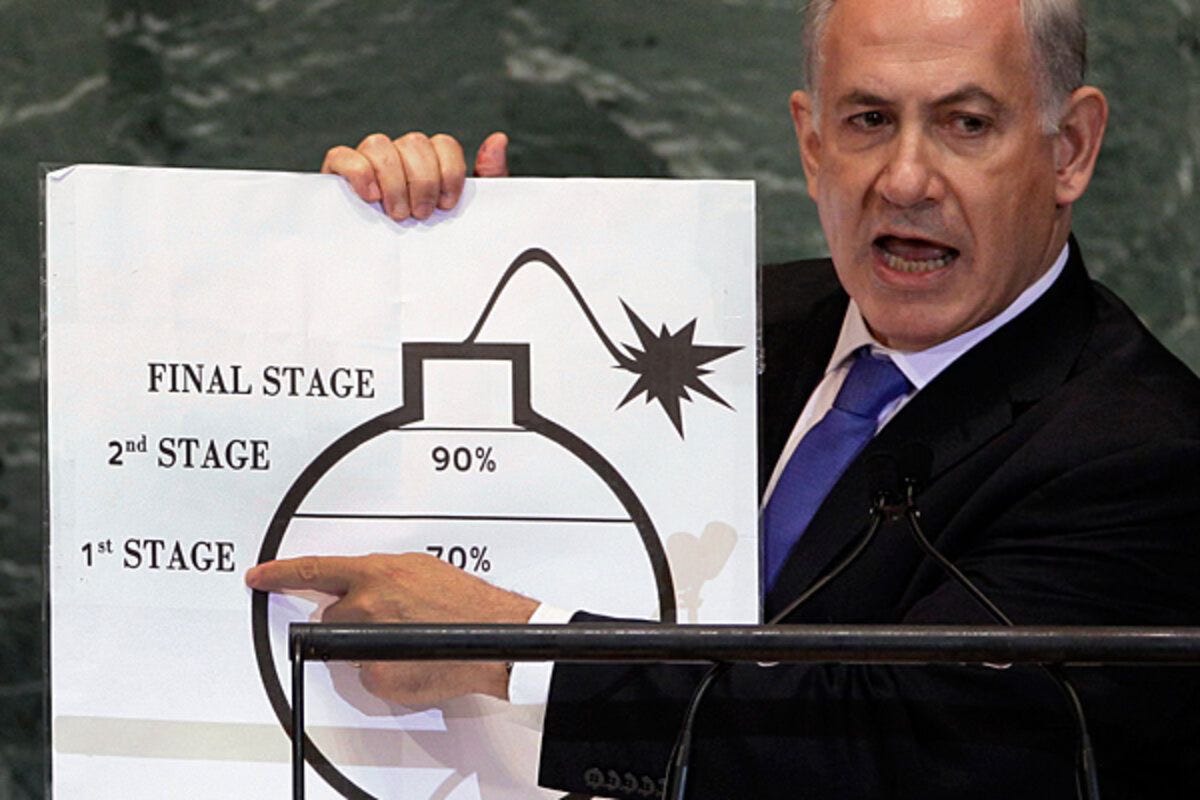
The pressure and posturing eventually led to a détente in 2013 as Obama entered his second term. The shuffling of the deck had become commonplace by this point for both Iran and the United States, who were always hedging between accommodation and compromise. In Iran, Hassan Rouhani, a perceived moderate, was elected president, defeating a slate of revolutionary hardliners, including Saeed Jalili, Mohammed Ghalibaf, and Mohsen Rezaee, by winning a majority in the first round.
While the Obama administration had made overtures, including direct ones, the Green Movement, followed by the Arab Spring, had made public engagement with Middle Eastern autocracy a challenge. Soon after the start of Obama’s second term, in March 2013, Oman began facilitating direct negotiations headed by National Security Advisor to the Vice President Jake Sullivan and several Iranian counterparts. After Rouhani’s June win, President Obama spoke by phone with him.
With Secretary of State John Kerry on one side and a familiar face, Javad Zarif, now the minister of foreign affairs, on the other, the negotiations moved quickly toward what was called a Joint Plan of Action by November 2013. Zarif was supported by his deputy, Abbas Araghchi, who would go on to become minister of foreign affairs almost a decade later. The overall participants included not just the US but also the five permanent members of the Security Council (P5+1).
This was a provisional agreement, but it took effect in January 2014 while negotiations continued on the broader Joint Comprehensive Plan of Action (JCPOA). There was a lot of criticism of the agreement, publicly from Israel and privately from Gulf allies. In both the United States and Iran, there was skepticism from expected corners. Iran immediately received $4.2 billion in frozen funds by the summer of 2014.
As the Obama administration continued to pursue a new global order driven by diplomacy, peace, and accommodation with former adversaries, world events slowly came to the fore. Around the same time of the negotiations in 2013, the White House backed off a stated red line regarding the use of chemical weapons by Syrian President Bashar al-Assad, an ally of Iran. Instead, it deferred to a Russia-led initiative to disarm Syria of chemical and biological weapons.
Two months after the initial deal with Iran, Russia invaded and annexed Crimea in March 2014 from Ukraine, beginning a long war in the eastern part of the country. A few months later, ISIS declared an Islamic State in part of Syria and Iraq. The Houthis took Yemen’s capital, Sanaa, in 2014. In January 2015, King Salman ascended to the throne in Saudi Arabia and anointed his son, Mohamed bin Salman (MBS), as de facto ruler. MBS soon launches an offensive in Yemen that the Obama administration chose to support.
A few months later, in the summer of 2015, Qassem Soleimani reportedly flew to Moscow to draft a new regional framework of cooperation with Russia, particularly in Syria. In September 2015, Russia began a sustained aerial bombardment campaign to support the Assad government. Apparently, an operations room was established that linked Hezbollah, Iran, Russia, and Syria. Iran, which had become increasingly isolated in the region by both governments and leaders of popular uprisings, especially due to its relationship with the Assad government, was focused on a longer-term strategic view.
In the midst of all this, just before the final JCPOA was signed on July 14, 2015, Donald Trump famously descended the escalator at Trump Tower on 5th Avenue and declared his candidacy for president. One of his chief talking points: he would rip up the newly signed JCPOA.
On ‘implementation day’ of the nuclear deal, January 16, 2016, it is estimated that Iran received upwards of tens of billions of dollars in frozen funds from previous years of sanctions. With all the other regional flashpoints, it was a boon to both its domestic standing, especially amidst flagging oil prices. It also created a new pipeline of funding for proxy groups when it was most needed.
Meanwhile, Qassem Soleimani has organized in Iraq a force of popular mobilization units (PMU), essentially Shiite militias, to combat ISIS. They operated under American air cover as they were technically integrated into the Iraqi army. On the ground, Hezbollah operatives were moving from Lebanon to Syria to Iraq, and then into other countries, notably Yemen. The transregional network of Iran was reaching its height, targeting the interests of American allies just as America was seeking engagement with Iran. There was even a large battalion of Afghan Shiites called the Liwa Fatemeyoun.
Meanwhile, the split that had occurred over Syria between Iran and Hamas ended after the 2014 Gaza War. The next few years saw the restoration of ties. By 2017, a full rapprochement would be underway, including the supply of new weapons and funding.
In 2015, the events in Washington and the region led Israel and Gulf countries to deepen intelligence and security ties. Israel opened an office in Abu Dhabi. In a famous interview on the Obama Doctrine, the president said, “Saudi Arabia and Iran need to find an effective way to share the neighborhood and institute some sort of cold peace.” It would prove prescient, but the conditions were not ripe then.
In Iran, the Al Quds Force and the IRGC were ascendant, and the JCPOA ushered in a new era and resurgence of the growing business conglomerates under the Revolutionary Guard. This included Khatam al-Anbiya Construction Headquarters, Bonyad Taavon Sepah, the Sepah Cooperative Foundation, the Etemad Mobin Consortium, and others, which together operated across infrastructure, energy, telecoms, finance, and large state development projects. It also solidified Iran’s growing non-clerical leadership. This included figures like Ebrahim Raisi, Mohammed Bagher Qalibaf, Saeed Jalili, and Ali Larijani. And for a while, Qassem Soleimani.
With an ever stronger Iran, allied with Russia, and oil prices at a nadir, the Gulf and Israel engaged both the Democratic and Republican sides ahead of the 2016 elections. They needed a change. The region, in their view, was being lost to the Russians, Iranians, Sunni Islamists, and vacuums of power.
Art of the Assassination (2017-2020)
After President Trump was inaugurated, his first trip was to Saudi Arabia, followed by Israel. It was a clear sign of things to come. There was no mistaking the policy towards Iran: it would be facing a 180. There was no interest in renewing the rapprochement. In Iran, the hardline element felt vindicated. For Ayatollah Khamenei, it renewed his long-held view that the Americans could not be trusted. Still, as usual, he leveraged Iran’s political structure to deploy the hand that was needed.
The Gulf’s initial preoccupation was not with Iran but rather a squabble between neighbors. In May 2017, Saudi Arabia and the United Arab Emirates initiated a blockade against Qatar. It was also a time when Turkey was rising, which quickly came to Qatar’s aid. Yet the Trump administration had different plans for the region: one integrated security zone.
In that sense, they wanted to recreate the pre-1979 architecture, but this time swapping out one side of the Persian Gulf for the other. By 2018, the U.S. withdrew from the JCPOA, and by April 2019, it had declared the IRGC itself as a terrorist organization. As Iran’s leading military branch, it would have far-reaching consequences. But to encircle Iran, a more transformative approach would be needed.
After the killing of ISIS leader Baghdadi in October 2019, the attention fully turned to Iran. Tensions had already begun flaring due to maritime skirmishes, rising sanctions called ‘maximum pressure’, and targeted attacks by Iran, first on oil tankers such as in Fujairah and then on Saudi oilfields in late 2019. The target, the Saudi Abqaiq oil facility, was the largest of its kind in the world. While the Houthis initiated the attack, it was clear that Iran was strengthening the group’s hand.
Iraqi militias, notably Kataeb Hizbollah, also escalated their attacks using drones on U.S. targets in Iraq. In late December, when a U.S. contractor was killed, the U.S. bombed key militia sites, which led to militia members swarming the U.S. embassy, although no one was injured. Just 3 days later, Qassem Soleimani was killed along with a senior Iraqi militia commander.
The assassination of Iran’s top military commander was an earthquake in the U.S.-Iran dynamic. As commander of the Quds Force, Soleimani reported directly to the Supreme Leader. But he was much more than just a high-level figure. For over two decades, he had cultivated the entirety of Iran’s proxy coordination, its main deterrence against its rivals. He was the most senior figure killed in the fighting between the two countries over the 40 years of the revolution.
When Israel carried out a range of assassinations of key Hamas figures in the early 2000s, such as Abdelaziz al Rantisi and Hamas founder, Sheikh Ahmed Yassin, it was condemned by the Bush administration as an extrajudicial killing. The U.S. government, however, soon followed suit, especially as drone technology improved. Under President Obama, the policy of assassinations was formalized in a White House memorandum.
The pace of attacks picked up after the killing of Osama bin Laden. But it focused mainly on Al Qaeda and Taliban-linked targets, such as Anwar Awlaki and Mullah Mohammed Mansour. President Trump had set a precedent for Iran’s own leadership to be a target, especially after the IRGC was declared a terrorist group.
By the summer of 2020, the U.S. had facilitated the Abraham Accords, bringing Israel together with Bahrain, the United Arab Emirates, and Morocco, with the promise of more to come. In January 2021, the Gulf dispute was formally over, and later that year, the countries of the Abraham Accords, along with the U.S., would hold joint military exercises.
Although the policy of assassination was now on the table vis-à-vis Iran, the killing of Soleimani led to Iranian retrenchment into its zones of familiarity, and the two countries avoided direct conflict. The focus for Iran became nuclear enrichment, and strengthening its positions in Lebanon, Syria, Iraq, and Yemen.
The Iranian orientation towards the Gulf countries also began to shift from confrontation to conciliation. Israel understood the geopolitical landscape. It began to weaken Iran on two fronts. Aided by penetration through signal and human intelligence, it became increasingly successful in killing IRGC figures operating in Syria, who were facilitating the movement of arms to Hezbollah.
The confrontation shifted more directly between Iran and Israel, and away from America, for the time being.
Pride in Persia (2021-2023)
When the Biden administration took office in January 2021, there was a visible sigh of relief in Iran. The maximum pressure of sanctions had been punishing, and with low oil prices and the broader COVID malaise, the two combined to create perilous economic conditions in the country. The Vienna Talks began immediately in April.
Within one week, Israel carried out a remote (perhaps cyber) attack that led to a blackout of the Iranian nuclear facility at Natanz. Less than a week later, Iran announced that it would be proceeding with higher enrichment levels. During the April talks, it was clear that the political winds had changed. The room to maneuver for a nuclear deal this time around was much more limited. And Israel would more aggressively try to prevent it this time around.
Iran, however, felt that it was in a stronger position. While the sanctions had been punishing, they had only strengthened the IRGC’s position in the country as its businesses became increasingly more important. The election of Ebrahim Raisi and the disqualification of candidates ranging from reformist to conservative, including Ali Larijani, reflected the Supreme Leader’s mindset at the time.
The Biden administration pushed for an end to the Yemen conflict, leaving the Iranian-backed Houthis effectively in charge in 2022. Gulf countries, weary of the policy vacillation between American administrations, began significant outreach to Iran. They did not want to be in the crosshairs of any Israeli-Iranian confrontation. Sheikh Tahnoon bin Zayed, the UAE’s National Security Advisor, made a trip to Tehran in December 2021, the first since 2016.
Saudi Arabia followed suit in March 2023, with China’s support, restoring ties that had been formally cut off in 2016 following the execution of a Saudi Shiite cleric, Nimr al-Nimr. With the Yemen conflict subsiding, and MBS seeking to focus on the economy and Vision 2030, he wanted to reduce tensions with Iran. Qatar, Oman, and Kuwait had not fully broken ties with Iran, but they used the moment to deepen the relationship. President Raisi made official visits to Doha and Oman in 2022, while the foreign minister at the time, Hossein Amir‑Abdollahian, visited Saudi Arabia and the UAE.
Iran was also reconsolidating its military-industrial base and improving its capabilities, following the Soleimani strike. Israel’s control of the skies in Syria proved challenging. It repeatedly struck key IRGC facilities throughout the country, leading to the deaths of IRGC leadership in the country. Iran’s response was to invest in new technology.
In June 2023, it unveiled its first hypersonic missile, and overall, the accuracy of its ballistic missiles capable of reaching Israel was improving. But it was the Russian invasion of Ukraine in 2022 that was the game-changer. The conflict provided the platform for full-scale deployment of its Shahed drones, which would cost less than $50,000 each to produce.
While Iran focused on its adversaries abroad, its own population was under increasing economic stress, resulting once again in mass protests in 2022. Inflation was often running at 40-50%, there was significant inequality, and the commercial elite were only more entrenched. The protests were ignited by the death of Mahsa Aman while in custody in the Kurdistan province.
The Farsi slogan of zan, zendegi, azadi evolved from the Kurdish Jin, Jiyan, Azadi, which was initially popularized in the region’s Kurdish areas in the 1990s. While the protests accelerated and captured global attention, by early 2023, they had largely subsided and were contained. Meanwhile, while the nuclear negotiations had faltered, there was movement on prisoner exchanges. This resulted in the release of $6.2 billion to Iran in September 2023.
Iran had also invested in its overall financial architecture through its Gulf relationships, which were paying dividends. Through its operations in the UAE, it was able to reignite global financial transactions via entities linked to Bank Melli. It had also begun rerouting the majority of its oil exports to China. Iran also completed the Gorgan-Jask pipeline and terminal, which was operational in its first phase by 2021. This provided a potential alternative to the Strait of Hormuz. Meanwhile, the relationship with Iraq had only strengthened after an initial setback following the 2021 elections. The political bloc in charge was linked with Iran.
Iran appeared to have reached a strategic equilibrium with the United States. Still, it did not take this for granted and sought to solidify its position through two ongoing avenues: advancing nuclear development and ensuring alternative oil routes. On the nuclear front, it had advanced facilities: in Natanz to potentially enrich uranium up to 60%; in Fordow, to enrich uranium up to 60% in an underground setting; and in Isfahan, the key research facility enabling uranium conversion for enrichment. Fordow was particularly difficult to target because of its underground location. It would require the most advanced bunker-busting bombs if it were a target.
The Gulf states had not forgotten about the intervening period in the 2010s nor the 1980s. They still saw Iran as a threat, even if contained for now. Saudi Arabia continued to pursue normalization with Israel. Behind the scenes, it had also begun a defense procurement arrangement with Israeli companies. The UAE was far more advanced in this area. Israel’s links with the Gulf states, especially in terms of security coordination, had markedly risen by 2023.
The Great Confrontation (2023-2026)
On October 7, 2023, Iran watched as Israel was engulfed in flames from an attack by Hamas. The deadly attacks constituted the most significant assault on Israel since the Yom Kippur War, 50 years to the day. That evening, the unrelenting siege on Gaza began. On October 8, Hezbollah fired rockets into Israel, and the Lebanon front became increasingly active. It led to the mass evacuation of northern Israel. On October 19, the Houthis also fired missiles at Israel.
Iran was ascendant, and it began to probe the U.S. presence in and around Iraq. It wagered that America did not want to enter into a direct confrontation. Iraqi militias launched numerous drone operations against American positions and in January 2024 hit Tower 22, an American installation on the Jordan-Syrian border. The Americans responded in a limited fashion.
By Spring 2024, however, a different picture started to emerge. In subsequent actions, it was clear that Iran was on the back foot. After a wave of killings of IRGC officials in Syria in April, its embassy was hit by Israel, and a senior commander died. Iran responded for the first time in its history by attacking Israel directly with ballistic missiles. Israel responded with a strategic attack on Isfahan.
In the summer, everything escalated. Israel hit the Houthis hard in Yemen in July and then again in September, including Hudaydah port. On a similar timeline, it first killed prominent Hezbollah commander Fuad Shukr in July, and then, in September, launched what is known as the ‘pager’ attack, and then assassinated the charismatic leader of Hassan Nasrallah. It was a tremendous blow to Iran’s prestige.
Iran’s own president, Ebrahim Raisi, was killed in a suspicious helicopter crash in May 2024. In the subsequent presidential election, Masoud Pezeshkian, a reformist, was elected. Just hours after the presidential inauguration on July 31, the leader of Hamas, Ismail Haniyeh, was killed in a huge explosion at the government guest house in Tehran.
Iran responded in earnest to Israel on October 1 with a barrage of ballistic missiles targeting Israel, hitting the strategic Nevatim Airbase. Israel undertook severe attacks on Iran later at the end of October, devastating its ballistic missile capabilities and air defenses. But it stopped short of assassinating Iranian officials.
A week later, Donald Trump won re-election to the presidency. He was returning to the White House. Israel’s Prime Minister Netanyahu would visit Donald Trump at Mar-a-Lago a month before his inauguration in mid-December. Ending the Gaza War was at the forefront of the incoming Trump administration’s mind.
For Iran, it always viewed America as its direct enemy and threat, but in recent years, it viewed the relationship in a period of strategic balance, while the real battle unfolded with Israel. Broadly speaking, the crux of American hostility towards Iran was over the Persian Gulf. Now for the first time, America’s Gulf allies were in a full détente with Iran, in a way markedly different than perhaps ever.
A ceasefire between Hezbollah and Israel was reached in late November 2024. But the strategic calculations continued to change in the region. On December 8, Bashar al-Assad’s regime fell in Syria, as forces led by Jabhat Al-Nusra seized the capital Damascus. The oft-discussed ‘Shiite Crescent’ that extended from Iran through Iraq, then Syria, and into Lebanon, and encircled Israel, was irrevocably broken. Iran entered 2025 in a weakened geopolitical position.
The Trump Administration made resolving the Gaza War its priority. Although it reached an initial deal on January 19, just before taking office, the interim ceasefire collapsed twice in the Spring. Just before his inaugural trip abroad to the Gulf states, the U.S. entered into negotiations with Iran in Oman, led on the American side by Steve Witkoff and on the Iranian side by Foreign Minister Abbas Araghchi, on April 12, with a letter from Trump to Khamenei in hand.
Amidst the negotiations, while President Trump’s envoy to the Levant, Tom Barrack, was busy containing the situation in Lebanon and Syria, the United States launched severe strikes on the Houthis, which ended by May. As June approached, the two-month deadline Trump had set for the negotiations to conclude successfully loomed. Since 1979, Iran has always seen negotiations as an open-ended exercise. For President Trump, he was imposing his own timeline. It was a divergence that could not be resolved.
On June 13, Israel launched what would become known as the 12-day war. It was an unprecedented assault on Iran that the U.S. would then join. The United States was soon in open and direct conflict with Iran for the first time in its history. While Israel and Iran traded long-range missiles, the U.S. involvement was limited to one day and targeted Israel’s nuclear sites.
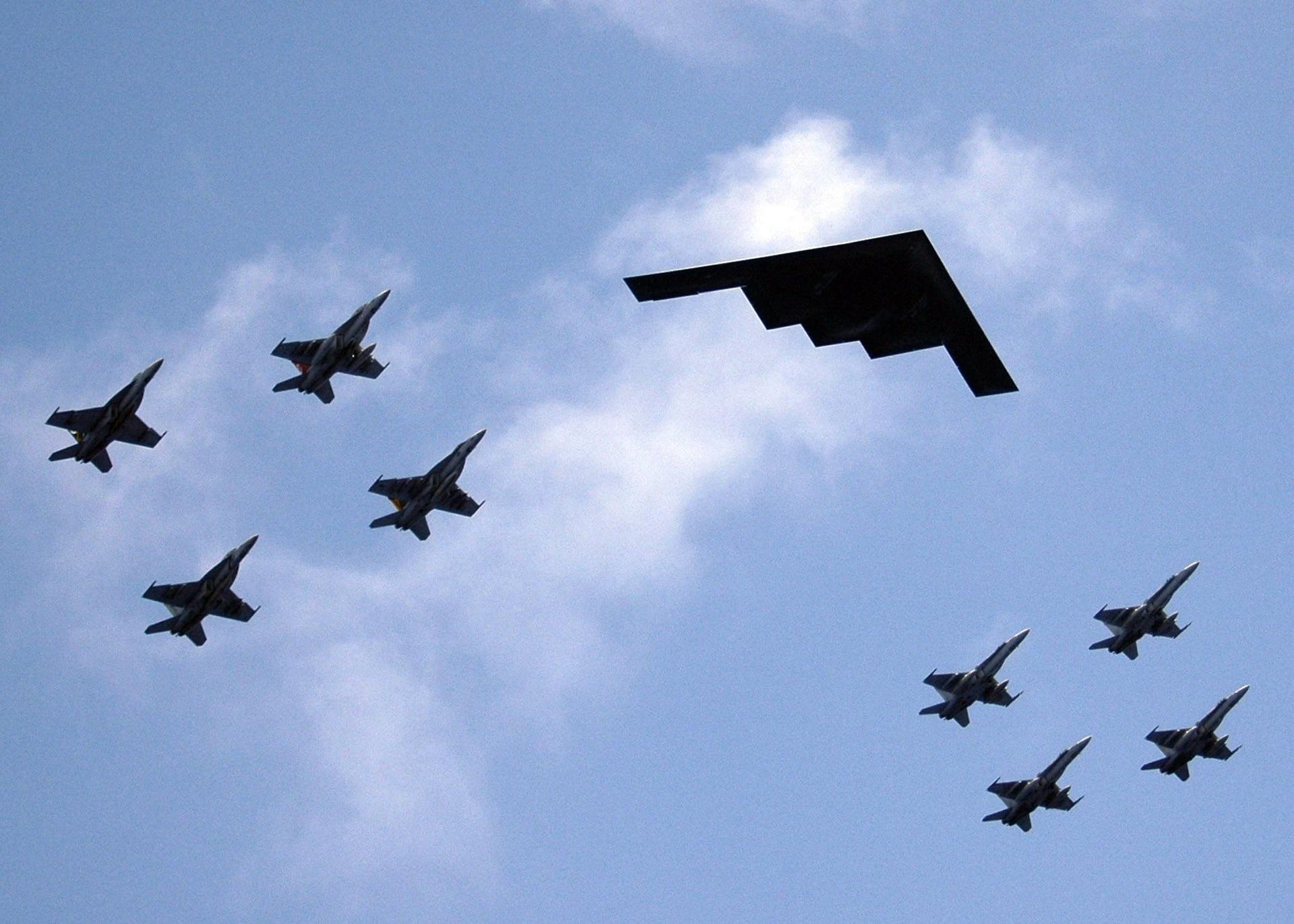
The primary objective for the U.S. military was the Fordow nuclear installation and its underground enrichment facility, which President Trump claimed was totally destroyed. U.S. airstrikes also hit facilities in Isfahan and Natanz. Israel operated in Iran’s skies undeterred for the overall conflict, showing total air supremacy. While Iran’s defense capabilities were degraded, it did manage to strike back at Israel with various long-range missiles. These were not the Scud missiles from Saddam Hussein in 1991. They caused significant damage, although the full extent has not been revealed by authorities.
In what appeared to be a telegraphed response to the Americans, Iran hit the Udeid Airbase in Qatar, when it seemed to be evacuated, on June 23, 2025. And just like that, the short-lived direct confrontation had concluded.
For the Make America Great Again (MAGA) base for President Trump, this could not have come sooner. There was tremendous domestic criticism around the march to war. On the campaign trail, prominent voices like Vice President Vance had cautioned against a regime change war in Iran. Meanwhile, platforms like Turning Point USA were holding debates around Israel, led by Charlie Kirk, who served as an effective political bridge between Trump and MAGA factions.
Kirk was assassinated on September 10, which brought the president’s political coalition back together in a show of unity. Around the same time, Israel had led an attack on Hamas operatives in Doha. Qatar, which was a strong US ally, objected vociferously, especially as one of its own security officers had been killed.
President Trump forced an apology from the Israeli Prime Minister during a phone call at the White House to the Qatari Emir on September 29. That same day, they announced the 20-point Gaza peace plan, which the United Nations Security Council soon formalized following a Gaza Peace Summit in Cairo on October 13.
Notably, Iran did not attend the Summit, despite being invited. The Supreme Leader had a long memory, and it was not episodic. In his view, as always, America could not be trusted. The urgency, however, changed by early 2026. In Iran, there were fresh protests and armed elements in parts of the country. The demonstrations had significant support and were widespread throughout the country, driven by a range of factors, including a growing water crisis. It went to the heart of the regime’s legitimacy. Ultimately, companies linked to the IRGC were also responsible for much of the country’s water management infrastructure.
The government’s tactics in response seemed to be having success. The death toll, however, from the brutal crackdown was reported to reach in the tens of thousands. Increasing calls could be heard for President Trump to intervene in Washington. Then on January 3, in a shock move, the U.S. military led a daring raid into Venezuela and arrested the sitting president, Nicolas Maduro. His successor, Vice President Delcy Rodriguez, pledged to cooperate with the United States.
Amidst its show of strength in the Americas, the U.S. was also moving significant military assets from around the world to the Middle East throughout January. Iran’s foreign minister, Abbas Araghchi, and America’s lead negotiator, Steve Witkoff, stayed in contact and, in February, arranged to meet first in Oman earlier in the month, then in Geneva on February 17 and February 26. In between, Ali Larijani made trips to Doha and Moscow. He was increasingly playing a lead role behind the scenes and had a direct line to the Supreme Leader.
The U.S. side was joined by President Trump’s son-in-law, Jared Kushner. While the Omani foreign minister appeared sanguine, and Araghchi optimistic, U.S. officials were less so. There were simple demands from the White House, but they started with zero enrichment. Other issues were also brought up regarding ballistic missiles and proxy forces. Yet Witkoff made it clear that what the president really wanted to see was Iranian “capitulation.”
The next day, as the Omani foreign minister made a last-minute appeal in a preview clip for the popular news show, Face the Nation, the U.S. and Israel prepared to strike Iran that evening. On Saturday, February 28, 2026, airstrikes on the residence of Khamenei killed him and several close family members. After 37 years as Supreme Leader and nearly five decades in the leadership of Iran, Ayatollah Ali Khamenei was dead.
In the immediate aftermath, there was an online euphoria, driven by clips of the Iranian diaspora celebrating in the streets and by the reemergence of figures like Reza Pahlavi, the son of the deposed shah, who claimed victory. But this was not Venezuela. Iran and its regime had been preparing for this day ever since the revolutionary government took power in 1979. This was always the inevitable war. And now it had arrived. They were ready to fight.
If this war had happened a couple of years earlier, it might have caught the Iranians off guard. Neither Israel nor the United States had attacked Iran directly to that point. And for Iran, after nearly five decades, it had found a way to avoid a true confrontation with the United States, understanding when to escalate and when to de-escalate. Iran had perfected the strategic posture of concurrent divergence to an art.
Yet the events of 2024 and 2025 jolted the Iranian security establishment into action. They had a clear game plan for how and when to escalate. They had built in contingencies for both civilian and military operations. Their stockpiles were now deeply buried, with a clear understanding of Israeli and American capabilities. More importantly, even the demonstrations in January assisted the Iranians by ensuring they had restored internal control before any war.
Following the killing of Khamenei, it was clear this was not a limited strike. This played into Iran’s advantage again. It did not need to be constrained in its reaction. It was in the existential endgame, and that meant everything was on the table. Progressively, Iran expanded the theater of the war to a dozen countries through the use of ballistic missiles and drones that could reach 1500 miles (2500 kilometers).
Meanwhile, Hezbollah, despite the prior war with Israel and the assassination of its leadership, was active again. It entered the conflict in early March. In Iraq, militias started drone and rocket attacks on U.S. targets, breaking a fragile peace. The embassy in Baghdad was targeted.
Yet this time, Iran was not just leading with the proxies. In the first ten days of the war, the Houthis had not even entered the frame. Iran was more than capable of extending its capabilities on its own. It hit U.S. targets, including diplomatic facilities, CIA stations, and military bases, in Saudi Arabia, Qatar, the United Arab Emirates, Oman, Kuwait, and Bahrain.
Across those Gulf countries, Iran also targeted critical infrastructure, including desalination plants, oil facilities, airports, and power stations. Hostilities were extended to targets in Cyprus, Azerbaijan, and Jordan. Iran’s message was clear: anywhere and everywhere with a U.S. military relationship was a target.
With an arsenal of tens of thousands of long-range drones, this was no idle threat. The ultimate weapon for Iran was also displayed early on in the conflict: paralyzing the global economy. It threatened to close the Strait of Hormuz effectively. Would that be possible? The threat of passing oil tankers was reminiscent of the 1980s Iran-Iraq war. The US offered to insure the insurers through the Development Finance Corporation.
Oil spiked to its highest levels in years, over $100 a barrel, before subsiding. The Gulf countries winced at the escalation. But the biggest effect was on President Trump’s base. Over the first ten days, social media was wall-to-wall with accusations that this war was one for Israel. This came from central figures like Tucker Carlson, an ally of Vice President Vance. Several days before the war, Carlson had made a trip to the Oval Office to try to talk President Trump back from the brink of war.
The prevailing media narrative was that this was a war Prime Minister Netanyahu had foisted on the White House by threatening to act first. In the fog of war, it is difficult to determine what is fact from fiction. And certainly, the timing of the conflict raised questions. But ten days into the conflict, it was clear that the U.S. may not have been ‘winning,’ but it was not losing either.
The U.S. quickly set about destroying Iranian naval assets. It also degraded the overall missile capabilities in Iran, and progressively, Iran’s ability to fire missiles and drones was declining. And Gulf countries, while fierce in their responses and vocal in their calls for de-escalation, began achieving higher interception rates against incoming Iranian fire.
Quickly, it was also unclear where U.S. and Israeli interests converged and diverged. For Israel, the objective appeared to be weakening Iran at all costs, even if it meant chaos. Its strikes on Iranian oil depots caused the skies to turn black during the day, in scenes that appeared apocalyptic. Meanwhile, the civilian costs were mounting, with images of dead school children engendering sympathy for Iran across the Middle East.
Amidst all of the strikes, Iran managed to convene its Assembly of Experts to select a new Supreme Leader. The Islamic Revolution was not about to end, at least not yet. On Sunday, March 8, it was announced that a new Supreme Leader had been selected: Mojtaba Ali Khamenei, the 56-year-old son of Ali Khamenei.
In the grand history of Iran, it marked the beginning of a new chapter. While the pages may turn, assuredly, there is much more to be written. Whether it will be by Mojtaba Khamenei, his co-revolutionaries, or something new, only time will tell.
In the modern era of shifting global power, Iran and the United States will remain locked in each other’s fates.
Epilogue: The Way Forward
This section was last updated on March 11, 2026
Whether the status quo of the Islamic government in Iran remains or falls is an open question.
In the interim, the conflict remains unpredictable. There will continue to be shocks, in particular to oil supplies, logistics routes, and regional economies. This would lead to sustained oil prices above $100 per barrel and continued force majeure for oil, natural gas, and chemical supplies. The cascading effect of this, in particular, would be felt most acutely in South and East Asia. This is already happening to petrochemical companies that rely on the Middle East for feedstock.
The CEO of Aramco, Amin Nasser, put it clearly: “The disruption has caused a severe chain reaction in not only shipping and insurance, but there’s also a drastic domino effect on aviation, agriculture, automotive, and other industries.”
The longer the conflict continues, the more it could lead to the participation of neighboring countries in airstrikes on Iran. Their engagement could provoke more direct hits on Gulf capitals. The long-term consequences of that would be felt, but it would lead to immediate capital flight in the short term. This is a scenario that all sides are trying to prevent, but that may not be possible.
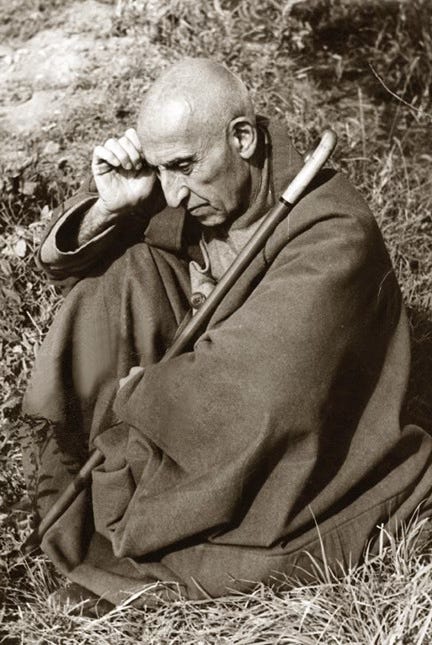
Defining Victory
It is not easy to define victory for the United States. Does Iran capitulate and surrender to the Americans? For Iran, simply put, the regime needs to survive and avoid the fate that befell the Ba’athist government in Iraq. Yet, the United States wants to permanently degrade the ballistic missile, nuclear, and proxy force capabilities of Iran. The war will become increasingly violent if these objectives cannot be achieved at the negotiating table.
While previous rounds of negotiations on the nuclear issue involved complex measurements and methods, it is unlikely to satisfy the American administration this time. Given that Iran had reportedly reached the ability to achieve 60% enrichment, a technical step away from weapons-grade enrichment, the demand from the Americans would be zero or near-zero in-country enrichment.
The timeline for this becomes open-ended, and with any war, unintended consequences can lead to a quagmire. For Iran, surviving the military confrontation past the 40-day mourning period after the Supreme Leader’s death would be symbolic. President Trump is due to travel to China at the end of the month. It is hard to see that visit occurring amid the war, but that decision could be a cliffhanger. Politically heading into the mid-term elections, and especially with early and mail-in voting, early September would appear to be a definitive date to conclude the war.
The question of divergent interests remains. Israel could maintain the conflict with Iran at a low level even without the United States, especially if it determines its interests are not met. Moreover, the conflict has extended to Lebanon, where there is no end date; that theater could continue until Israel feels Hezbollah has collapsed, thereby risking civil war in Lebanon.
Warfighting Readiness
The conflict with Iran, as of this writing, is already on its way to being the most significant interstate conflict involving the United States since the Gulf War, which itself lasted 43 days. Since 1991, the United States has mostly conducted wars with aerial campaigns, including when it toppled the regime of Saddam Hussein. The ‘shock and awe’ campaign succeeded in 20 days. Of course, what came next was far more prolonged and, on the ground, something the U.S. is not prepared for in Iran.
In the quarter-century of the War on Terror, the United States had become accustomed to contesting sub-state actors as a primary threat. The changing geopolitical climate, which brings the specter of great-power conflict to the fore, also suggests confrontations with rising middle powers. Conventional warfare between states is once again on the table.
Regardless of the war’s outcome, the military-industrial complex, the Pentagon, and defense planners will take many lessons from the conflict. Specifically, the weapons supply chain and manufacturing process will be scrutinized. For example, the explosive RDX, which is used in over 4,000 ordinances, is produced in only one plant in Tennessee in the United States.
Anti-drone systems – Merops – developed in the Ukraine conflict are being re-purposed for Gulf allies facing Iranian drones. Missile makers, in a meeting shortly after it began, agreed to ‘quadruple’ production. If there were ever a confrontation with Russia and China, the U.S. would never have been aware of the vulnerabilities it is now discovering.
When the United States sank the Iranian naval ship off the coast of Sri Lanka early in the conflict, it was the first time since World War II that the US Navy sank a warship with a torpedo. Similarly, the U.S. is facing Chinese and Russian empowered tracking, radar, and anti-aircraft technology that the Iranians are using to combat American fighter jets. While the U.S. is learning, the Chinese and Russians are studying as well.
The U.S. had already asked for $500 billion in supplemental Pentagon funding. The next decade, already driven by the rise of sovereignty, will likely see increased defense spending worldwide. In the United States, the war with Iran brings home further the need to accelerate defense technology in the areas of hypersonic weaponry, robotics, artificial intelligence, and drones, as well as new types of aircraft. But it will also invest heavily in upstream production, including chemical precursors. Like all wars, the consequence reshapes economies.
The implications extend far beyond the United States. In the face of Iran’s attacks, it brings home the fragility of not just Persian Gulf countries, but many other states, especially those neighboring larger, if not great, powers. The new arms race that results will likely be mind-boggling. Many countries, such as Turkey, are well on their way to developing indigenous capabilities. Others, notably in the Gulf, will try to double down on this approach.
The Iranian Regime
In Iran, there has been an orderly transition at the outset of the war with Mojtaba Khamenei ascending to the position of the Supreme Leader. Yet behind the scenes, it is more likely that a collective of interests is positioning for power. In retrospect, it may become clear that the younger Khamenei was being positioned for his role for quite some time. But it goes to the heart of the Islamic regime. There is an improbability of Mojtaba Khamenei playing the role of a so-called modernizer, like MBS. He is not, however, from the right generation and is cut from the same cloth as the clerical establishment, literally and figuratively.
The Pahlavi dynasty ruled Iran for 54 years. The Khamenei dynasty could last even longer, although there are concurrent rumors already questioning Mojtaba’s health. Aside from the hereditary dynamic, the question arises about the very nature of theocracy. The legitimacy of the clerical founding of the regime is now only nominal. While the constitutional requirement that the Supreme Leader be a marja was removed at the time of Khamenei’s ascension, it is now quite clear that his son is being selected through nepotistic absolutism.
While domestically, this may be resolved simply through brute force and control, new forms of patronage, and a gradual adoption of syncretic Iranian nationalism, it raises questions about its projection of power abroad. Likely, the hydra of Shiite leadership is on the decline for the Islamic regime, which will have to turn more inward in any case.
This assumes that the Islamic regime survives. The Americans, and President Trump specifically, have spoken about avoiding the ‘Iraq’ scenario, something reiterated in press remarks on March 9. Yet the idea that there could be a Venezuela scenario, for example, with someone like Ali Larijani playing the role of Delcy Rodriguez, seems out of the question. It is anathema to the nature and founding of the regime itself. Israel and others may still seek to push regime collapse, specifically through the arming of various insurgent groups such as Kurdish, Balochi, and Ahvazi separatists. The longer the conflict continues, the more potential chaos enters the picture.
Iran has succumbed to both internal and external regime change over the past 150 years. During the time of the Qajar dynasty, there were assassinations, such as when Naser al-Din Shah was killed in 1896. In 1906, the constitutional revolution reshaped the fabric of government. In 1921, Reza Shah seized power in an effective coup. In 1941, the USSR and the British collaborated to install his son on the throne. In 1953, an internal uprising nearly dislodged the Shah, and he was then effectively reinstated by the CIA. Then, in 1979, the Islamic Revolution effectively toppled the Pahlavi dynasty on the back of an Islamic-Leftist-Nationalist coalition.
If anything is normalized in Iranian history, it is a change of regime and orders. However, the prerequisite is the ability to maintain a monopoly of force on the ground. Thus far, there is no clear military commander, akin to the late Qassem Soleimani, who could play that role. Original powerbrokers like Rafsanjani are also no longer there. And short of an American occupation (which itself is not militarily feasible), there is no external force that can impose its will on a country so vast.
The only far-flung scenario is that in the event of a power vacuum, a set of massacres by the regime that causes outrage, or internal realignment, the regular Iranian Army or Artesh takes control. While smaller than the IRGC, it provides a parallel monopoly of force in the country. The overall chief of staff of the armed forces, Abdolrahim Mousavi, was killed in the initial airstrikes, and may have been a person U.S. intelligence services had projected could be a future leader. One interesting figure is Amir Hatami, the current head of the army, who did not serve in the IRGC. This, however, is all speculation.
The more plausible scenario is that the shadow leaders of the IRGC and related business entities take command of the country, with a nominal if not symbolic Supreme Leader at the fore.
Regional Futures
The instability driven by Israel would only continue, regardless of what the United States decides. For America itself, it is committed to energy security and its Persian Gulf allies. How could an investment find a safe harbor there, knowing conflict could erupt at any point? This is why the countries in the Gulf, while promoting diplomacy, have not called for an immediate halt to American strikes. Nor did they condemn the intervention.
Oman is an irregular case as it has been an Iranian ally since the 1970s. Qatar is similarly not a bellwether because it shares a gas field with Iran and is particularly susceptible. It is Saudi Arabia and the United Arab Emirates, the two leading countries of the GCC, that will indicate to Washington their displeasure or support, and often behind the scenes.
In particular, only at the leadership levels of MBS and MBZ could this be properly communicated. While those two countries have in the past couple of years pursued détente with Iran, since the 1970s, even before the revolution, there have been constant tensions between Iran and its Persian Gulf neighbors. With war now already unfolding, the sacred halo of stability has already been pierced. There is no going back. The Gulf leadership will want to see the conflict end only with a severely weakened and changed Iran.
Regardless of how the regime evolves, it is likely to lead to new alliance formation in the region. The countries with the most powerful military and industrial bases, such as Algeria, Egypt, and Turkey, will likely seek to position themselves at the forefront and perhaps start to create a new security architecture for the Middle East, juxtaposed to Israel, even if not oppositional at first.
Countries with large Shiite populations, such as Iraq, Bahrain, and Lebanon, will see a longer tail of evolution beyond the yoke of the neo-imperialist vision of vilayet-e-faqih. That may lead to a contestation of power within Iraq, most specifically, but could also pose intergenerational challenges to existing structures of Amal and Hezbollah in Lebanon and in the urban neighborhoods of Bahrain. How this plays out in broader Shiite-Sunni dynamics remains to be seen.
Yet, since the Iranian revolution in 1979, the region has been beset by sectarian dynamics. A more pan-Islamic discourse could emerge, giving a renewed boost to Islamic revivalism in some corners of the Middle East, especially if modernization projects fail to deliver amid economic realities. In that counter-factual way, the fall of the Iranian revolutionary ideology could engender a more rooted Islamic set of movements in the coming decade.
Imperium Americanum
The Iran War is a defining event for the nature of American hegemony moving forward. Does American dominance extend only in the Western hemisphere or also to geostrategic regions like the Middle East? What is the nature of enforcement for this dominance in the absence of a rules-based order?
The United States is a preeminent power, looking at its adversaries and removing them from the geopolitical table, one by one. The actions in Venezuela and Iran, and perhaps soon in Cuba, should be viewed in that light. This is a continuation of policy from previous presidencies, but of course has a much more flamboyant and flippant nature under President Trump.
Russia and China will closely study the aftermath. They will want to intervene further in their own neighborhoods and in Eastern Europe and the South China Sea, respectively. Yet an ascendant America may not be tame in response. The longer the Iran War continues, the more incentive there is for China and Russia to find a way to bog down America, similar to what Iran did in the 2000s in Iraq.
The war is clearly demonstrating the importance of technology and military capabilities. While countries will pursue both asymmetric means and the ability to defend against asymmetric weapons, will they also jockey to be the junior partner to America, as Israel has been? Who is that in Latin America? What country can play that role in South Asia? Who can that be in Africa?
Overall, many countries will seek to obtain nuclear weapons to safeguard their sovereignty. This will no longer be the provenance of rogue states or American adversaries. The American repositioning and transactional nature could leave allies such as South Korea and Japan exposed. Without nuclear weapons at their disposal, what ultimate defense do they have?
The Iran War is unlikely to be the Iraq War of 2003, no matter how similar it seems. The humanitarian consequences are, however, already grave, as seen by the devastating attack on a school in Tehran. The United States will achieve both tactical and strategic outcomes once this concludes. The question will be at what cost?
The Iran War is the culmination of decades of enmity in the most important geostrategic zone for the United States, and it may have been inevitable. Still, it was certainly avoidable, for now. Many tactical and strategic gains could have been obtained through negotiations and other means. The results may not have come as quickly, but they may have been more sustainable.
The timing of the American strike at the outset of this war successfully removed Ayatollah Khamenei, but it also led to his son succeeding him, at least initially. This was at a time when Iran was already under tremendous pressure. The Supreme Leader was also quite old. Perhaps if he had died of natural causes, street protests would have forced a different outcome in the regime leadership. Now, if the regime does stay fully intact – still an if – in Iran, it will be much more hardened.
The quick demonstration of force in the summer of 2025 could have been repeated in 2026, rather than through assassination and a massive bombardment campaign. And this raises the Israel question and divergence of interests. As Israel grows in power, it has distinct motivations and interests from the United States, even as a junior partner. For example, in the Middle East, Turkey is a junior partner, exercising influence in Syria. Yet Turkey and Israel remain at odds. For the United States, it could diverge with one or the other to maintain its interests. The Israeli political spectrum has already indicated that Turkey is next after Iran.
A definitive outcome of the war will be a clear demarcation within American domestic politics between the interests of foreign allies, in this case Israel, and those of the United States. Within the Republican Party, this is likely to be an increasingly contentious debate. Regardless of how quickly the war concludes and oil prices are restored, the risks created by the current conflict are too high. There will be much more organized political opposition to any push for American engagement in the Middle East if it is perceived to be in the interests of Israel.
Overall, Iran has exposed through its survivability over the decades the very limits of American power. The nationalist pushback against American control in Iran has taken many forms, but it has not always been Islamist in nature, as 1953 amply showed. Today, as the United States is on a technological hyper-march, Iranian technology, developed asymmetrically in isolation, is forcing a change in war strategy.
Survivability, however, is not sovereignty. In Iran’s case, the total control it has maintained over its population and its constant confrontation with the world’s leading power have frozen what was once a vibrant civilizational dynamic. What religious forces would emerge if Iranians could practice freely? What would a modern Iranian identity look like? At the turn of the 20th century, some of the world’s most vibrant ideological debates were taking place in Tehran. No longer.
In defining its next chapter, Iran, like most countries, not just from a philosophical positioning but from a matter of core practical concern in the age of sovereignty, needs to question existing dogmas that trap it between reactionary ideology and complete submission at the expense of the development of a vibrant internal core (across culture, economy, industry, and politics).
The world today lives in the shadow of America, as does Iran. Its population, leaders, and thinking seem to have vacillated between what the famed Jalal e Ahmed coined as Gharbzadegi (West-toxication) and ‘Islamzadegi’. Perhaps it is time for a third path.
And what has befallen the light of the sun?...
No man knoweth, in youth or prime
Or in wisest age;
of whom would’st thou ask:
What has befallen the wheels of Time?
- Hafez (True Love)
Appendix: Resources
There are many great resources on Iran, and it is as complex a country as any. Here are several that helped inform this writing and are good starting points.
· Mantle of the Prophet: Religion and Politics in Iran by Roy Mottahedeh
· The Vanished Imam: Musa Al Sadr and the Shia of Lebanon by Fouad Ajami
· The Twilight War: The Secret History of America’s Thirty-Year Conflict with Iran by David Crist
· Postrevolutionary Iran: A Political Handbook by Mehrzad Boroujerdi and Kourosh Rahimkhani
· 60 Minutes Interview with Ayatollah Ruhollah Khomeini and 60 Minutes Interview with the Shah of Iran
For reference, two posts from last summer provide historical context and record that may be useful: “Israel versus Iran: A strategic snapshot of the past, present, and future of a regional rivalry” & “America in Persia: Tidings of Midnight Hour in the Middle East.”
---
This essay was written in the first 10 days of the 2026 Iran War. While the epilogue will be updated, the main body will be adjusted only for factual corrections, grammatical issues, and formatting. Please excuse any missteps, given the haste to publication.