The initial article in the series, “Part 1: The New Gulf Moment,” was published in February 2023.
In early December 2025, Abu Dhabi hosted the world’s leading investors for Abu Dhabi Finance Week. The host was its own financial center, Abu Dhabi Global Market (ADGM), where family offices from Europe and North America have been setting up satellite holding companies in recent years, including prominent investors like Ray Dalio.
During the week, other marquee events also took place, including a collaboration with global philanthropists comprising Africa’s leading investors, the Bridge Summit, which brought together media and capital, and the Further Network Summit focused on blockchain innovation.
This came after another epic Formula 1 weekend that featured billionaires, heads of state, and yachts. On the sidelines, Mubadala held its annual business forum, and the Milken Institute hosted its annual regional summit.
If there ever was a week establishing Abu Dhabi as the capital of capital, this was it.
What made Abu Dhabi the capital of capital beyond the fanfare on the surface? Underneath is a tectonic awareness of global shifts underway and a deft instrumentalization of sovereign power combined with sovereign capital. The scaffolding includes investment institutions built over three decades, which has accelerated over the last five years.
While there has been intentionality, there has also been risk-taking and overreach. The adaptability of the leadership, including oscillating attention between East and West, has catapulted Abu Dhabi to a unique position on the global cap table.
Will it last? Who are the relevant institutions? How can Abu Dhabi and its global partners be stewards of success rather than cannibalize each other’s capital?
The landscape is best understood in its narrative form.

Transiting in Dubai
In the summer of 2007, the hottest place to be was Starbucks in Emirates Towers. The second hottest location? The nearby hotel lobby café. To say that billion-dollar deals were being made over Mocha Frappuccinos was no understatement. It was the summer of Dubai. All investment roads led to the desert and its building bonanza.
At the time, a flamboyant figure, David Jackson, stood at the helm of Dubai’s sovereign wealth fund, Istithmar (part of Dubai World), which he led on an international buying spree. Barney’s. The Mandarin Oriental in Manhattan. Queen Elizabeth 2. All gobbled up. Like many things in the Dubai boom at the time, purchases were fueled by debt.
Following the 2008 global financial crisis, Dubai entered a period of recovery. Expat mainstays that had indulged in the excess, like David Jackson, faded away. Many firms went insolvent. Debts were restructured. And the cranes went quiet.
Soon after, the Middle East erupted in revolution. Then the revolutions gave way to ISIS, which is when oil prices slumped. In the Gulf, a cold war erupted, pitting Qatar against the UAE and Saudi Arabia. The latter two countries soon faced their own scrutiny in the spotlight. The rise of new leadership in Saudi Arabia was marked by trials and tribulations, to say the least. The Mueller investigation focused in part on the UAE.
The COVID pandemic provided the Gulf with respite. Buoyed by rising oil prices and then wider détentes – within the Gulf and regionally – by late-2022, it was clear that a ‘New Gulf Moment’ was underway. Amid rising interest rates, the Gulf’s $1 trillion capital surplus became a favored source of global investment.
The constant stream of announcements and events masks the true undercurrent: Gulf institutions, from the global financial crisis onwards, have been on a straight growth curve through all the ups and downs. Leadership had never stopped investing in infrastructure and institution-building.
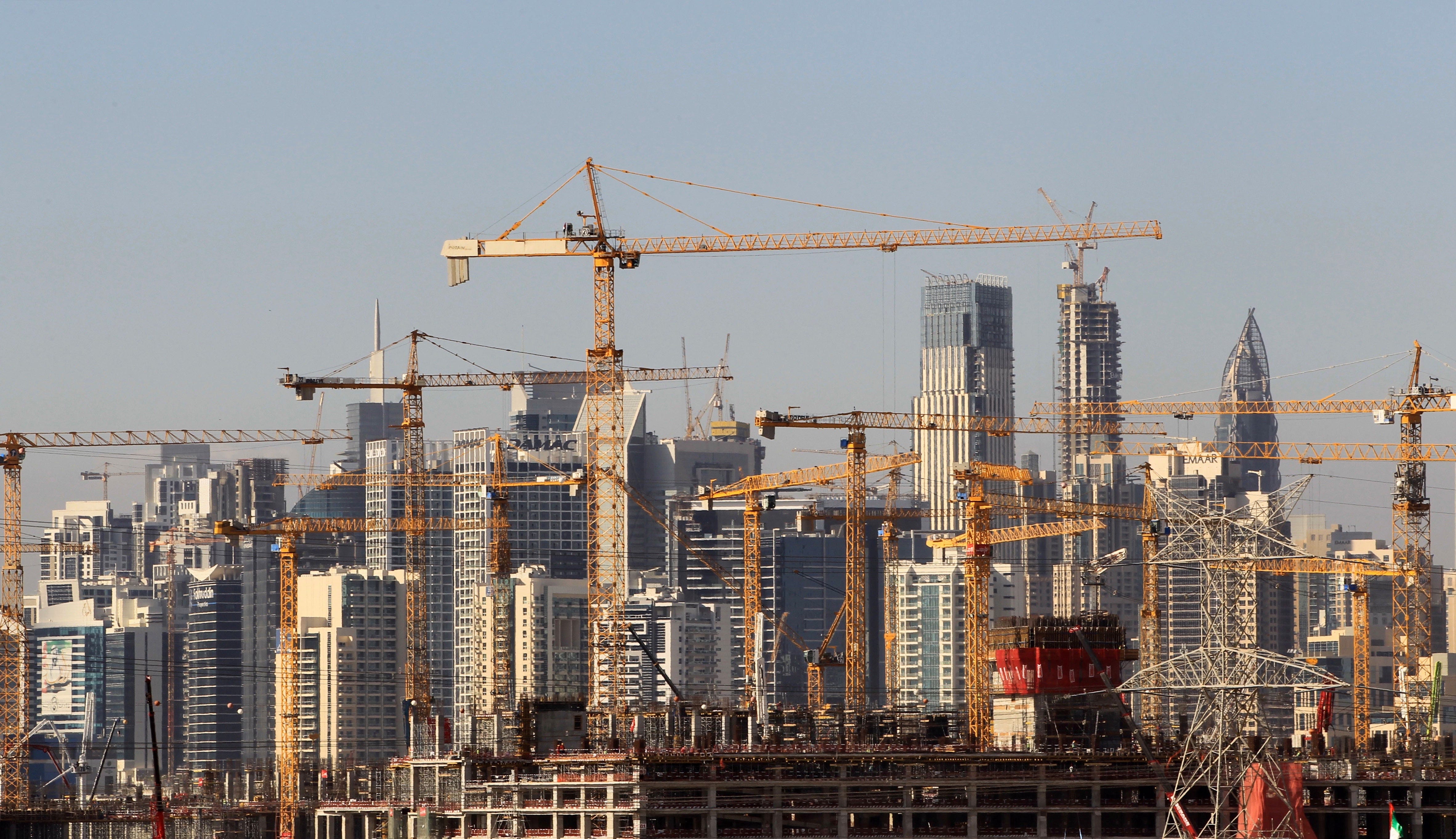
Even Dubai, which seemed in despair in 2009, opened the Dubai Metro on time on 9/9/9. On January 4, 2010, the vaunted Burj Dubai was completed, with a new name upon unveiling: Burj Khalifa. Dubai’s destiny deserves its own telling in a separate article.
In Abu Dhabi, while the Burj Khalifa was named after Khalifa bin Zayed, the then-president of the UAE, his younger half-brother, Mohamed bin Zayed, was beginning to chart the country on an aggressive path forward.
Roots of Abu Dhabi
Much of the coverage of the rise of Abu Dhabi as a city, emirate and sovereignty is either overly hagiographic or polemical. As it is one of the world’s leading political and economic centers, this is a disservice to all. While this article focuses on investment flows in the modern period, it is worth situating Abu Dhabi in a broader, deeper perspective.
Sheikh Zayed bin Sultan Al Nahyan, the founder of the nation, was a monumental figure in the Muslim world. His story is charted by his long-time photographer, Noor Ali Rashid. Sheikh Zayed’s pact with Sheikh Rashid bin Saeed Al Maktoum, the then-ruler of Dubai, to forge a new sovereign nation was itself a dramatic departure in a region full of internecine strife.
Political events in the 1970s and 1980s shaped the country’s outlook, including the disposition of the current president of the UAE and ruler of Abu Dhabi, Mohamed bin Zayed, better known as MBZ. The assassinations of Saif Al Ghobash in 1977, who was then minister of foreign affairs, and Khalifa Ahmed Al Mubarak, then the ambassador to France in 1984, by Abu Nidal, a radical splinter group of Palestinian militants, have never been forgotten. It is worth noting that Mubarak was the father of Khaldoun Mubarak (CEO of Mubadala) and Mohammed Mubarak (who leads Abu Dhabi Tourism).
MBZ is also acutely aware that the country sits on the borders of two larger powers, which informs his decision-making. Since the UAE’s founding, Iran has occupied part of its territory, the Tunb Islands. Saudi Arabia has never fully demarcated its borders with Abu Dhabi, and before independence, still claimed the emirate as its own.
While Abu Dhabi is the capital of the UAE and holds the federation’s sovereign leadership, there are six other emirates, each with its own ruling system and leader. Sharjah has its own Game of Thrones history and, in recent years, has demonstrated entrepreneurial and cultural dynamism. Dubai, of course, is on its own destiny. Other emirates, often less in the headlines, are worth paying attention to. Ras Al Khaimah, where the casino industry is on the march, was itself the center of Islamist intrigue for many years, a focus for Abu Dhabi for decades. Everything in the country connects over time.
Some of this history and political context may seem taboo for the investor to probe, but it is essential to understand it delicately, layer by layer. A good starting point is Robert Worth’s in-depth interview with MBZ. To date, he stands alone as the journalist who spent the most concentrated time with the leader for a long-form piece.
Rise of the Capital
Just before independence, Sheikh Zayed took on the role of urban planner, mapping the contours of Abu Dhabi in the desert sand, alongside a Japanese architect. As oil prices rose in the 1970s, the emirate accumulated significant dividends. This largesse gave it an outsized role in the region and also in the broader Muslim world.
Sheikh Zayed was known for his philanthropy and for supporting various political causes. Alongside those areas, he also looked to the long-term stewardship of oil wealth, establishing the Abu Dhabi Investment Authority in 1976. It was, however, not the first sovereign fund in the region; the Kuwait Investment Authority, established in 1953, holds that title.
In the 1990s, following the Gulf War, Kuwait was no longer the region’s institutional leader. Around that time, the UAE was undergoing renewed modernization, a quarter-century after its founding, as a new generation of leadership began to emerge. Saudi Arabia had always been the big prize, but it had not yet consolidated a sovereign wealth fund and, in many ways, was closed off to the West. Dubai was on the march, but it could never match Abu Dhabi’s resources.
In the mid-to-late 1990s, MBZ was starting to come into its own. His international advisor would soon be his close confidante, Yousef Al Otaiba. With MBZ overseeing defense contracts, he came into proximity with Washington and the global defense industry. Sheikh Zayed appointed his son as Deputy Crown Prince in 2003, formally creating the pathway to succession.
Just a year prior, Mubadala Investment Company had been established to “advance the emirate’s economic diversification.” Khaldoun Mubarak, a confidante of MBZ whom Sheikh Zayed had effectively adopted after his father’s assassination, was appointed CEO. It marked the beginning of a more activist sovereign investment framework, beyond ADIA’s relative passivity.
In addition, the 1990s opened the door to restructuring the governance of the state’s capital. The BCCI case had resulted in huge losses. The case would have echoes in future cycles. It also led to a long period of restructuring in ADIA and asset allocation based on global growth.
While Mubadala and ADIA had been principal touchpoints for visiting investors in the 2000s, other significant sovereign funds had also emerged. One was the International Petroleum Investment Company (IPIC), founded in 1984. The second was Abu Dhabi Investment Council, founded in 2007. At different points, due to an accumulation of capital following a sustained period of elevated oil prices, there were more opportunities to deploy capital.
Sheikh Mansour bin Zayed, a brother of MBZ and also married to a daughter of the Ruler of Dubai, played a central role in the ruling family’s finances and in Abu Dhabi’s sovereign wealth. His role became more visible when he established Abu Dhabi United Group to oversee the purchase of Manchester City.
Following Sheikh Zayed’s death in 2004, MBZ became the crown prince, and his elder half-brother, Khalifa bin Zayed, became the Ruler of Abu Dhabi and the UAE president. Nevertheless, MBZ was the driving force of the emirate’s decision-making. He participated in key meetings in 2007 at Camp David, hosted by then-President Bush, which led to a strengthened partnership, including eventually a “gold standard” 123 nuclear agreement.
Around the same time, Yousef Otaiba became the ambassador in Washington, where he remains. He filled a void left by the influential Saudi Ambassador Prince Bandar bin Sultan, who departed several years earlier and whose daughter, Princess Reema bint Bandar, now serves as the ambassador. In America’s capital, the focus was shifting as well from the Levant to the Gulf, partly driven by an interest in rising capital flows.
Otaiba’s familiarity with Washington also shaped the UAE’s investment architecture. In 2007, Mubadala took a stake in private equity firm Carlyle Group. It was a continuation of a series of strategic investments in the U.S. market, including a notable position in AMD and then a subsequent foray into semiconductors.
Back in Abu Dhabi, while overtly pursuing a different model from its neighbor, Dubai, it was hard not to follow in some of the same footsteps and industries. Etihad Airlines was founded in 2003 to build the aviation sector. Aldar was established in 2004/5 to support real estate development. Abu Dhabi Ports was founded in 2006 to solidify the logistics industry. A futuristic city called Masdar was launched the same year, to be led by a 33-year-old national from the emirate of Um Al Quwain, Sultan Al Jaber.
As the global financial crisis unfolded in 2008 and oil prices skyrocketed, the investment architecture in Abu Dhabi gained renewed prominence as a financial safe harbor. Mubadala was also growing, benefiting from a talent exodus from post-crisis Dubai. Still, the 2010s, when MBZ truly took the helm, were very much about politics, amidst the vicissitudes of the Arab Spring.
As politics was in the forefront, other entities were taking greater risks with the surplus of capital in the background. The opacity of financial structures in Abu Dhabi had so far brought little scrutiny.
Capital Consolidation
In June 2014, oil prices began to fall precipitously from $115 a barrel (Brent Crude). By November, the price was under $80. At that time, budgets were being balanced at around $85 per barrel in the Gulf. Additional discretionary spending to support political efforts in the region to counter the effects of the Arab Spring went beyond those levels. Belts would have to tighten.
The U.S. Federal Reserve began raising interest rates in December 2015, paring back some of the easing initiated after the global financial crisis. This led to headwinds for many global investments, as they became unprofitable. This environment in the UAE and globally led to greater scrutiny and, eventually, several crises that paved the way for consolidation.
State Assets in the Spotlight
The 1MDB scandal involved a mysterious figure named Jho Low, who had been, among many things, the primary backer of the film The Wolf of Wall Street. The details are covered in Billion Dollar Whale, but they centered on the ties between Malaysia and its leadership and institutions in the UAE. The Abu Dhabi link was through entities under Sheikh Mansour’s purview, primarily IPIC and a subsidiary, Aabar Investments.
Aabar had guaranteed questionable bonds, a transaction attributed to a senior executive, Khadem Al Qubaisi. A famous photo of the executive at Hakkasan in Las Vegas circulated on Malaysian blogs, prompting an online investigation, then a formal one. Hakassan was once owned by a real estate group in Abu Dhabi, which was sold in 2021.
The 1MDB affair came on the heels of increasing scrutiny of Aabar in mid-2014 regarding its stewardship of Arabtec, a prominent construction company. Arabtec was founded by Riad Kamal and led many of Dubai’s leading real estate projects, including the Burj Khalifa. In 2012, it was acquired by Aabar, and Al Qubaisi became chairman, with a Jordanian figure, Hasan Ismaik, becoming CEO. For a while, Arabtec was ascendant, and Aabar powered its growth in the region. It led to potential projects in Egypt during the height of the UAE-Egypt partnership.
Following the Arab Spring, Sultan Al Jaber, closely trusted by Abu Dhabi’s leadership, was given the Egypt file to oversee the partnership with its new leader, Abdelfattah Al Sisi, with support from Booz & Co. Al Jaber, by then a Minister of State, worked to develop multi-billion-dollar projects to revitalize Egypt. He turned to a familiar face known to the UAE, Richard Attias.
Attias was the events producer at the World Economic Forum, but after a falling-out over personal matters, he started his own enterprise, Richard Attias & Associates. For several years, he organized events featuring African leaders. Attias worked with Al Jaber to organize the Egyptian Economic Development Conference in Sharm El-Sheik, which rebranded Egypt and its leadership.
This blueprint would eventually be used in the first Future Investment Initiative Summit, also known as Davos in the Desert, two years later in Riyadh. Saudi Arabia and the United Arab Emirates collaborated closely during the initial years of Mohammed bin Salman’s (MBS) rule. This would evolve in the coming period, mainly due to events in Yemen, but also more broadly because of the independent nature of each ruling family vis-à-vis the other.
The Egypt partnership provided an umbrella for investment projects from Arabtec and Aabar. It also attracted new Abu Dhabi entrants, such as Eagle Hills, an entity set up by Mohammed Al Abbar, the charismatic co-founder of Dubai real estate powerhouse Emaar. Ahead of the Egypt conference, it was announced that Eagle Hills would help build a new administrative capital costing upwards of $80 billion. In March 2014, Arabtec had announced plans to build $40 billion of affordable housing in Egypt.
Arabtec had started facing scrutiny in early 2014 as its profits and stock price skyrocketed. It came on the back of the Egyptian momentum. It was not sustainable, and there was no clear plan for delivering on the various commitments it had made. Arabtec’s CEO left in mid-2014. The company never recovered from various setbacks and, many years later, declared bankruptcy. Later in 2015, Egypt’s partnership with Eagle Hills for the new capital city was restructured.
In April 2015, Al Qubaisi was removed from his posts, amidst ongoing probes in Switzerland and the United States. Soon after, IPIC was put on a path to a merger with Mubadala. It was the beginning of the consolidation of sovereign wealth in the emirate. It also firmly set the path of sovereign capital in the service of global ambitions rather than on regional concerns.
ADIC, another sovereign fund, was a significant investor in major Abu Dhabi financial institutions. Under its aegis, First Abu Dhabi Bank was also formed through a merger of two banks. By 2018, ADIC had also merged with Mubadala. This started to bring Mubadala slightly closer to ADIA in size, albeit still a far way off.
Sheikh Mansour moved from the front page to the background. He was not relegated; instead, he shifted focus and assumed leadership of the newly formed Abu Dhabi Media Investment Corporation (ADMIC) in 2016. It created International Media Investments (IMI) and consolidated assets, including The National and Sky News Arabia.
The desire to strengthen the credibility of sovereign resources extended to the formal oil sector in Abu Dhabi. This paved the way for the reform and restructuring of ADNOC, the emirate’s oil company. Sultan Al Jaber, who had previously led the renewable energy company Masdar (that grew out of plans for a city), was given the mantle as CEO in 2016.
Amidst the consolidation, another entity, Abu Dhabi Developmental Holding Company, was established in 2018 as a holding structure for public assets. At the time, it seemed like a footnote in Abu Dhabi Inc., but soon it would become the lead chapter.
Fall of Private Stars
In the 2010s, the UAE began to be known for a new class of billionaires who joined the Davos and philanthropy circuits. Their rise brought attention to the country. And inevitably, that also brought scrutiny.
Abraaj Capital, a private equity group, was a shining example of success in Dubai. Its founder, Arif Naqvi, was backed by supporters across Saudi Arabia and the UAE, including investors within Abu Dhabi. He had built a cult-like following around what he termed ‘growth markets’. He promised both impact and returns.
The fall of Abraaj in early 2018 after its precipitous rise was dramatic. For a while, Naqvi itself appeared to escape justice. But he was soon arrested, along with other executives. The story is well covered in the book The Key Man, and its remaining details are not relevant here.
For some in Abu Dhabi, Abraaj represented a very Dubai story, reflecting the city’s run-and-gun style. If Abu Dhabi were to be differentiated, it would take a different tack as a more responsible home for capital. Abu Dhabi Global Market, a competitor to the Dubai International Financial Center (DIFC), was founded in 2013 to attract global companies, and was due to lead this effort.
Private sector success stories in Abu Dhabi included the Al Nowais family, Lulu Group, founded by Yussuf Ali, and NMC Healthcare, founded by BR Shetty. While Abu Dhabi was itself establishing its bearings as a home for global private capital, in a well-regulated environment, it was soon shaken by an Abraaj-level crisis of its own.
In December 2019, a short-selling activist fund, Muddy Waters Research, issued a blistering report accusing NMC Healthcare of fraud. NMC was a prominent company listed on the London Stock Exchange. Like Naqvi, Shetty had joined the Giving Pledge. The fraud was real and brought Abu Dhabi’s banking sector, which had significant exposure, into the global spotlight. NMC was soon suspended from public exchanges, and Shetty’s assets were frozen.
Then, in April 2020, a report by the Financial Action Task Force (FATF) put the UAE on the path to the grey list, which was formalized in 2022; it was removed in 2024 due to significant reforms. While not about Abu Dhabi Inc., the broader lack of oversight of the private sector and the constant headlines could have undermined a narrative positioning to be the capital of capital.
This reinforced the view of greater consolidation, regulation, and transparency. In many ways, this occurred, at least in the evolution of ADGM, the overall regulatory structure, and the nature of the private sector itself. There were, however, bigger waves underway.
Abu Dhabi Incorporated
Some years have been fulcrum moments in Abu Dhabi’s rise, as a power but also as a capital of capital. One of those was 2020. While the rest of the world was positioning around COVID, Abu Dhabi was building the future. The subsequent five-year period from 2020 through 2025 brought dramatic change to the emirate’s sovereign investment structure.
This has led to a number of new entities that are hard to keep track of. Yet, it is worth noting that despite all the change, there are mainstays, namely ADIA and Mubadala, that still play significant roles. There are institutional figures who have remained at the helm in some capacity since the 2000s, such as Sultan Al Jaber and Khaldoun Mubarak.
Through it all, however, it is worth reiterating that what is new in Abu Dhabi is no accident; it is related to the leadership’s direction. It is and has always been MBZ and his vision at the core. In 2022, Abu Dhabi Ruler Khalifa bin Zayed passed away, and MBZ ascended formally to the presidency. The following year, Khalid bin Mohammed, or KBM, was appointed crown prince, putting to rest any questions regarding succession.
KBM’s role was already apparent by then, with an increasing number of institutions and key strategies reporting to him. At the outset of the pandemic, he oversaw the streamlining of public finances and economic planning in the emirate. This was led by Jassem Mohammed Al Zaabi, the Chairman of the Department of Finance (not to be confused with Ahmed Jasim Al Zaabi, who is the Chair of ADGM).
The boards of Mubadala and ADIA were reshuffled in March 2023, just ahead of KBM’s formal appointment as crown prince that month – certainly, no coincidence. It was a key indicator of the evolving governance of Abu Dhabi Inc. While KBM is most well-known, his siblings also play significant roles. They also became visible in the early 2020s across institutional boards and leadership. This marked a generational shift from the brothers of MBZ, who still hold various positions, to his children.
Sheikha Mariam bint Mohamed leads several social files. Sheikh Theyab bin Mohamed is active in aspects of foreign relations. Others, such as Sheikh Zayed bin Mohamed and Sheikha Shamma bin Mohamed, are younger and still emerging into their roles, but have various board seats.
The Crown Prince Court (or CPC) also emerged as an important office within Abu Dhabi Inc. since 2023, and it has only continued to grow in prominence. In 2025, Saif Saeed Ghobash, who had worked in the CPC of MBZ when he was the crown prince, was appointed as its chairman. The integration of the CPC into governance aspects of Abu Dhabi Inc. continues to unfold in 2025 and will continue to do so over many years.
Since his emergence, KBM has also maintained a close working relationship with another member of the ruling family, Sheikh Tahnoon bin Zayed, MBZ’s brother. Similar to his uncle, KBM was engaged in defense and security matters in the 2010s, while also building personal business interests through a family office. Sheikh Tahnoon assumed the role of National Security Advisor in 2016; KBM became Deputy National Security Advisor in 2017.
Starting in 2020, Sheikh Tahnoon has become the visible face of sovereign wealth in Abu Dhabi. While Sheikh Tahnoon chairs ADIA, and Mubadala is chaired by Sheikh Mansour, KBM sits on ADIA’s board and has close associates on Mubadala’s board. By understanding these associations, it becomes clear that KBM’s reach into oversight of Abu Dhabi’s investment space is vast.
Sovereign State
Every day seems to bring a new announcement of a new entity, with an even flashier name. On the frontier of almost everything, the world of Tahnoon bin Zayed has bedazzled the global investment scene. Before 2020, except in close political circles, Sheikh Tahnoon was not considered someone institutional leaders would see in Abu Dhabi. The rare interlocutors who knew Royal Group would say differently. The same would apply to those involved in the defense and cybersecurity industries. Yet, by and large, it was not clear when or how he should be engaged.
Abu Dhabi Developmental Holding Company, formed in 2018, began being built in earnest in late 2019 and early 2020, consolidating state assets in Abu Dhabi, notably the Abu Dhabi Securities Exchange, Emirates Nuclear Energy Corporation, Etihad Airways (later), Abu Dhabi Power, among others. It comprised a range of infrastructure and utility companies, as well as some free zones. On the outside, it appeared to be domiciling assets, but in reality, it was laying the groundwork for its future form.
Led day-to-day by Mohammed Suwaidi, the company announced a rebrand to ADQ in March 2020. It attracted talent from the wider UAE ecosystem, including Dubai, as well as some of the generation of Emiratis in Abu Dhabi who had advanced their careers at Mubadala. This gave it an edge on the learning curve, which would help it swing for the fences.
At the helm sits Sheikh Tahnoon. By 2025, its total assets had crossed $250 billion, nearing the size of Mubadala, although still dwarfed by the trillion-dollar behemoth that is ADIA. In mid-2021, ADQ helped set up the Abu Dhabi Growth Fund. The Growth Fund enabled further deals, particularly in the technology sector, and funded a sister-entity, G42, to enter into various deals with Mubadala in the capital.
Joint ventures between G42 and Mubadala have included MGX, focused on AI, and M42, focused on health. These players also make waves. For example, this year, MGX, led by Ahmad Yahia Al Idrissi, a former Mubadala executive, took a stake in Binance. Then, following President Trump’s visit to the region, it became the driving vehicle for the AI Infrastructure Partnership.
ADQ has also taken a partnership model with ADNOC, setting up Taziz to drive industrial development. Another alliance was announced in 2021 involving ADQ, Mubadala, and ADNOC, as hydrogen was taking off. ADQ does not always look for a partner. For example, it has an in-house vehicle, Zero Two, which is capitalizing on today’s data center boom.
While Mubadala has begun making forays into new areas and models of working alongside ADQ, ADIA has not been as involved in the hydra of sovereign wealth that has been evolving in the capital of capital. While it has, over time, increased its private equity stakes and hedge fund exposure and even made selective venture investments, it has refrained from creating new entities, diverse operating vehicles, and joint ventures, unlike ADQ. Today, ADQ sits alongside Mubadala and ADIA as a port of call for any investment group on its way to Abu Dhabi.
While the duality of sovereign roles – in government and in investment – would seem to pose a challenge, in other respects it has enabled some of the very partnerships led by the UAE. For example, as National Security Advisor, he paved the way in 2023 through discussions with then US National Security Advisor Jake Sullivan for the eventual G42 partnership with Microsoft, which laid the groundwork for US-UAE AI cooperation in subsequent years.
The tale of Sheikh Tahnoon over the last several years, however, goes beyond sovereign-state entities. The institutions on the other side of the ledger, as a sovereign individual, are perhaps only just beginning.
Sovereign Individual
On the business side, Sheikh Tahnoon had focused on personal investments and growing a conglomerate of companies under Royal Group in the 2000s. However, in his capacity in the security sector, he was increasingly involved in the growth of new entities. One founded in 2018 was G42, which oversaw efforts in artificial intelligence and cybersecurity.
While building state entities under the aegis of ADQ and related to the defense sector during the pandemic, Sheikh Tahnoon also expanded his private business holdings into what may be the most far-reaching private-sector enterprise in the world today, both geographically and sectorally. At the heart of this is International Holding Company, helmed by Syed Basar Shueb. He took the official reins in 2019 and has since grown the conglomerate into one of the largest companies in the Middle East by market capitalization, reaching nearly $250 billion.
It is hard to fathom that IHC, which sits on the cap tables of the world’s largest companies, started as a fisheries company all the way back in 1999: Asmak. Still listed in the portfolio on the IHC website, Asmak “processes, distributes, and exports fresh & frozen seafood across GCC, MENA, and Europe.”
Today, it is one of over 1,400 subsidiaries in the company. Royal Group, however, was the original holding entity for Sheikh Tahnoon. It has a majority share of IHC, expanding its footprint through IHC, its holding entities, their portfolio companies, the subsidiaries of those portfolio companies, and the joint ventures as entered into by all of them.
Significant Royal Group holdings were transferred to Chimera Investment in 2007. It alone claims to comprise 60 entities. Chimera, which today is part of IHC, was the primary vehicle backing the creation of Lunate in 2023, led by three founding partners who had previously worked on both sides of the Sheikh Tahnoon ecosystem. Lunate has grown from strength to strength in terms of building investment gravitas in Abu Dhabi. Family offices can not only store their wealth but also deploy it and have it managed, without ever having to leave the capital of capital.
As an alternative asset manager, while seeded by Abu Dhabi Inc., it has diversified holdings and reached over $110 billion of assets under management. U.S.-based firms see both opportunities and threats and are increasingly partnering with Lunate to create offerings and ventures that continue to benefit from the largesse of management fees. It recently launched its 20th ETF.
Lunate is a player in its own right, sitting on OpenAI’s cap table, for example. It partnered with Olayan Group to take a stake in ICD Brookfield Place in Dubai. It is also expanding its offering for clients by taking stakes in hedge funds and wealth management entities this year. Earlier this year, it activated one of its units, Axight, to lead deals in East Asia.
Perhaps by design, IHC has enabled multiple operating entities with their own leadership, each able to drive growth strategies. Multiply Group, founded in 2003 by Samia Bouazza as a marketing firm, grew in the late 2010s and early 2020s into a diversified group, eventually integrating into IHC and becoming publicly listed.
In 2024, a new group, 2PointZero, was founded to absorb significant holdings from Royal Group and modernize its investment approach. The leader of that entity is Mariam AlMheiri. AlMheiri, like many Abu Dhabi officials, has multiple hats. She is also the Chair of the International Affairs Office in the Presidential Court. Earlier in 2025, it was announced that Multiply Group would merge with 2PointZero, with the combined entity to be led by Bouazza and Muhairi, the latter of whom now holds the title of Managing Director.
There are other holdings, such as Phoenix Group, that also now sit within IHC after it took a stake in late 2023 and are helping to drive the crypto strategy. This overall cryptocurrency strategy may be understated; it remains unclear how much cryptocurrency sovereign wealth institutions in Abu Dhabi have accumulated.
The growth of the private and public entities under the stewardship of Sheikh Tahnoon has led to unprecedented sprawl in Abu Dhabi’s investment landscape. That growth enables opportunities for expansion, diversification, and relationship-building. It has also led to potential blind spots, at least for the time being.
New Pillars of Growth
In late 2022, Redbird IMI was formed as an entity under Abu Dhabi Media Investment Corporation, led by Sheikh Mansour. It was initially capitalized with $1 billion and led by Jeff Zucker, the former head of CNN. While seeking major media deals, it faced roadblocks when it tried to buy the UK’s Daily Telegraph and pulled out in November 2025. The lack of new deals is not due to a lack of desire. IMI still serves as the tip of the investment spear for media and entertainment within Abu Dhabi Inc. Yet its size and stature are now in a more crowded space.
The UAE has increasingly made a play in basketball. This has been led by Abu Dhabi Tourism under the leadership of Mohammed Mubarak, due to its relationship with the NBA. That has led to a tie-up with the New York Knicks and James Dolan, with one investment deal to bring the Sphere to the capital. Mubadala was the entity that helped capitalize Mark Walter’s TWG Global just before it sought to acquire the Los Angeles Lakers for $10 billion earlier in 2025. As sports grow in focus, it is likely a new investment vehicle will emerge, but where would it sit?
In late 2024, ADNOC launched XRG to focus on a low-carbon future, which pivoted with political winds in 2025 to include powering the future of AI. Its illustrious board includes global investment leaders alongside leading figures from across the Abu Dhabi capital ecosystem. Beyond branding, it is quickly emerging as a leader in chemicals and natural gas.
The shifts in Abu Dhabi are themselves already shifting. In late October, a new entity, L’imad, announced it had acquired a majority stake in Modon Holdings, absorbing the shares held by both IHC and ADQ. Modon is now the premier real estate and hospitality entity in the capital. Was L’imad a real estate development company? What would it mean for another incumbent, Aldar Properties (owned in part by Mubadala and another IHC subsidiary, Alpha Dhabi)?
In the United States, in December 2025, the focus was on a potential acquisition of Warner Bros. with competing bids from Netflix and Paramount. Jared Kushner’s Affinity Partners reportedly coordinated the latter bid. In initial news reports, L’imad was listed as a key backer.
In the capital of capital, the only constant is change.
Cyclical Tides in the Capital
The landscape of Abu Dhabi does not always reveal its full reach. That range extends across sectors, geographies, and companies. Notable institutions – Blackrock, Blue Owl, and Brookfield – in particular have acted as facilitators, creating pooled funds, alliances, and coalitions. This has brought together various sovereign funds. Yet it has also brought multiple entities from Abu Dhabi as shareholders, side by side within the same companies.
This raises the question of exposure, or double exposure. It becomes increasingly complex for Abu Dhabi Inc. to obtain a consolidated view of its risks and opportunities. As many entities are also asset managers that fund funds, they are often many layers removed from the final transaction. This also poses another challenge for investees: how much exposure do they have to Abu Dhabi?
Regardless, a crosstab analysis of Abu Dhabi with the world’s leading companies would show that it is an impressive driver of the global economy and innovation.
Its institutionalized framework, which converges sovereign power and capital, is now shaping global investment flows.
This will bring scrutiny from both governments and the media, mainly due to the co-mingling of state and private interests. Yet in the new era, if anything, it is Western countries that are moving towards the Gulf model, setting up state-backed funds and partnerships. The U.S. defense complex is also now heavily intertwined with Abu Dhabi, especially regarding AI integration and innovation.
As complex as things appear, understanding Abu Dhabi still comes down to distilling the people and principles at play. The centralization of power should not be forgotten in all interactions, nor should the interlinked nature of internal capital. While maps, charts, and Excel tables can guide, they cannot replace the depth of understanding that comes with being immersed in the capital of capital.
It will also then be apparent that there is still a unified source for the money that flows and its returns: one family that anchors Abu Dhabi’s power and capital. There is a thematic throughline driving strategic thinking, especially in a world of shifting geopolitics and technology, that starts at the top.
Still, Abu Dhabi is unpredictable, and it appears to be headed for a turning point. As the global economy shifts, it will bring aspects of Abu Dhabi’s balance sheets to the surface. Similarly, the next generation under Mohamed bin Zayed, particularly Khalid bin Mohamed, will assume greater roles in the coming years. This will undoubtedly lead to a renewed period of consolidation and strategic thinking about the stewardship of capital.
Some companies and funds might still choose to avoid Abu Dhabi. It may be because of the headlines. Perhaps they have concerns about the conflation of sovereign power and capital. That choice ultimately comes down to the prerogative of each institution.
Yet, in many senses, it no longer matters. And it is due to a simple fact:
While you may be avoiding Abu Dhabi, Abu Dhabi is not avoiding you. It may already be your biggest investor.
This article may be updated in the coming months, at which point any corrections to facts and figures may also be made.


