
When Field Marshal Asim Munir, Chief of Pakistan’s Defence Forces, visited the White House in September 2025, he came bearing gifts: rare-earth minerals in a delicate wooden box. Unveiling the display to the American president as his own country’s prime minister drifted into the background, the theatrics on the surface masked the growing depth of Pakistan’s geopolitical position.
In the 2026 Iran War, Pakistan emerged as an unlikely would-be peace broker. The role of the mediator in recent decades had been of a soft intermediary, represented by smaller states with substantial wealth, such as Qatar, Norway, and Singapore. In a world of hard power, countries intervening today must possess hard power themselves. This enables them not only to command the respect of conflicting parties but also to bring resources to the table that can credibly shape or guarantee outcomes.
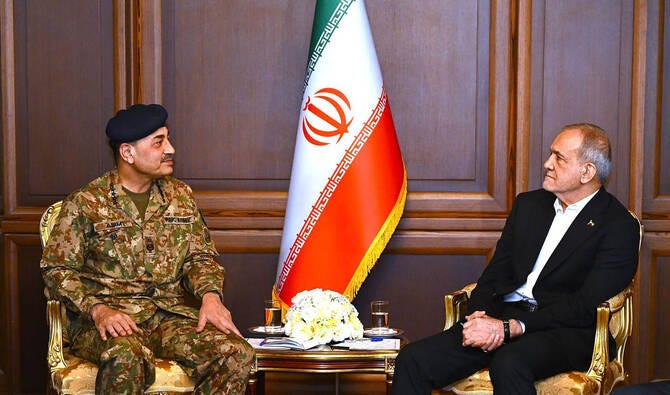
Geopolitical bargains in recent years have reflected this: China between Iran and Saudi Arabia in 2023, Turkey in Syria in 2024, and the United States in multiple theaters, such as the Caucasus. ‘The Pakistan Gambit’ in the Iran War is no accident of history; it also represents a new trend. As European power fades, power is rising in the center of the world between East and West.
This is the unfolding story of an increasingly interconnected multi-region, termed in these pages and the 2040 World podcast as Middle Earth. It is where half the world’s population resides. The great game of the past was a geopolitical competition among global powers for control of parts of this vast geography. Today, the battle for power will also take place within and between the powers of Middle Earth.
Pakistan Gambit
At the height of the Cold War, President Richard Nixon and his National Security Adviser Henry Kissinger understood that they could no longer afford to have China on the sidelines. Already alienated from the Soviets, the time was now to bring them into the fold. Kissinger needed to visit China to begin formal discussions with Zhou Enlai, the day-to-day administrator of the People’s Republic.
That encounter was facilitated by then-Pakistani President General Yahya Khan. During a formal visit to Pakistan, Kissinger surreptitiously flew in the middle of a hot summer night to Beijing. While Pakistan had been a key US military ally since 1954, its geographic location and rivalry with India also meant it maintained an open relationship with China.
Fast forward to the 2000s, and Pakistan’s stature was diminished due to a low-level domestic insurgency, chaos in Afghanistan, and global marginalization as a result of the war on terror. In the last several years, the U.S. presence in Afghanistan dissipated, the war on terror faded into the background, and domestic uprisings were quelled. Pakistan has itself remained a geostrategic lynchpin between India and China, while sitting adjacent to the Persian Gulf and Iran. Beyond its geographic position, Pakistan is a nuclear power with a formidable military that has proved its prowess in recent military skirmishes. It is also the fifth-most populous country, after China, India, Indonesia, and the United States.
Iran in 2026, like China in 1971, provided an opening for Pakistan. But this is a different moment, and a different time. It is not just about the United States or great powers. Pakistan has equally been constructing military pacts with Saudi Arabia and strengthening ties with Turkey and others. The gambit it is taking is not just to strike a deal between Iran and the United States through the Islamabad Talks, but also to play a growing role as a geopolitical actor in a widening neighborhood.
Rise of Middle Earth
Spanning over 80 countries in the heart of the world, Middle Earth comprises the regions of the Middle East, Africa, the Caucasus, Central Asia, and the Subcontinent – the area between East and West, and the power projection of China, Russia, and the United States.
Here lies half the world’s population at 4 billion people, with over 2 billion being under the age of 30. It is not just a population center; in a world of demographic decline, it is the consumer marketplace of tomorrow. This cross-border zone is also economically powerful, now representing a quarter of global GDP when adjusted for purchasing power. As its nominal flows catch up, this will add to the weight of capital that emerges.
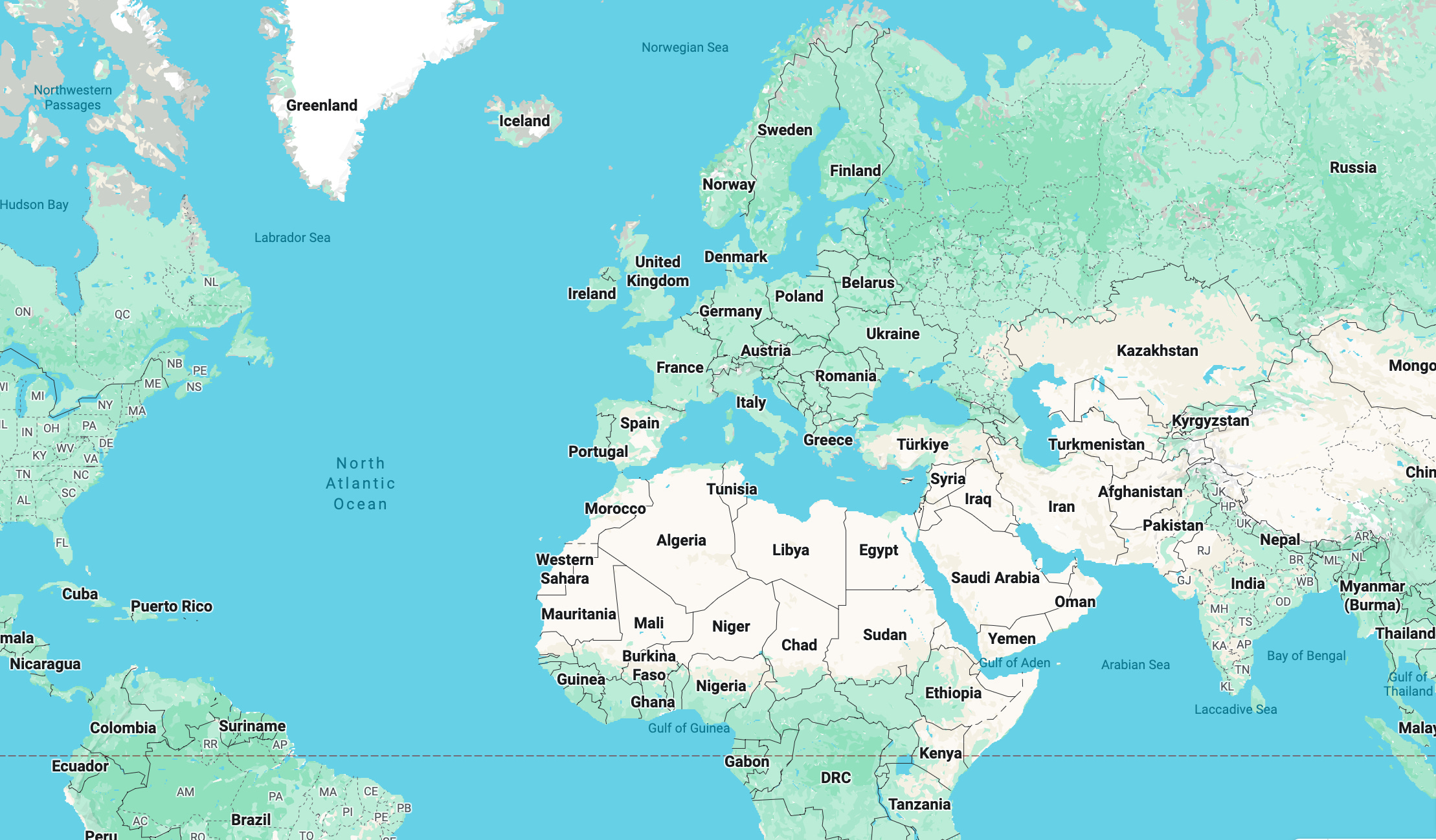
Several countries possess hard power – military might, an industrial complex, and organized bureaucracy – that can be projected abroad, notably Turkey, Israel, Pakistan, and India, the latter three possessing nuclear capabilities. Egypt, Azerbaijan, Algeria, and Saudi Arabia have significant potential to join alongside. Iran’s fate is seemingly now being determined. This leaves many smaller countries with ambition trapped in the in-between, notably the United Arab Emirates.
Middle Earth itself is very much imbued with a Muslim civilizational ethos. The cultural character that has blended over centuries of shared history allows for greater exchange and synchronicity. This is already seen in the lines between regions, with shared peoples and languages. But this is not the driving force. That push is coming from the concurrent organization of multiple sources of hard power that are now finding one another. This is linking economic and industrial forces, in addition to cultural ones.
In 2024, there was significant discussion around the Quad, which brought together Japan, Australia, India, and the United States. In 2026, there is as much discussion of the quad in Middle Earth, comprising Turkey, Egypt, Saudi Arabia, and Pakistan, all of which have strong ties with the United States.
Despite the rise of Middle Earth, its power remains disaggregated and decentralized, still very much in its nascent phase.
The Greatest Game
In the past, China, Russia, and the United States would seek to manage this multi-region. Today, these great powers still want to ensure their interests are met – and use force (or other coercive means) to achieve that where possible. But the consolidation of Middle Earth is primarily a competition from within.
This is what is now unfolding. The rise of Israel as a proto-empire (or “super Sparta”), the growing prowess of Turkey, the attempted relevance by Pakistan – these are all tied to a desire to play an expanded geostrategic role. Yet the vast geography means that integrated alliances are required to build a multifaceted industrial base to support the military coverage needed to hold sway. In effect, a new decentralized empire is being built from the ground up.
What is likely over the coming years is growing cross-border influence, networks of alliances, and collaboration on defense industrial projects. It is equally likely that countries will seek to test the limits of their power, and counter-alliances will form in response. The most salient confrontation on the horizon today is with Israel; should it seek accommodation with Turkey, Pakistan, and Iran, and vice versa?
From the outside looking in, it will be tempting for countries and institutions to choose sides. Yet, given the fast-moving dynamics, it will be important to stay out of the fray and facilitate relationships across all sides. The complexities of descending into a conflict involving 4 billion people across multiple regions are unnecessary burdens, including for China and the United States.
A World of Power
Pakistan’s gambit, as well as the vulnerability of Iran, makes it clear that the next arms race will not just be for AI but also for a nuclear weapon or equivalent. No country will want to be the odd one out surrounded by hard power buttressed by nuclear capability. Rising power also fuels predictions of a world war. The next great conflict, if it did occur, may be most similar to World War I, involving many smaller players and accidental conflicts arising from an interwoven web of alliances, driven from Middle Earth.
This raises the stakes even higher, as it could mean conflict between many disparate powers possessing nuclear weapons. For the world’s dominant power, America, it will need to learn to manage the power of others rather than just dominate through its own power.